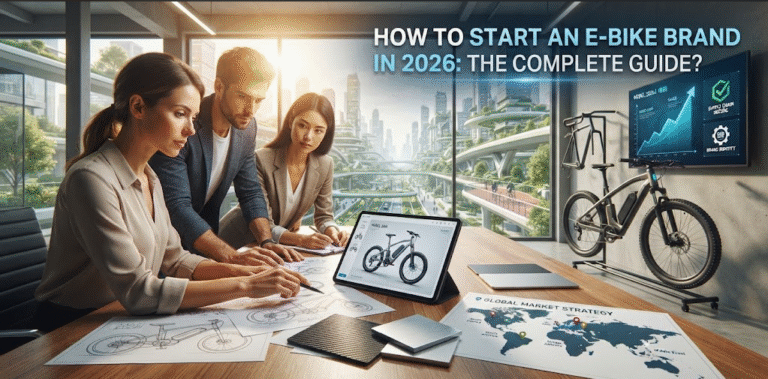

Struggling to figure out how to start an e-bike brand in a market that seems both booming and incredibly crowded? You see the potential for high profits, but you're agitated by the risks of sourcing bad products, facing endless delays, and ultimately failing to connect with customers. The solution isn't just finding a good e-bike; it's building a resilient brand with a rock-solid supply chain from day one.
To start an e-bike brand in 2026, you must focus on three core pillars: 1) developing a unique brand identity that resonates with a specific target audience, 2) securing a reliable supply chain by thoroughly vetting manufacturing partners and managing logistics, and 3) tailoring your product and marketing strategy to the specific regulations and consumer preferences of your target market, whether it's Europe, North America, or the Middle East.
Successfully launching a brand is about more than just a purchase order. It's a strategic process that balances product quality with brand storytelling and operational excellence. In my years of exporting e-bikes to new brands, I've seen what separates the winners from the rest. Let's dive into the critical steps that will set you on the path to success.
Why is a Strong Brand Identity More Important Than Just a Good E-Bike?
You've found a factory that produces a fantastic e-bike with all the right specs. Is your work done? Many entrepreneurs fall into this trap, believing a great product will sell itself. In today's saturated market, however, that's rarely true. Without a compelling brand, your high-quality e-bike becomes just another commodity, forced to compete on price alone.
A strong brand identity is what gives your product meaning. It builds trust, justifies your price point, and fosters a community of loyal customers who buy into your story, not just your specs. This is your most durable competitive advantage.
Dive Deeper: From Commodity to Coveted Brand
In my experience working with dozens of aspiring brand owners, the initial conversation is almost always about the product: motor wattage, battery range, and component brands. While these are important, they are not the foundation of a business. The foundation is the why. Why should a customer choose you over the ten other brands with similar specs?
H3: Moving Beyond Product Specs
The technical specifications of an e-bike are the table stakes—the minimum requirement to even play the game. Everyone has access to Bafang motors, Samsung batteries, and Shimano components. Relying on these as your sole selling point is a losing battle because your competitor can always source the same parts.
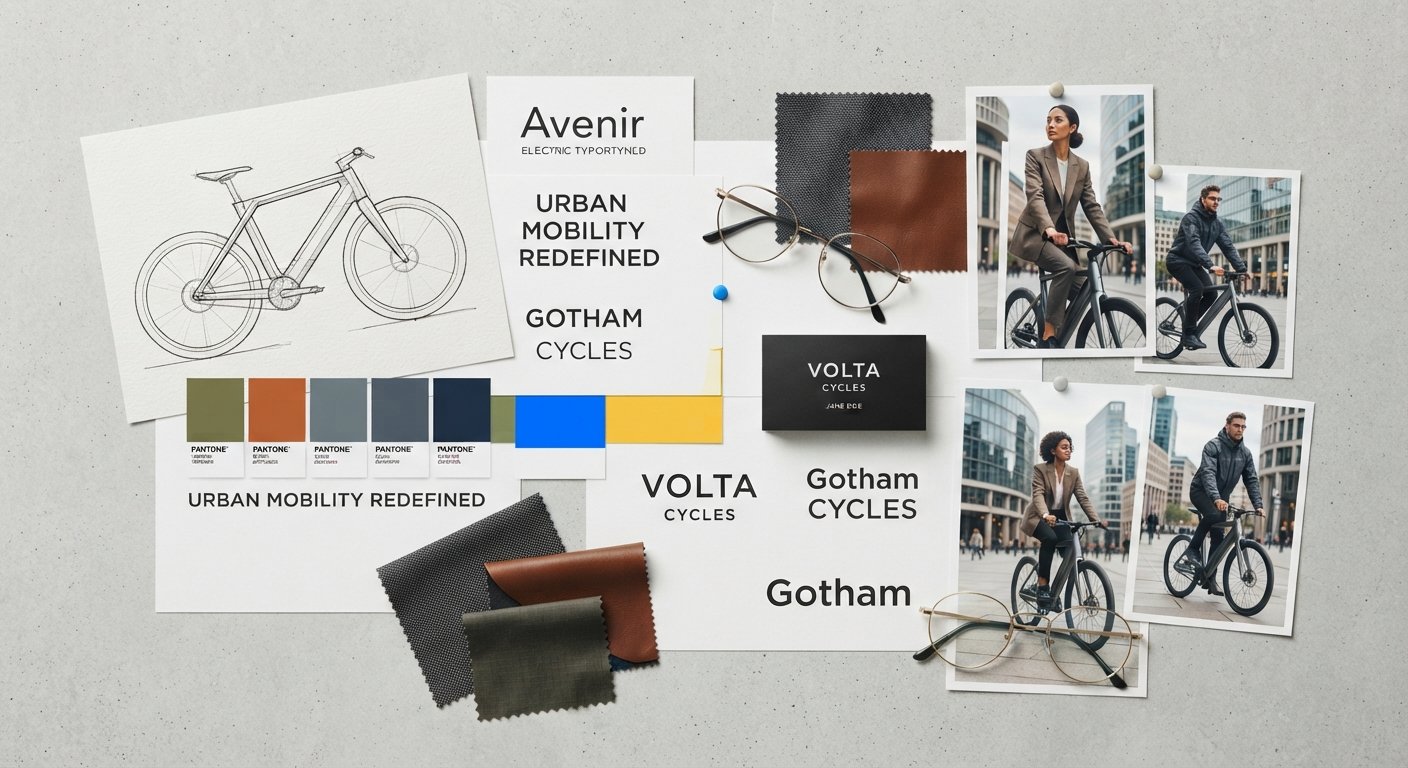
Your brand is what creates differentiation where the product cannot. It's the sum of:
- Your Mission: What problem are you solving? Are you promoting urban sustainability, enabling off-road adventure, or providing mobility for seniors?
- Your Values: What do you stand for? Quality craftsmanship, exceptional customer service, environmental responsibility?
- Your Voice: How do you communicate with your audience? Are you technical and precise, or inspiring and adventurous?
H3: Defining Your Target Audience
One of the most common mistakes I see is trying to build an e-bike for "everyone." The brand that appeals to everyone ultimately appeals to no one. You must get specific. Who is your ideal customer?
- Urban Commuter in Europe: This customer values reliability, safety (lights, reflectors), compliance with local laws (EN 15194), and practical features like fenders and racks. Your brand should convey efficiency and safety.
- Off-Road Enthusiast in North America: This buyer wants power, long-travel suspension, and durability. They are less concerned with commuting features and more interested in performance. Your brand should be rugged and adventurous.
- Luxury Buyer in the Middle East: This customer may be drawn to cutting-edge design, premium materials (like carbon fiber), and exclusive features. Your brand should communicate status and innovation.
I once worked with a client who wanted to launch a "do-it-all" e-bike. Sales were stagnant. We sat down and refocused his strategy on a single niche: reliable, low-maintenance e-bikes for food delivery couriers in major cities. We adjusted the marketing, highlighted the bike's durability and long range, and his business found its footing.
H3: Crafting Your Brand Story
Your brand story ties everything together. It's the narrative that connects your mission to your customer's needs. It's not just a marketing slogan; it's the authentic reason your company exists.
| Product-Focused Approach | Brand-Focused Approach |
|---|---|
| "We sell a 750W fat tire e-bike." | "We empower weekend adventurers to explore further." |
| "Our e-bike has a 500Wh battery." | "Our bikes give you the freedom to turn a day trip into a discovery." |
| "Featuring Shimano Deore components." | "We build our bikes with components trusted by professionals, so you can ride with confidence." |
A strong brand gives you pricing power, customer loyalty, and a clear direction for future product development. It’s the most valuable asset you’ll build.
How Can You Secure a Reliable Supply Chain to Start an E-Bike Brand?
Are you having nightmares about sending a large deposit to a supplier only to receive a container of faulty e-bikes months late? This fear is real and, unfortunately, common for startups. A weak supply chain can single-handedly destroy your margins, timeline, and reputation before you even sell your first bike. The key to mitigating this risk is a diligent, structured approach.
To secure a reliable supply chain, you need a multi-step process. It starts with rigorously vetting suppliers beyond their website, continues with creating crystal-clear product specifications, and finishes with proactive management of logistics and quality control. This isn't a one-time task; it's an ongoing partnership.
Dive Deeper: Building a Resilient Sourcing Strategy
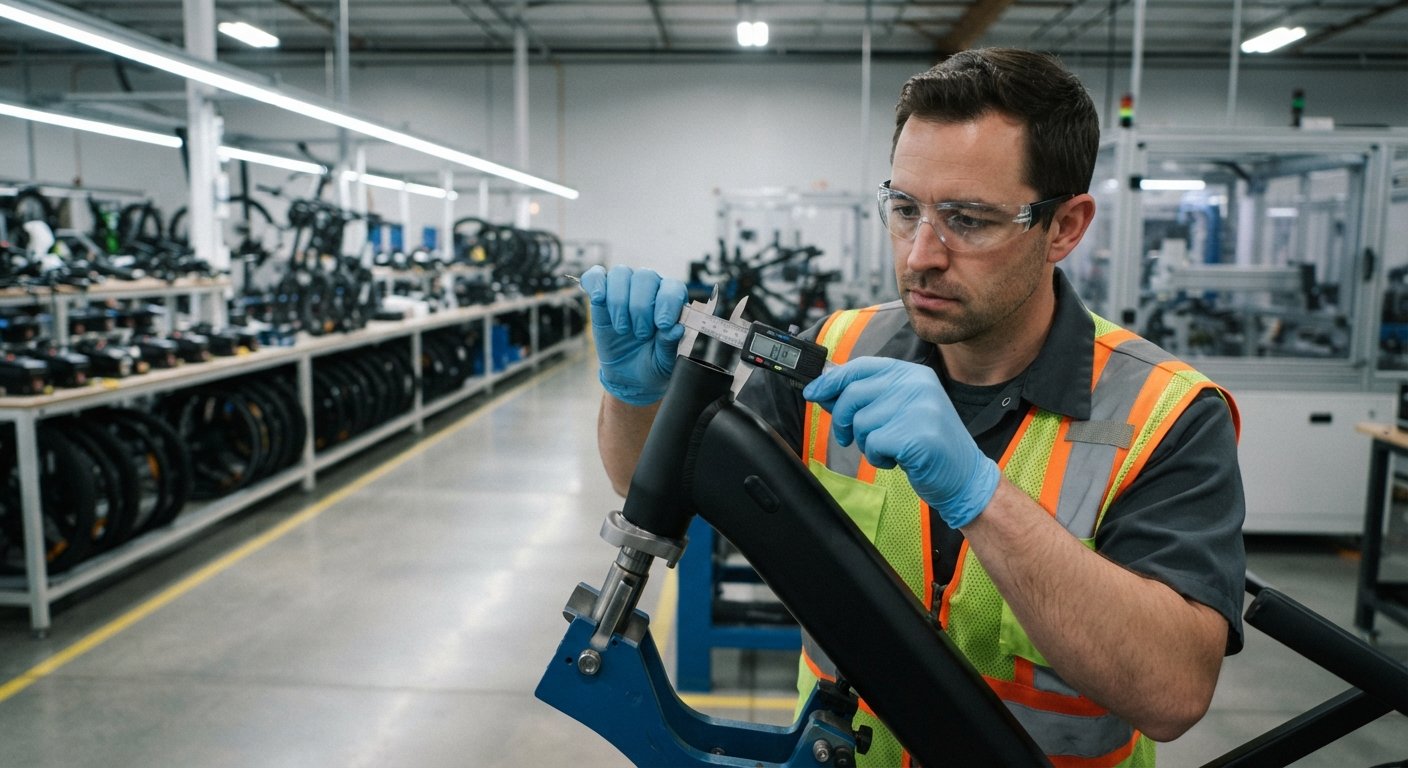
Sourcing is not shopping. You are not just buying a product off the shelf; you are building a manufacturing partnership. My clients who succeed are the ones who treat their suppliers as partners, not just vendors. This relationship is built on clear communication, mutual respect, and—most importantly—a thorough vetting process.
H3: Vetting Your Manufacturing Partner
Finding suppliers on platforms like Alibaba is easy. Finding a good supplier is hard. Here’s a checklist I give my clients to move beyond the sales pitch:
- Request Business Licenses and Certifications: Ask for their business registration and any quality management certifications like ISO 9001. For your target market, ask for proof of compliance, such as CE certificates for Europe (specifically showing EN 15194 compliance for e-bikes) or testing reports for UL 2849 (for the entire e-bike electrical system) for the US. Treat these as documents to be verified.
- Ask for References: A confident, experienced factory will have past clients who can vouch for them. Ask for contact information for a brand they have supplied in a non-competing market.
- Order and Test Samples: Never place a bulk order without first testing a physical sample. This isn't just to check the product quality. Pay attention to the entire process: How was their communication? Did they pack it well? How long did it take? This is a preview of what a larger relationship will be like.
- Conduct a Factory Audit (If Possible): For significant orders, hiring a third-party service to audit the factory or visiting in person is a wise investment. It provides an unbiased look at their capabilities, quality control processes, and working conditions. As an exporter, this is a service we often facilitate for our clients.
H3: The Power of a Detailed Product Specification Sheet
The single biggest cause of quality disputes is ambiguity. A "Product Specification Sheet" (or "Spec Sheet") eliminates this. It is a detailed document that leaves no room for interpretation. It should be an appendix to your purchase contract.
Your spec sheet must include:
- Frame: Material (e.g., 6061 Aluminum), geometry chart, paint color (provide Pantone codes), decal placement and design.
- Motor: Brand, model, power rating (e.g., Bafang M620, 48V 750W), and any custom programming.
- Battery: Cell brand (e.g., Samsung 21700), capacity (e.g., 48V 17.5Ah), case design, and charger specs.
- Components: List every single component by brand and exact model number (e.g., Brakes: Tektro HD-E350, not just "hydraulic brakes"). This includes tires, rims, saddle, grips, pedals, etc.
- Packaging: Specify the box dimensions, cardboard thickness (e.g., 5-ply), internal protection materials, and any branding on the box.
A client once told me he specified "black grips" and received hard, slippery plastic ones instead of the soft rubber grips he'd assumed. This small detail made the bike feel cheap. A good spec sheet would have listed "Velo VLG-776AD3, rubber, black." Be that specific.
H3: Navigating Logistics and Hidden Costs
Your product cost doesn't end at the factory gate. You must account for shipping, insurance, import duties, and local taxes.
- Understand Incoterms: Terms like FOB (Free On Board) and EXW (Ex Works) define who pays for what and when responsibility transfers. FOB is common; the supplier is responsible for getting the goods onto the shipping vessel. You are responsible from that point on.
- Calculate Landed Cost: Your "landed cost" is the total cost to get a product to your warehouse door. It includes the product cost + shipping + insurance + tariffs/duties + customs brokerage fees. A startup client of mine was shocked when their first container's landed cost was nearly 40% higher than the product cost because they hadn't budgeted for tariffs and port fees. Don't make that mistake. Work with a freight forwarder or customs broker to get estimates early.
What Are the Key Market Differences to Consider When You Start an E-Bike Brand?
Thinking you can launch the same e-bike with the same message in Germany, Texas, and Dubai? This is a fast path to wasted inventory and marketing spend. The global e-bike market is not a monolith; it's a collection of distinct regions with unique regulations, consumer habits, and competitive landscapes. Ignoring these differences is a critical error.
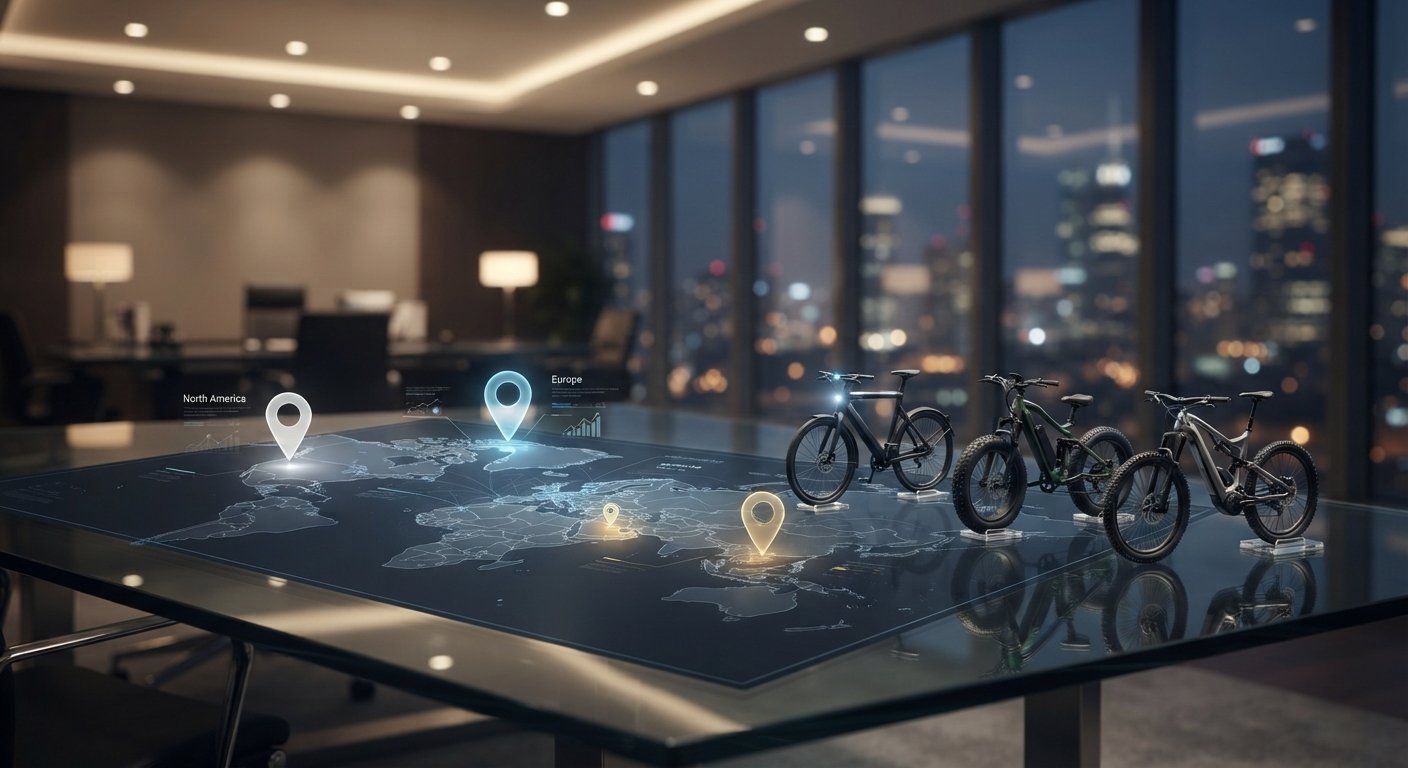
To successfully start an e-bike brand with international ambitions, you must analyze and adapt to key market differences. This includes legal requirements like the EU's EN 15194 standard, consumer preferences for bike styles like fat bikes in North America, and the unique demands of emerging markets like the Middle East.
Dive Deeper: A Tale of Three Markets
From my vantage point as an exporter, I see firsthand how different client requests are based on their target region. A German brand is focused on legal compliance and commuting efficiency, an American brand is asking for more power and ruggedness, and a new brand in the UAE is focused on luxury and design. Let's break it down.
H3: Europe: The Market of Regulation and Refinement
The European market is the most mature and also the most regulated. You cannot simply ship any e-bike here and expect to sell it.
- Regulation is King: The primary standard is EN 15194. In simple terms, it defines an e-bike (or EPAC) as having a motor that assists only when pedaling (pedelec), with a maximum continuous power of 250W, and assistance cutting off at 25 km/h. Anything outside these parameters is often classified as a moped, requiring licensing and insurance. Your supplier must be able to provide a Declaration of Conformity for this standard.
- Consumer Preferences: European buyers, particularly in countries like Germany and the Netherlands, favor practicality. City and trekking e-bikes with integrated lights, fenders, and rear racks are dominant. There's a strong appreciation for established component brands (Bosch, Shimano, Brose) and a willingness to pay for quality and reliability.
- Branding & Sales Channel: The market is crowded with established players. As a new brand, you need a strong niche. Many successful startups focus on a specific segment (e.g., stylish urban bikes, cargo bikes for families) and often work through a network of independent bike dealers (IBDs) who provide service and support.
H3: North America: The Market of Power and Freedom
The North American market (primarily the US and Canada) is characterized by more liberal regulations and a greater diversity of riding styles.
- The Class System: Most US states have adopted a 3-class system:
- Class 1: Pedal-assist only, up to 20 mph.
- Class 2: Throttle-actuated, up to 20 mph.
- Class 3: Pedal-assist only, up to 28 mph. This allows for more powerful motors (often 500W or 750W nominal) and throttles, which are less common in Europe.
- Consumer Preferences: "Bigger is better" can often be the theme. Fat tire e-bikes are immensely popular for their all-terrain capability and bold look. E-mountain bikes (eMTBs) are also a huge segment. Consumers are generally more open to newer brands and often purchase through direct-to-consumer (DTC) online channels.
- Branding & Sales Channel: The DTC model puts a heavy emphasis on digital marketing, online reviews, and creating a strong online community. Brands compete on performance, value, and customer service. I've seen clients succeed here by building a loyal YouTube following or active Facebook groups.
H3: The Middle East: The Emerging Market of Luxury and Durability
The e-bike market in the Middle East, particularly in the GCC countries, is newer but growing rapidly. It has its own unique characteristics.
- Climate is a Factor: Products must be built to withstand extreme heat. This has implications for battery performance and component durability. Dark-colored frames can get incredibly hot.
- Consumer Preferences: There is a strong appetite for high-end, luxury, and technologically advanced products. E-bikes are often seen as recreational toys or status symbols rather than just transportation. Unique designs, carbon fiber frames, and powerful motors are popular. Fat tire bikes also do well for desert and beach riding.
- Branding & Sales Channel: The market is less saturated, presenting an opportunity for new brands to establish themselves. A focus on premium quality, exclusive design, and a high-touch customer experience is key. Partnerships with luxury retailers or developments can be a powerful channel.
| Feature | Europe | North America | Middle East |
|---|---|---|---|
| Max Power | 250W (continuous) | Often 750W+ | High power is popular |
| Max Speed | 25 km/h (assist) | 20-28 mph (assist) | Less regulated, performance-driven |
| Throttle | Generally not allowed | Common (Class 2) | Popular |
| Popular Styles | City, Trekking | Fat Tire, eMTB | Fat Tire, Luxury/Designer |
| Key Standard | EN 15194 | 3-Class System, UL 2849 | Durability in heat |
| Sales Channel | IBDs, Dealers | DTC, Online | Specialty & Luxury Retail |
Frequently Asked Questions
How much does it cost to start an e-bike brand?
This varies dramatically, but avoid focusing only on the per-unit cost. Key expenses include your initial inventory order (factories have a Minimum Order Quantity, or MOQ, often 50-100 units), branding (logo, website), marketing, shipping, and import duties. A realistic starting budget for your first batch of inventory and initial setup often falls in the $50,000 to $150,000 range, but it can be higher depending on your model's complexity and order size.
Can I just white-label existing e-bikes?
Yes, this is a very common and effective way to start. White-labeling involves putting your brand on a pre-existing model from a factory's catalog. It significantly reduces development costs and time. However, to be successful, you must add value through a strong brand story, excellent customer support, curated accessories, or minor customizations that make the bike unique to your brand.
What are the most common legal requirements?
The most critical are product safety and compliance standards. For Europe, it's the CE mark, specifically demonstrating compliance with the EN 15194 standard for e-bikes. In North America, while not always federally mandated, UL certification for the battery pack (UL 2271) and the entire electrical system (UL 2849) is becoming the industry standard and is crucial for safety and liability. Always consult with a legal professional familiar with your target market.
How do I find a reliable e-bike supplier?
Finding a good supplier is a research project. You can start on B2B platforms like Alibaba, attend major trade shows like Eurobike or the Taipei Cycle Show, or get referrals from industry contacts. The most reliable method is often to work with a sourcing partner or trading company like us. We have already vetted dozens of factories and can match you with a partner that fits your product needs, quality standards, and budget.
Conclusion
To successfully start an e-bike brand in 2026, you must look beyond the product and build a complete business system. A great e-bike is just the beginning. True success is built on the twin pillars of a resonant, well-defined brand identity and a robust, reliable supply chain. By understanding your specific customer, crafting a compelling story, and managing your manufacturing partnerships with diligence, you move from simply selling a commodity to building a lasting and profitable enterprise. Remember to adapt your strategy to the unique regulations and tastes of your target market, whether it's the structured environment of Europe, the diverse landscape of North America, or the emerging luxury segment in the Middle East.
If you're ready to take the next step and need a partner to help you navigate the complexities of sourcing, quality control, and international logistics, we're here to help. We specialize in connecting new brands with our trusted network of manufacturers to launch with confidence. Contact us to discuss your project.