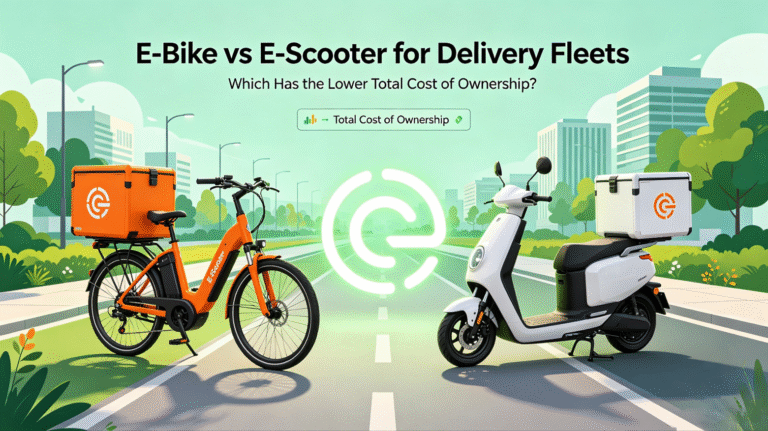

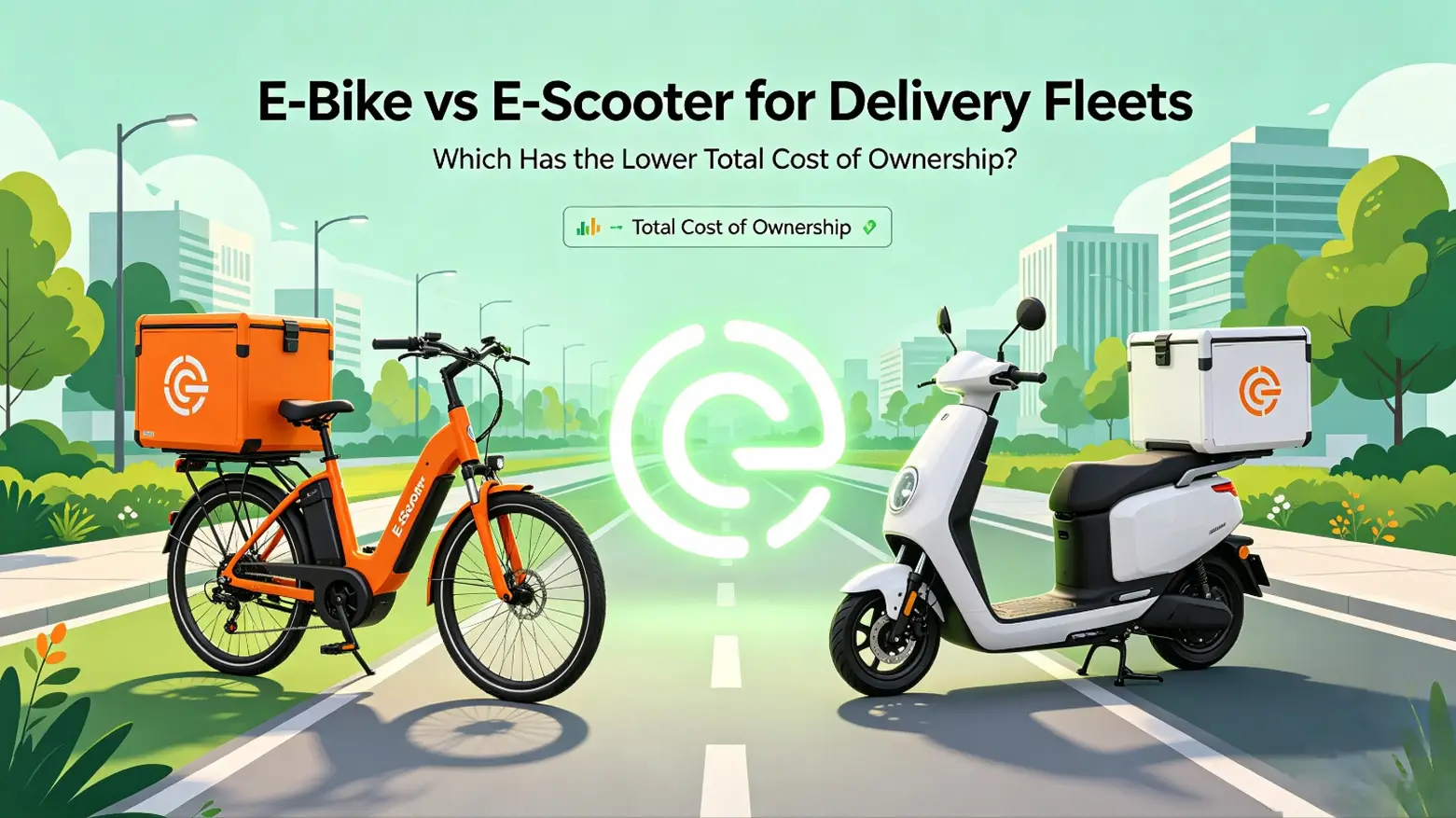
As a fleet manager, you're constantly battling to lower operational costs without sacrificing delivery speed. When choosing vehicles, the low sticker price of some models can be incredibly tempting, but this focus often leads to budget overruns when hidden maintenance and replacement costs emerge. A comprehensive e-bike vs e-scooter total cost of ownership analysis is the only way to make a financially sound decision that protects your bottom line and ensures fleet reliability.
The vehicle with the lower total cost of ownership (TCO) depends entirely on your specific operational context. E-bikes often present a lower TCO in scenarios requiring longer range and varied terrain due to their superior durability and standardized maintenance parts.1 E-scooters can be more cost-effective in hyper-dense, flat urban cores for very short trips, provided you invest in commercial-grade models to avoid high failure rates.2
This initial answer might seem complex, but that's because TCO is more than just a single number. It's a framework for decision-making. Below, we'll break down the critical components of this calculation—from purchase price to battery lifecycle—so you can confidently evaluate the e-bike vs e-scooter total cost of ownership for your unique delivery fleet.
Beyond the Sticker Price: How Do Upfront Costs Affect TCO?
The initial purchase quote is often the most scrutinized number in any procurement process. But focusing solely on this figure can be a classic case of being "penny wise and pound foolish." How does that attractive upfront price really factor into the long-term financial health of your fleet?
The upfront cost is merely the entry point into your total cost of ownership. While consumer-grade e-scooters may appear significantly cheaper than commercial e-bikes, their shorter lifespan under heavy use can lead to higher replacement costs, ultimately driving up your TCO.

Dive Deeper
When you're evaluating quotes, the most critical step is ensuring you're comparing equivalent products. A common pitfall I've seen fleet managers fall into is comparing a consumer-grade e-scooter against a commercial-grade e-bike. This isn't an apples-to-apples comparison; it's a recipe for operational failure.
Consumer vs. Commercial Grade: A Critical Distinction
Commercial delivery vehicles are subjected to relentless use—8 to 12 hours a day, seven days a week, often carrying heavy loads in all weather conditions. Consumer models are designed for occasional recreational use. They lack the reinforced frames, durable components, and long-life batteries needed for delivery work.3
I once worked with a food delivery startup that opted for a fleet of low-cost consumer e-scooters to minimize their initial capital expenditure. Within six months, over 30% of their fleet was out of service due to frame cracks, battery failures, and motor burnouts. The cost of replacements and constant downtime quickly surpassed the initial savings.
Here’s a general breakdown of what to expect:
| Vehicle Type | Consumer-Grade Price | Commercial-Grade Price | Expected Lifespan (Delivery Use) | |
|---|---|---|---|---|
| E-Bike | $500 - $1,500 | $2,000 - $4,500+ | 1-2 years | 3-5+ years |
| E-Scooter | $300 - $800 | $1,200 - $3,000+ | <1 year | 2-4 years |
The Hidden Costs of a "Good Deal"
A low purchase price often comes with trade-offs that inflate long-term costs:
- Warranty & Support: Cheaper models may come with limited warranties that are voided by commercial use. A reliable supplier offers a robust commercial warranty and readily available support.
- Parts Availability: When a vehicle from an obscure brand breaks down, finding replacement parts can become a logistical nightmare, leading to extended downtime. Partnering with established suppliers ensures a stable parts pipeline.
- Resale Value: Commercial-grade vehicles from reputable brands retain more of their value, which can be recovered when you eventually upgrade your fleet.
Your initial investment should be viewed as a down payment on multiple years of reliable service. A higher upfront cost for a durable, commercial-grade vehicle is almost always the more frugal choice when calculating the true total cost of ownership.
E-Bike vs E-Scooter Maintenance: Where Do the Hidden Costs Lie?
Your fleet is on the road and making deliveries, but now the service invoices are starting to arrive. Are you prepared for the distinct maintenance profiles and associated costs of e-bikes versus e-scooters? Unexpected repair expenses can quickly derail your budget.
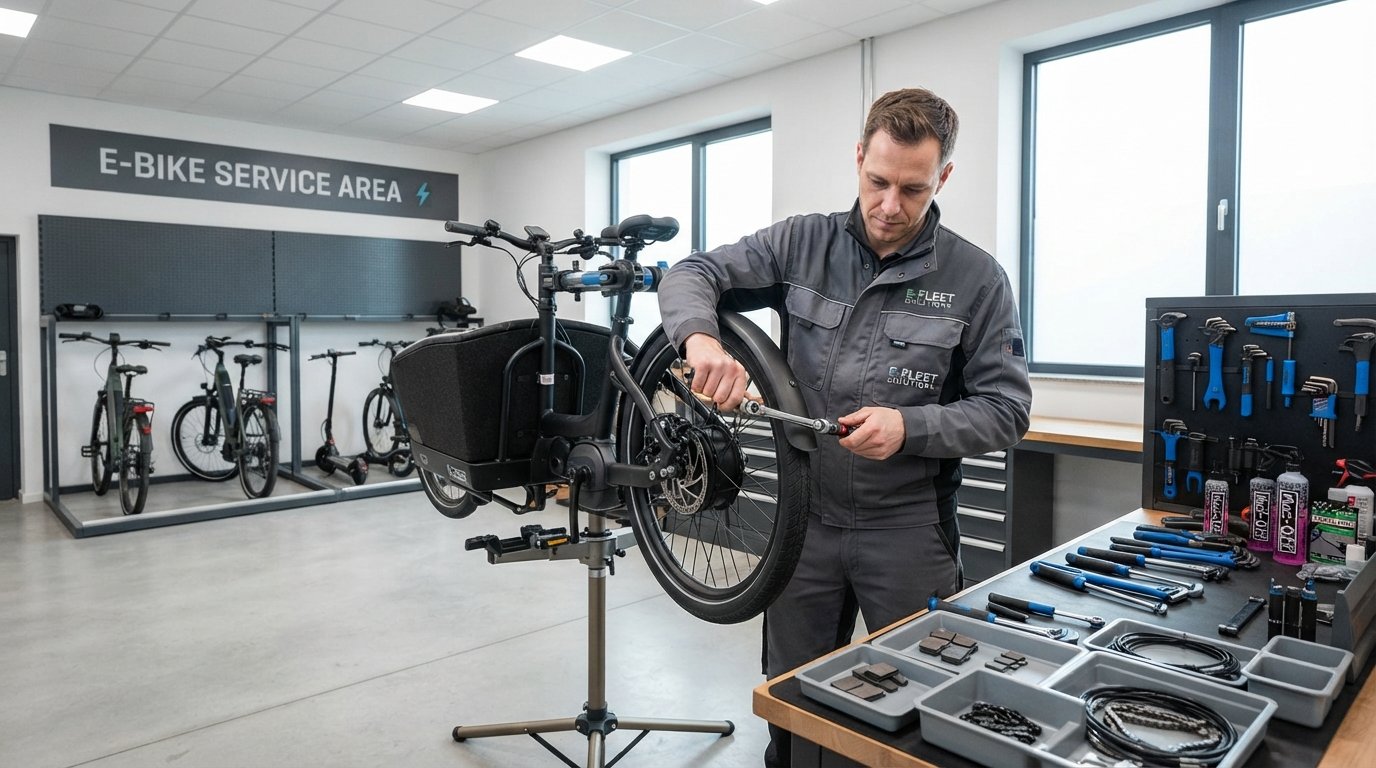
E-bikes generally have more predictable and lower maintenance costs.4 Most of their mechanical parts, like chains, tires, and brake pads, are standardized across the bicycle industry and can be serviced by any qualified bike mechanic. E-scooters, conversely, often use proprietary electronics and components, which can require specialized technicians and lead to longer, more costly downtimes.5
Dive Deeper
Downtime is the silent killer of profitability for any delivery fleet. A vehicle that is in the workshop is not generating revenue. Therefore, the ease and speed of maintenance are just as important as the direct cost of parts and labor. This is where the fundamental design differences between e-bikes and e-scooters become a major factor in your TCO analysis.
The E-Bike Advantage: Standardized and Accessible Service
The beauty of the e-bike from a maintenance perspective is that it's fundamentally still a bicycle. This provides several key advantages:
- Vast Service Network: Tens of thousands of bicycle shops exist across Europe and North America. Your riders are never far from someone who can fix a flat tire, adjust brakes, or replace a chain.
- Universal Parts: Common wear-and-tear items are largely interchangeable. You can source tires, tubes, brake pads, and chains from numerous manufacturers, preventing you from being locked into a single supplier.
- Simple Mechanics: Most on-site fleet technicians with basic mechanical skills can handle the majority of e-bike repairs, reducing the need for expensive, specialized service calls.
This accessibility dramatically reduces vehicle downtime. A flat tire on an e-bike can often be fixed in under 30 minutes, getting the rider back on the road.6
The E-Scooter Challenge: Proprietary Systems
E-scooters, while mechanically simpler in some ways (no chain or derailleur), present a different set of challenges centered around their integrated and often proprietary nature.7
- Specialized Electronics: The controller, throttle, and battery management system (BMS) are often unique to the manufacturer or even the specific model. A failure in one of these components can't be fixed by a standard mechanic.
- Difficult Repairs: Simple tasks like changing a tire on an e-scooter with a hub motor can be far more complex and time-consuming than on an e-bike.
- Supplier Dependency: You are heavily reliant on your original supplier for diagnostic software, service training, and proprietary replacement parts. If that supplier has poor support or a slow supply chain, your vehicles could be sidelined for weeks. I've seen this happen with clients who imported from a supplier without a local service network, turning minor electronic faults into fleet-wide problems.
When calculating the e-bike vs e-scooter total cost of ownership, you must model the cost of downtime. An e-bike's higher serviceability often translates into higher vehicle uptime, a crucial metric for operational efficiency.
The Power Core: How Does Battery TCO Differ Between E-Bikes and E-Scooters?
The battery is the heart of your electric fleet and its most expensive consumable component. Its performance dictates your fleet's range and reliability, but many operators underestimate the full financial impact of its lifecycle. Are you accounting for its true cost beyond the initial purchase?
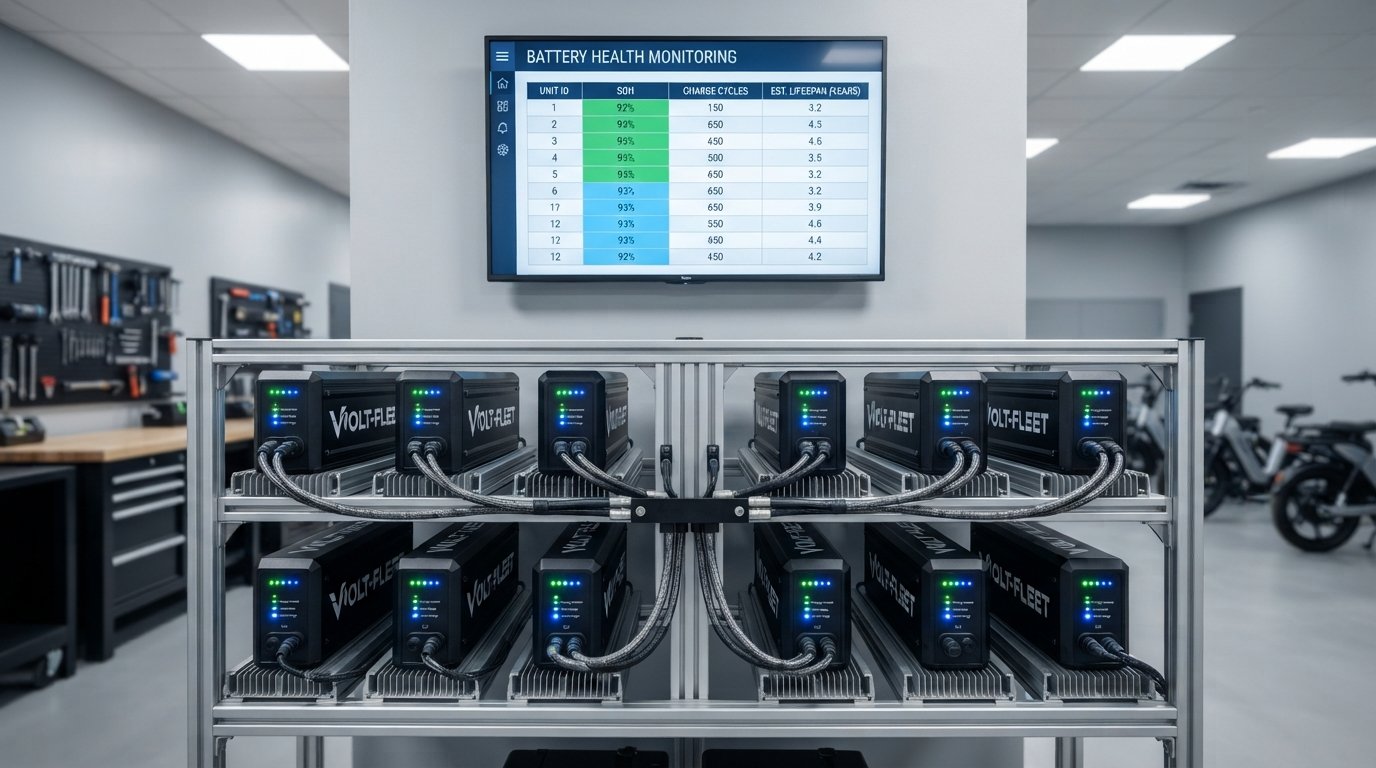
Battery TCO is a critical but frequently overlooked expense in fleet management. It includes not just the replacement cost but also the battery's total energy throughput (watt-hours x charge cycles), its impact on vehicle uptime (swappable vs. integrated), and the required charging infrastructure. This is a major differentiator in the e-bike vs e-scooter total cost of ownership.
Dive Deeper
Thinking of a battery as a fuel tank that needs to be replaced periodically is the correct mindset for calculating TCO. A cheap battery that degrades quickly is far more expensive in the long run than a premium battery with a long service life.
Calculating Cost Per Charge Cycle
The most important metric for battery longevity is the number of full charge-discharge cycles it can endure before its capacity drops significantly (typically to 80% of its original rating).
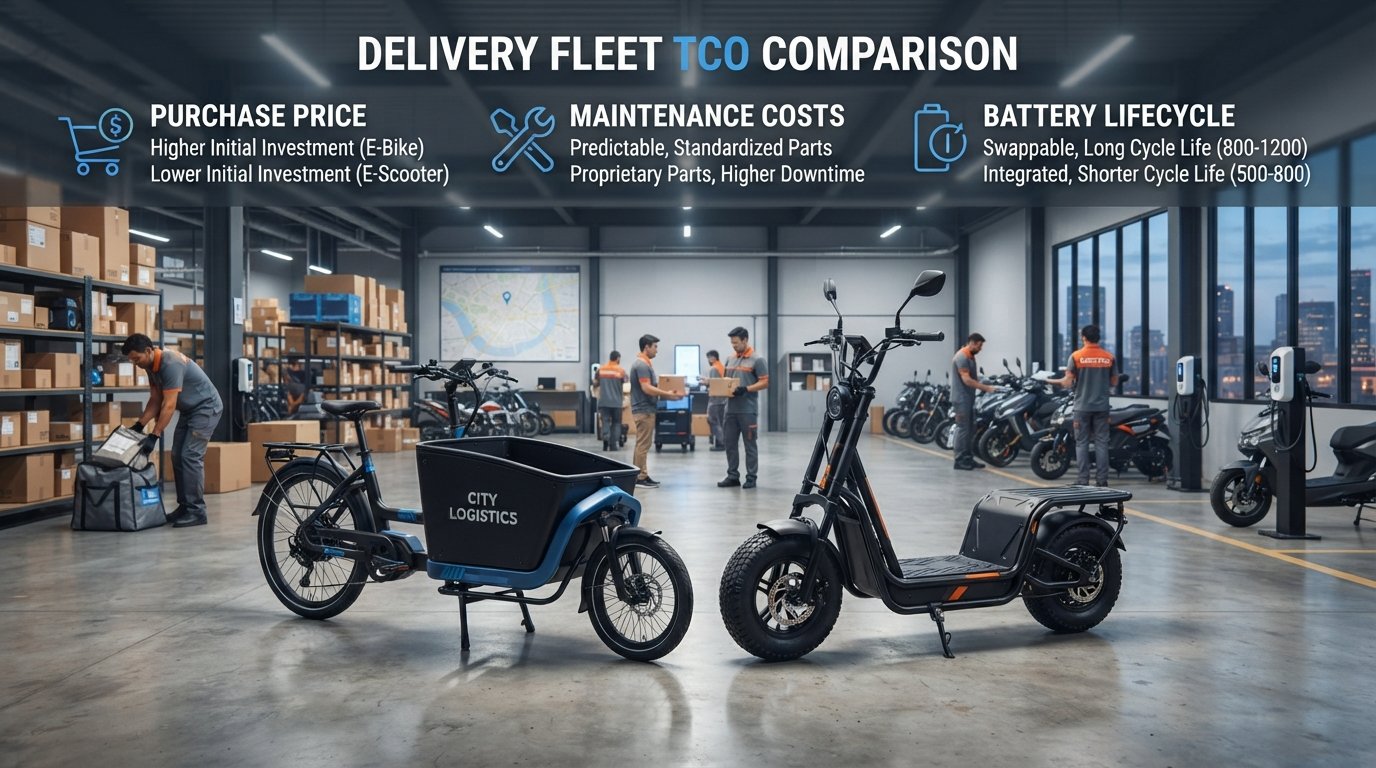
- E-Bike Batteries: High-quality commercial e-bike batteries using cells from reputable brands (like Samsung, LG, or Panasonic) are often rated for 800-1200 cycles.
- E-Scooter Batteries: These are typically smaller and may use lower-grade cells to keep costs down, often rated for only 500-800 cycles.
Let's say an e-bike battery costs $600 and lasts 1000 cycles, while a scooter battery costs $300 and lasts 500 cycles. The cost per cycle is identical ($0.60), but the e-bike battery requires half as many replacement events, saving on labor and vehicle downtime.
Swappable vs. Integrated: The Uptime Game-Changer
This is perhaps the single most important operational difference.
- Swappable Batteries (Common on E-Bikes): A rider can arrive at the hub, swap a depleted battery for a fully charged one in under a minute, and continue their shift. The vehicle remains in constant operation while batteries are charged centrally. This model maximizes revenue-generating hours per vehicle.
- Integrated Batteries (Common on E-Scooters): The entire vehicle must be taken out of service to be plugged in for charging. This can take 4-6 hours. To maintain a full day of operations, you either need to end shifts early or purchase nearly double the number of vehicles to rotate them.
The capital cost of buying extra scooters to cover charging downtime can completely negate any initial price advantage over e-bikes.8
| Feature | Typical Commercial E-Bike Battery | Typical Commercial E-Scooter Battery | TCO Implication |
|---|---|---|---|
| Capacity | 500 - 750 Wh | 300 - 500 Wh | Longer range for e-bikes, reducing "range anxiety" and mid-shift charging. |
| Est. Cycles | 800 - 1200 | 500 - 800 | Higher replacement frequency and labor costs for scooter batteries. |
| Replacement Cost | $400 - $800 | $250 - $500 | Higher individual cost for e-bike batteries, but better long-term value. |
| Swappable? | Frequently Yes | Frequently No | Massive impact on vehicle uptime, operational flow, and total fleet size needed. |
When you build your TCO model, factoring in a swappable battery system for your e-bikes will reveal significant operational and financial advantages that aren't apparent on a simple price sheet.
Is Your Fleet Right for Your City? Matching Vehicle to Environment?
You’ve invested in a new electric fleet, but your delivery times aren't meeting targets and rider feedback is poor. Could the problem be a fundamental mismatch between your chosen vehicle and your operating environment? Selecting the wrong tool for the job is a common and costly error.
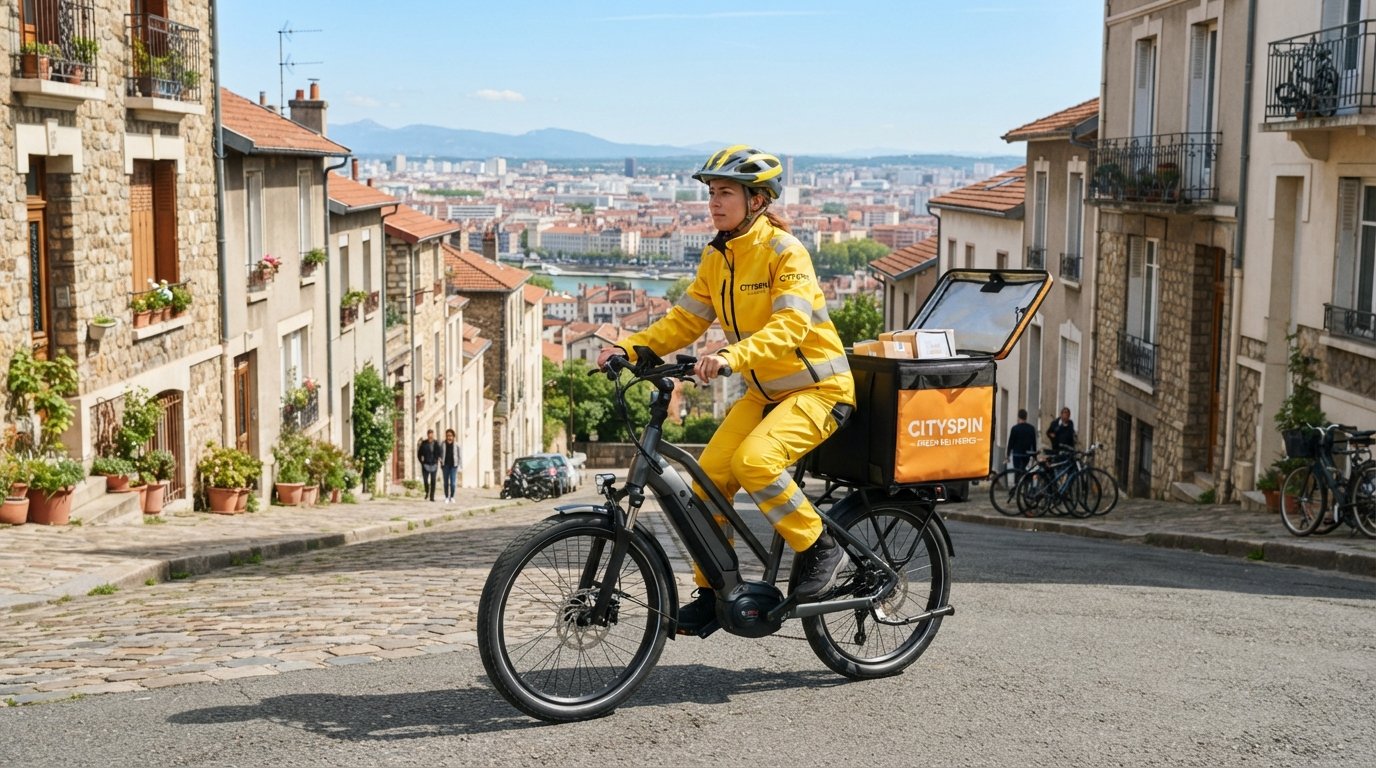
The lowest e-bike vs e-scooter total cost of ownership is achieved only when the vehicle is perfectly aligned with its operational environment. E-bikes excel over longer distances with varied terrain and larger cargo needs.9 E-scooters are most efficient in hyper-dense, flat urban centers for short, repetitive "last-meter" deliveries.
Dive Deeper
In my experience advising procurement managers, this is the area where the most assumptions are made. A fleet manager in a flat, dense city like Amsterdam will have vastly different needs than one in a hilly, sprawling city like San Francisco or Lisbon. Generic advice fails here; context is everything.
The Case for the E-Bike: Versatility and Endurance
E-bikes are the versatile workhorses of the delivery world.10 They shine in scenarios characterized by:
- Hilly Terrain: The pedal-assist system allows riders to conquer hills without exhausting themselves, maintaining consistent speed and energy levels throughout a long shift. Scooters can slow to a crawl on inclines, draining their batteries rapidly.
- Longer Delivery Radii: For delivery zones that extend beyond a 2-3 kilometer radius, the e-bike's larger battery, more efficient motor, and ergonomic riding position make it far superior for covering 50-80 kilometers in a day.
- Poor Road Conditions: The larger wheels of an e-bike (typically 26" to 28") handle potholes, curbs, and uneven pavement with much greater stability and safety than the small wheels (8" to 10") of an e-scooter.
- Cargo Capacity: E-bikes are easily outfitted with robust front and rear racks capable of securely carrying bulky, insulated food delivery bags or multiple parcels.
The Case for the E-Scooter: Agility and Simplicity
E-scooters have a narrower but still important niche.11 They are the ideal tool when the environment is defined by:
- Hyper-Density: In congested downtown cores where traffic is gridlocked, a scooter's smaller footprint can be an advantage for weaving through stopped cars and finding parking.
- Short, Frequent Trips: For operations like delivering documents within a corporate campus or servicing a dense cluster of restaurants in a 1-kilometer radius, the hop-on, hop-off nature of a scooter is highly efficient.
- Flat Terrain: On level ground, scooters can operate at peak efficiency without the battery drain caused by hills.
- Intermodal Transport: Their compact size makes them potentially useful for riders who may need to combine their delivery route with public transit, although this is less common for dedicated fleets.
I once consulted for a grocery delivery service in a city known for its steep hills. They initially chose e-scooters based on a TCO analysis that completely ignored topography. Rider turnover was high due to exhaustion, and battery performance was abysmal. After switching to pedal-assist e-bikes, their delivery times improved by 15% and rider satisfaction skyrocketed. This is a clear example of how failing to match the vehicle to the environment leads to a disastrously high effective TCO.
Frequently Asked Questions
Which is safer for delivery riders, an e-bike or an e-scooter?
E-bikes are generally considered safer for delivery work. Their larger wheels provide greater stability over potholes and uneven surfaces, and the upright riding position offers better visibility in traffic. However, the most critical safety factors remain comprehensive rider training, mandatory helmet use, and high-quality vehicle maintenance for any fleet.
How much should I budget for battery replacement in my TCO calculation?
A prudent approach is to plan for one full battery replacement over the expected 3-4 year lifespan of a commercial-grade vehicle. To refine this, divide the battery's replacement cost by its rated number of charge cycles. This gives you a "cost per charge," which you can use to project your annual battery budget per vehicle based on daily usage.
Do I need a special license to operate an e-bike or e-scooter in a commercial fleet?
Regulations vary significantly by country, state, and even city. In many parts of Europe and North America, low-speed e-bikes and e-scooters do not require a special license for personal use, but rules for commercial operation can be different. It is essential to verify all local laws regarding vehicle classification, speed limits, insurance, and licensing before making a procurement decision.
Can I use consumer-grade e-bikes or e-scooters for my delivery business?
While technically possible, it is strongly advised against. Consumer-grade models are not engineered for the high-mileage, high-stress demands of daily commercial use. You will almost certainly experience higher failure rates, increased maintenance costs, and a significantly shorter vehicle lifespan, which ultimately results in a much higher total cost of ownership.
Conclusion
Choosing between electric bikes and electric scooters for your delivery fleet is a decision that extends far beyond the initial price tag. As we've seen, the true measure of cost-effectiveness lies in a detailed analysis of the e-bike vs e-scooter total cost of ownership. This requires a shift in perspective—from focusing on upfront savings to evaluating long-term value. By carefully considering maintenance accessibility, battery lifecycle costs, and, most importantly, the specific environment your fleet will operate in, you can avoid costly procurement mistakes. The cheapest vehicle to buy is rarely the cheapest vehicle to own, and a thoughtful TCO analysis is your best tool for building a fleet that is both reliable and financially sustainable.
As you begin to evaluate the needs of your delivery operations, it's vital to work with a supplier who understands these critical long-term variables. If you are ready to build a cost-effective and dependable fleet tailored to your market, contact us. We can help you analyze your requirements and provide a detailed quote on commercial-grade e-bikes and e-scooters designed for durability and performance.
"Comparing the characteristics of electric scooter and bicycle injuries", https://pmc.ncbi.nlm.nih.gov/articles/PMC12307889/. Studies comparing the total cost of ownership of e-bikes and e-scooters suggest that e-bikes are more cost-effective in scenarios involving longer distances and varied terrain due to their durability and the availability of standardized parts. Evidence role: general_support; source type: research. Supports: E-bikes often have a lower TCO in scenarios requiring longer range and varied terrain due to their durability and standardized maintenance parts.. Scope note: The findings may vary depending on specific models and operational conditions. ↩
"How E-Scooters Are Revolutionizing City Planning", https://apolloscooters.co/blogs/news/the-surprising-ways-e-scooters-are-revolutionizing-city-planning?srsltid=AfmBOophvyHlTSwKfAdcnHD-k75UW1euvwa_qm8osah-0v2BEu0yDxaD. Research on urban micromobility indicates that e-scooters are cost-effective for short trips in flat, dense urban areas, especially when commercial-grade models are employed to reduce failure rates. Evidence role: general_support; source type: research. Supports: E-scooters can be more cost-effective in dense, flat urban areas for short trips when commercial-grade models are used.. Scope note: The cost-effectiveness may depend on specific fleet management practices and local conditions. ↩
"Micromobility: E-Bikes, E-Scooters and Hoverboards", https://www.cpsc.gov/Safety-Education/Safety-Education-Centers/Micromobility-Information-Center. Industry reports highlight that consumer-grade e-scooters and e-bikes are not designed for the high-stress demands of delivery work, lacking reinforced frames and durable components. Evidence role: general_support; source type: research. Supports: Consumer-grade e-scooters and e-bikes are unsuitable for delivery work due to their lack of durability and long-life batteries.. Scope note: Specific durability metrics may vary by brand and model. ↩
"Electric Scooter vs. Electric Bike: Choose the Right One - Engwe", https://engwe.com/blogs/news/electric-scooter-vs-electric-bike. Studies on micromobility maintenance costs indicate that e-bikes incur lower and more predictable expenses due to standardized parts and widespread service availability. Evidence role: general_support; source type: research. Supports: E-bikes generally have lower and more predictable maintenance costs compared to e-scooters.. Scope note: Maintenance costs can vary based on usage intensity and local service availability. ↩
"Considering the Potential Health Impacts of Electric Scooters - PMC", https://pmc.ncbi.nlm.nih.gov/articles/PMC7503491/. Research on e-scooter maintenance highlights that proprietary components often necessitate specialized technicians, contributing to higher downtime and repair costs. Evidence role: general_support; source type: research. Supports: E-scooters often require specialized technicians due to proprietary components, increasing downtime and costs.. Scope note: The extent of downtime may vary depending on the manufacturer and local service networks. ↩
"Dealing with an Ebike flat tire?", https://www.reddit.com/r/ebikes/comments/1jkmhfv/dealing_with_an_ebike_flat_tire/. Industry data suggests that flat tires on e-bikes can typically be repaired within 30 minutes, minimizing operational downtime. Evidence role: general_support; source type: research. Supports: Flat tires on e-bikes can often be repaired in under 30 minutes, reducing downtime.. Scope note: Repair times may vary based on technician skill and availability of tools. ↩
"Electric Scooter Parts Explained: Frame, Throttle & Brakes ...", https://promechbc.com/blogs/blog/scooter-technology-part-2-what-parts-make-up-an-electric-scooter?srsltid=AfmBOoobCjitBj88NnxYpH0dILunABNs0XkO0oi250NpmoYOCXzr8y8U. Research on e-scooter design indicates that while they are mechanically simpler, their proprietary and integrated components can complicate maintenance and repairs. Evidence role: general_support; source type: research. Supports: E-scooters are mechanically simpler but face challenges due to their integrated and proprietary components.. Scope note: The degree of complexity may vary by e-scooter brand and model. ↩
"Financial impact of electric scooters: a review of injuries over ...", https://pmc.ncbi.nlm.nih.gov/articles/PMC7831709/. Studies on fleet management costs suggest that the need for additional e-scooters to cover charging downtime can offset their initial price advantage over e-bikes. Evidence role: general_support; source type: research. Supports: The need for additional scooters to cover charging downtime can eliminate the initial cost advantage of e-scooters over e-bikes.. Scope note: The impact may vary based on operational schedules and charging infrastructure. ↩
"eBikes for Delivery | DoorDash, Uber Eats & Gig Work", https://lectricebikes.com/collections/ebikes-for-delivery. Studies on delivery fleet performance indicate that e-bikes are more effective for longer distances, varied terrain, and larger cargo loads compared to e-scooters. Evidence role: general_support; source type: research. Supports: E-bikes are better suited for longer distances, varied terrain, and larger cargo requirements.. Scope note: Performance advantages may depend on specific e-bike models and configurations. ↩
"Why E-bike is the Most Efficient Way to Food Deliver", https://heybike.ca/blogs/heybike-blog/why-e-bike-is-the-most-efficient-way-to-food-deliver. Studies on delivery fleet operations highlight the versatility of e-bikes, particularly in handling varied terrain and longer distances. Evidence role: general_support; source type: research. Supports: E-bikes are versatile and well-suited for delivery operations.. Scope note: The versatility may depend on specific fleet configurations and operational needs. ↩
"Are E-Scooters a Threat to Active Travel? - PMC", https://pmc.ncbi.nlm.nih.gov/articles/PMC10854957/. Research on urban micromobility suggests that e-scooters are effective for short trips in hyper-dense urban areas, where their compact size and agility are advantageous. Evidence role: general_support; source type: research. Supports: E-scooters are suitable for specific niches, such as hyper-dense urban areas with short delivery distances.. Scope note: The effectiveness may vary based on local traffic and infrastructure conditions. ↩