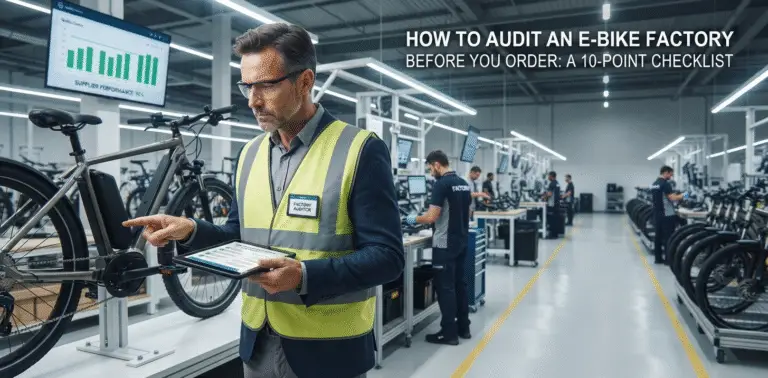

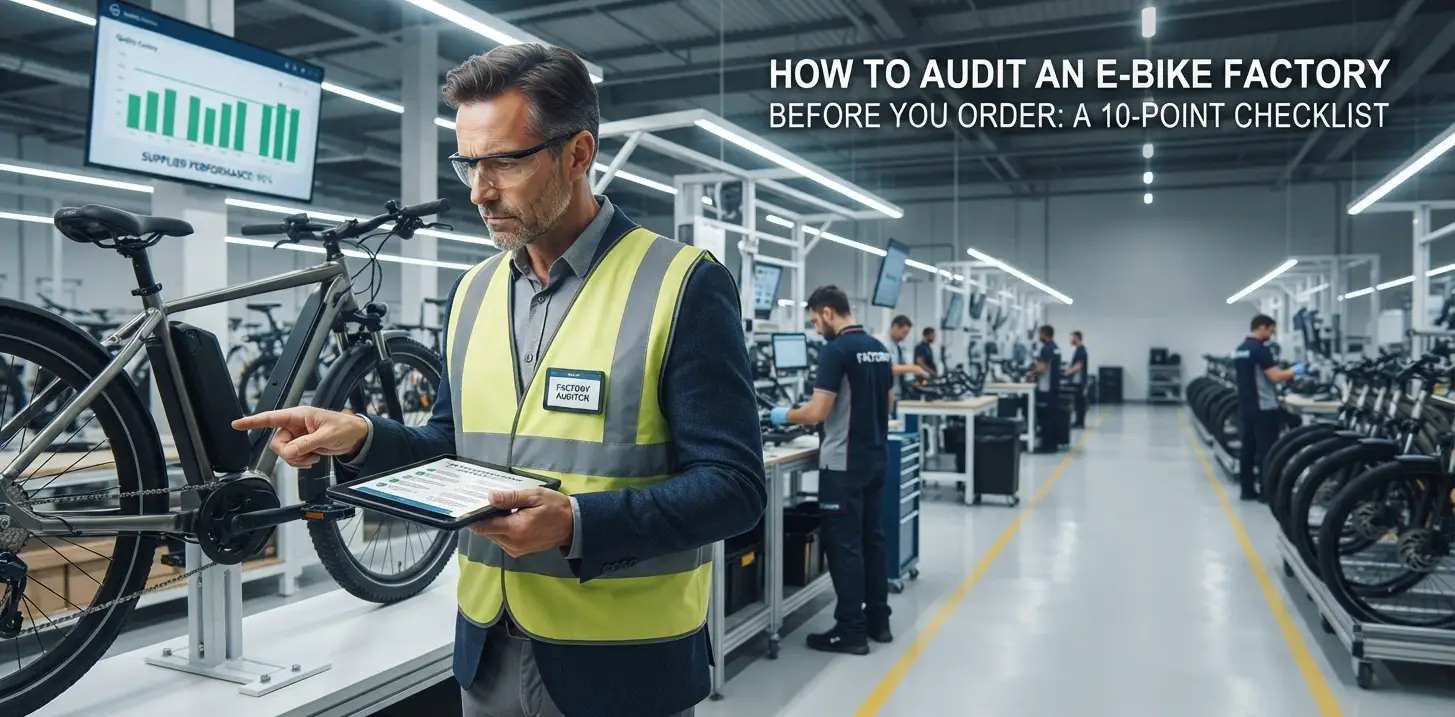
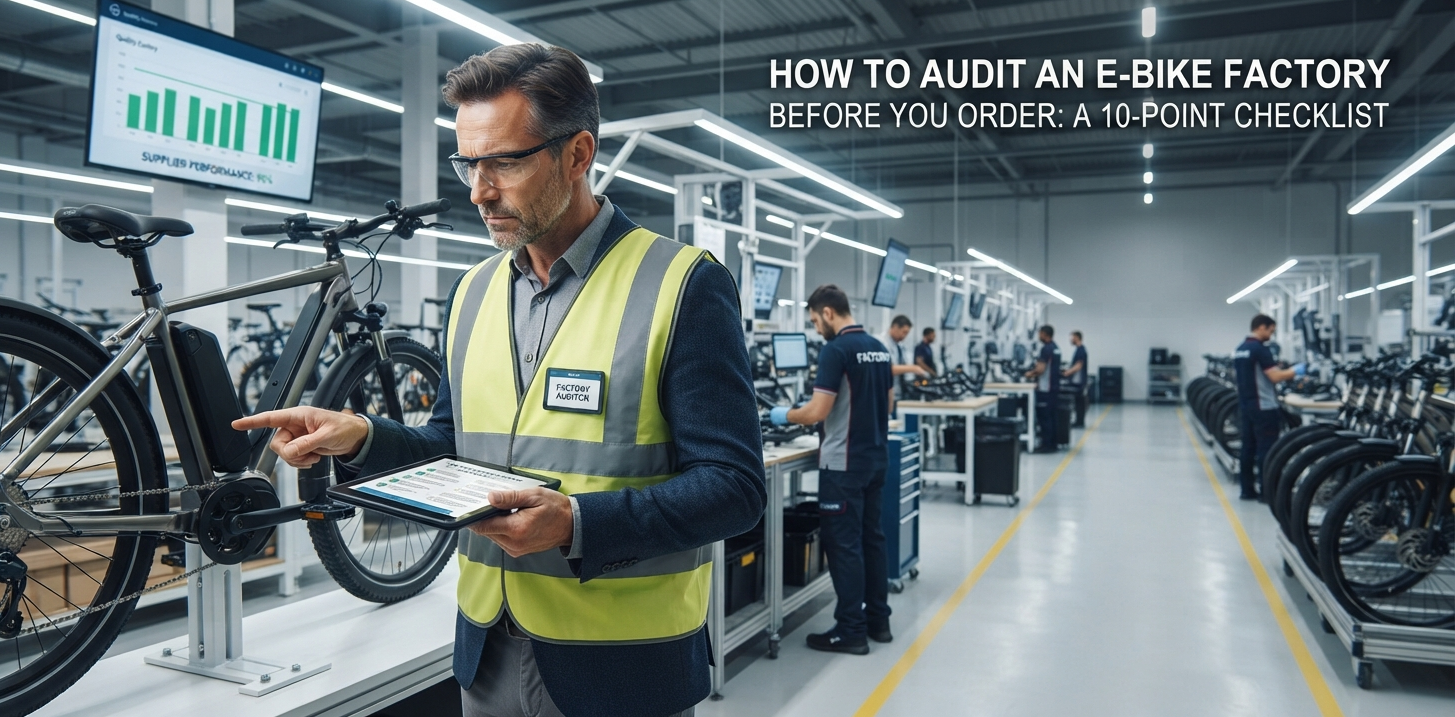
 Sourcing from a new supplier feels like a gamble. You're trying to find a reliable e-bike factory that can deliver quality products on time, but a slick sales presentation and a low price quote don't guarantee performance. The real risk is discovering quality issues only after thousands of units have landed, leading to costly recalls, angry customers, and a damaged brand reputation. A structured factory audit is the only way to turn that gamble into a calculated business decision.1
An e-bike factory audit is a systematic, on-site evaluation of a manufacturer's quality management systems, production capabilities, and operational stability.2 The goal is to verify that the factory can consistently produce e-bikes to your specifications. This involves a 10-point checklist covering everything from raw material inspection and production line controls to worker training and traceability systems, ensuring they are a reliable long-term partner before you commit to an order.
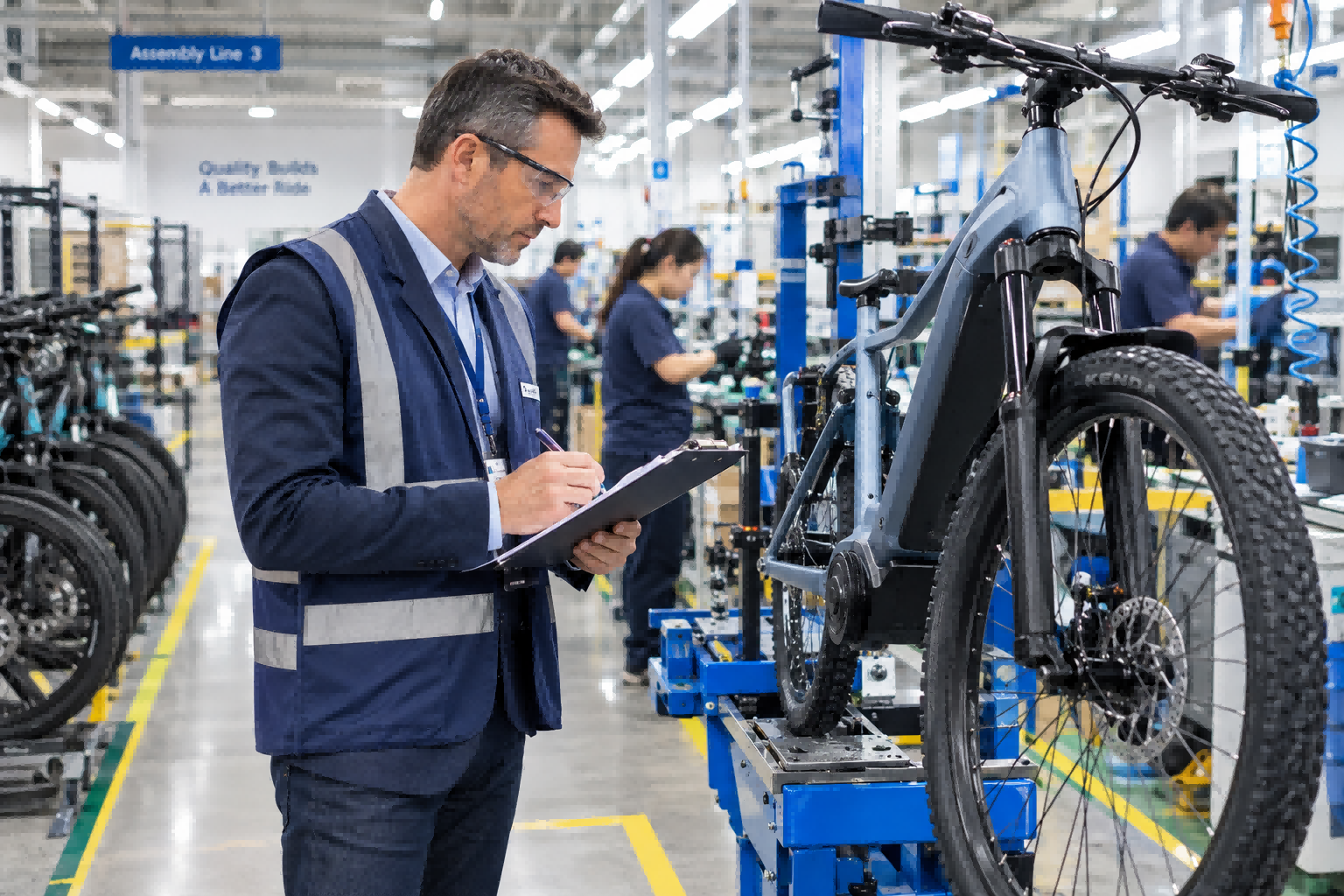
This checklist moves beyond a simple factory tour. It’s about asking the right questions and knowing what to look for. Below, I’ll break down the 10 critical checkpoints I use when evaluating a potential manufacturing partner, based on years of experience connecting clients in Europe, North America, and the Middle East with the right factories.
How Do You Verify a Factory's Quality Management System?
You’re handed a folder full of impressive-looking ISO 9001 certificates3. The problem is, these documents can be misleading. They show a factory passed an audit on a specific day, but they don't prove the system is actively used. To truly understand their commitment to quality, you must look beyond the paper and see the system in action.
To properly verify a factory's Quality Management System (QMS), you must review how their quality manual is applied on the production floor. Ask to see their process for handling non-conforming products and review their corrective action reports. This shows their ability to solve problems, not just hide them.
Dive Deeper: From Paperwork to Practice
A strong QMS is the backbone of any reliable manufacturer.4 It's the set of rules they have created to ensure consistent output. Your job is to verify they actually follow those rules, especially when things go wrong.
1. Documentation & Certification Review
Start with the basics. Ask for copies of their business license, export license, and quality certifications (like ISO 9001). But don't stop there.
- Verify Authenticity: Check the certification number and issuing body online.
- Check Scope: Does the certification cover the manufacturing of e-bikes, or is it for a different product line? I once saw a factory present an ISO certificate that was only for metal stamping, not for vehicle assembly.
- Look at Internal Audits: Ask to see reports from their own internal audits. A factory that is serious about quality audits itself regularly. If they can't produce these, it's a major red flag that their QMS is just for show.
2. The Quality Manual in Practice
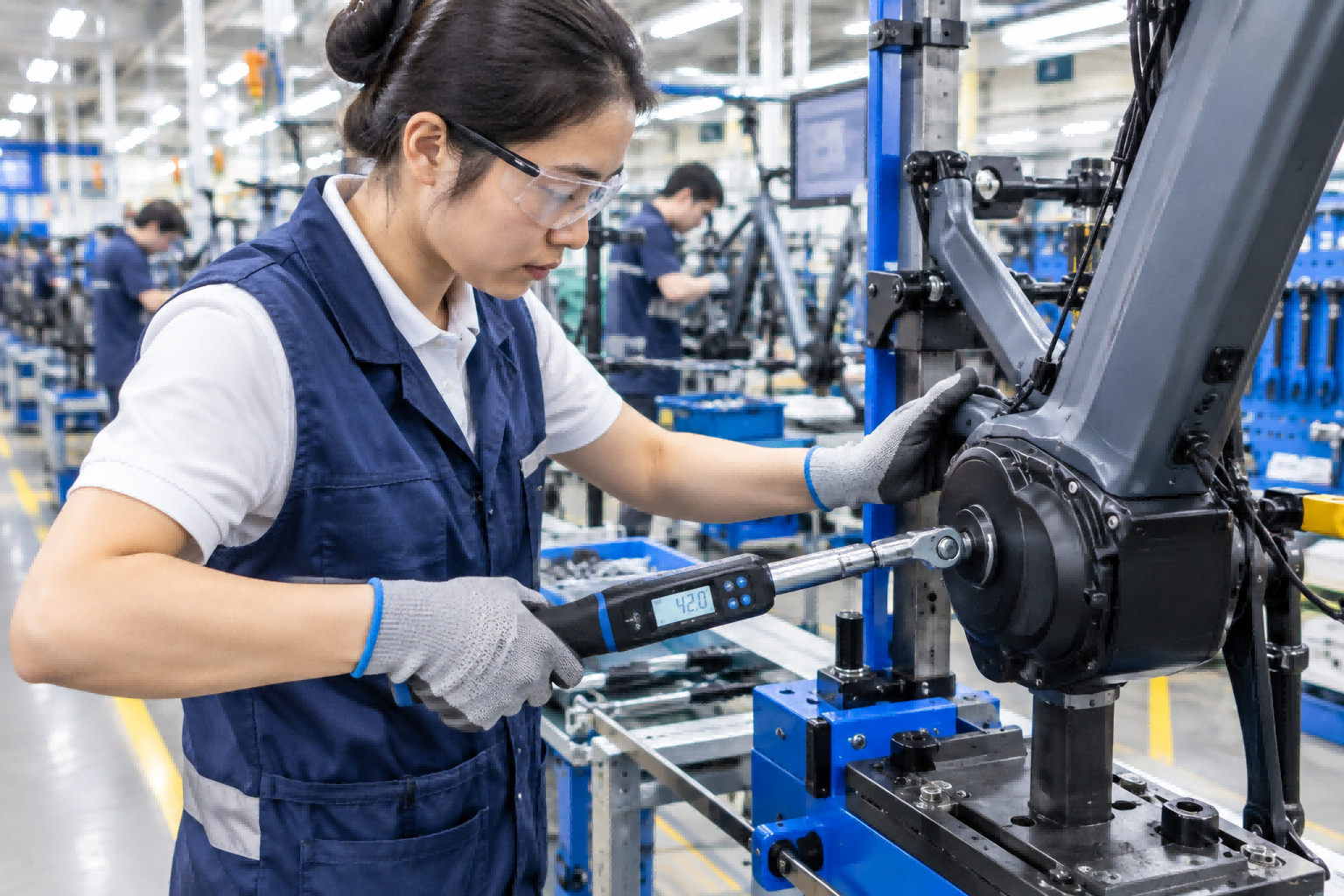
A quality manual that sits on a shelf collecting dust is useless. To test this, I often take a page from the manual describing a specific quality check—for example, the required torque for crankset bolts—and walk over to that station on the assembly line. I'll ask the operator to explain the procedure to me. If their description matches the manual and they are using a calibrated torque wrench, the system is working. If they give me a blank stare or describe a different process, the manual is just for appearances.
3. Non-Conformance & Corrective Action Process
No factory is perfect; defects happen.5 What separates a great e-bike factory from a poor one is how they handle those defects. They must have a clear, documented process.
Ask them to walk you through it: "Show me what happens when a frame is found to have a welding defect."
A strong process should look like this:
- Identification & Segregation: The defective part is immediately tagged and moved to a designated "red tag" or quarantine area to prevent it from re-entering the production flow.
- Analysis: A quality engineer analyzes the part to determine the root cause of the defect. Was it a machine error? Operator error? A bad batch of raw materials?
- Corrective Action: A plan is implemented to fix the root cause. This is not just about fixing the single defective part.
- Verification: The fix is monitored to ensure it was effective and the problem doesn't recur.
If a factory manager gets defensive or can't show you documentation for this process, they are likely either hiding problems or don't have a system to prevent them from happening again.
What Should You Inspect on the E-Bike Factory Production Line?
Walking through a busy factory floor can be overwhelming. Machines are humming, workers are moving quickly, and unfinished e-bikes are everywhere. It's easy to be impressed by the scale and activity. But the most critical quality steps are often quiet and easy to miss if you don't know what to look for.
When inspecting an e-bike factory production line, you must focus on the three pillars of manufacturing quality: Incoming Quality Control (IQC) for all raw materials, In-Process Quality Control (IPQC) at key assembly stages, and Final Quality Control (FQC) where 100% of finished e-bikes are tested against a checklist.
Dive Deeper: The Three Pillars of Production Quality
A factory's true quality capability is revealed on the assembly line itself. Let's break down what to look for at each stage.
4. Incoming Quality Control (IQC) for Raw Materials
Quality cannot be "inspected into" a product; it has to be built in from the start. This begins with verifying the quality of every component that arrives at the factory. A supplier that blindly trusts its sub-suppliers is passing that risk on to you.6 The IQC department should be a distinct area with specific testing equipment. For an e-bike factory, they must be testing:
- Frames: Checking for weld integrity, alignment, and paint thickness.
- Batteries: Not just checking the voltage, but using a battery tester to check capacity, internal resistance, and performance under load. Ask to see the batch testing records.
- Motors: Testing for power output, noise levels, and sensor function on a dynamometer.
- Controllers: Verifying firmware versions and testing all electrical inputs and outputs.
I worked with a client in North America who faced a catastrophic failure. Their previous factory had skipped batch testing on a shipment of battery cells to save time. The resulting product recall cost them hundreds of thousands of dollars and damaged their market reputation for years. This is why IQC is non-negotiable.
5. In-Process Quality Control (IPQC)
IPQC refers to the quality checks that happen during assembly. An assembly line should have several dedicated "quality gates" where a product cannot proceed until it passes inspection. Key IPQC stations for e-bike production include:
- Wheel Truing Station: Every wheel must be checked for lateral and radial runout.
- Electrical System Test: Before the frame is fully assembled, a technician should test the full wiring harness, including lights, sensors, and throttle connections.
- Brake System Check: Hydraulic brakes should be bled and tested for pressure before the bike moves to the final stage.
- Torque Checkpoints: Critical fasteners on the stem, cranks, and axles must be tightened with a calibrated torque wrench, and this should be documented.
6. Final Quality Control (FQC) & Testing
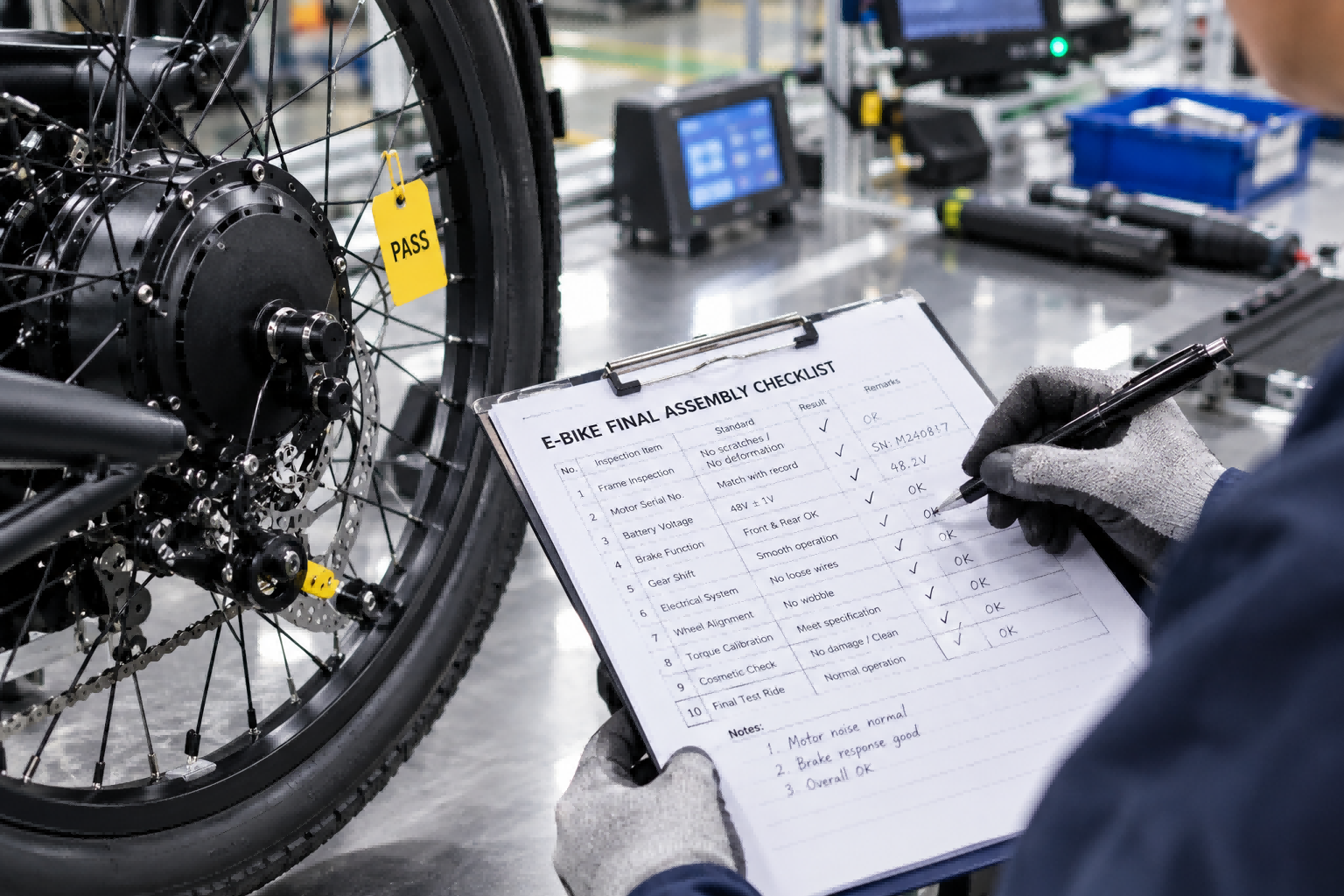
This is the last line of defense before an e-bike is packaged. Every single bike should go through a comprehensive final inspection. Ask for their FQC checklist. A weak process involves a quick visual scan and spinning the pedals. A strong FQC process is much more rigorous.
| Feature | Weak FQC Process | Strong FQC Process |
|---|---|---|
| Visual Check | Quick glance for major scratches or dents. | Detailed cosmetic inspection under bright, specific lighting. |
| Functional Test | Powers on, wheels spin freely. | A full test ride (on a test track or rollers), checking all gear shifts, brake performance, and motor assist levels. |
| Battery Test | Confirms the battery powers the bike on. | Voltage check under load and verification that the charging system works correctly. |
| Documentation | A simple "Pass" sticker on the bike. | A detailed, serialized inspection report with recorded measurements (e.g., brake lever travel) tied to the bike's serial number. |
A great factory will also have a dedicated area for outdoor testing to simulate real-world conditions, which is especially important for validating performance for different markets, like the hills of San Francisco versus the flat landscapes of the Netherlands.
How Can You Assess an E-Bike Factory's Long-Term Reliability?
The factory passed your inspection with flying colors. The production line is clean, and their quality documents are in order. But how can you be sure they will maintain this standard six months from now, when they are producing your second or third large order? A single snapshot audit isn't enough. You need to look for indicators of long-term stability and professionalism.
To assess the long-term reliability of an e-bike factory, you need to evaluate the systems that support consistent quality over time. This includes checking their equipment maintenance and calibration logs, understanding their worker training programs, verifying their product traceability system, and assessing their commitment to social and ethical compliance.
Dive Deeper: Indicators of a Sustainable Partner
These final points are less about a single product and more about the factory's culture and operational discipline. They are the best predictors of future performance.
7. Equipment Maintenance & Calibration
Tools and machinery that are out of specification produce products that are out of specification. It’s that simple.
- Ask for Calibration Records: Request to see the calibration certificates and schedules for critical tools like torque wrenches, multimeters, and battery analyzers.
- Observe Maintenance Practices: Look at the general condition of the machinery on the factory floor. Is it clean and well-maintained, or is it dirty and leaking oil? Proactive maintenance prevents unexpected downtime and quality deviations.
A few years ago, a client complained about inconsistent motor performance. During an audit, we discovered the factory's dynamometer hadn't been calibrated in over three years. They were essentially guessing at the motor's output.
8. Worker Training & Skill Assessment
High employee turnover is a major source of quality instability.7 A factory that invests in its people is investing in its quality.
- Ask About Onboarding: How are new employees trained? Is there a formal, documented training program, or do they just shadow another worker?
- Look for Skill Matrices: Well-managed factories often have a "skill matrix" posted in each department. This chart shows which workers are trained and qualified to perform which tasks. It’s a powerful visual indicator of a well-managed workforce.
- Talk to Line Managers: I often ask a production manager how they handle complex tasks that require a high level of skill, such as internal cable routing or programming a controller. Their answer reveals the depth of expertise on their team.
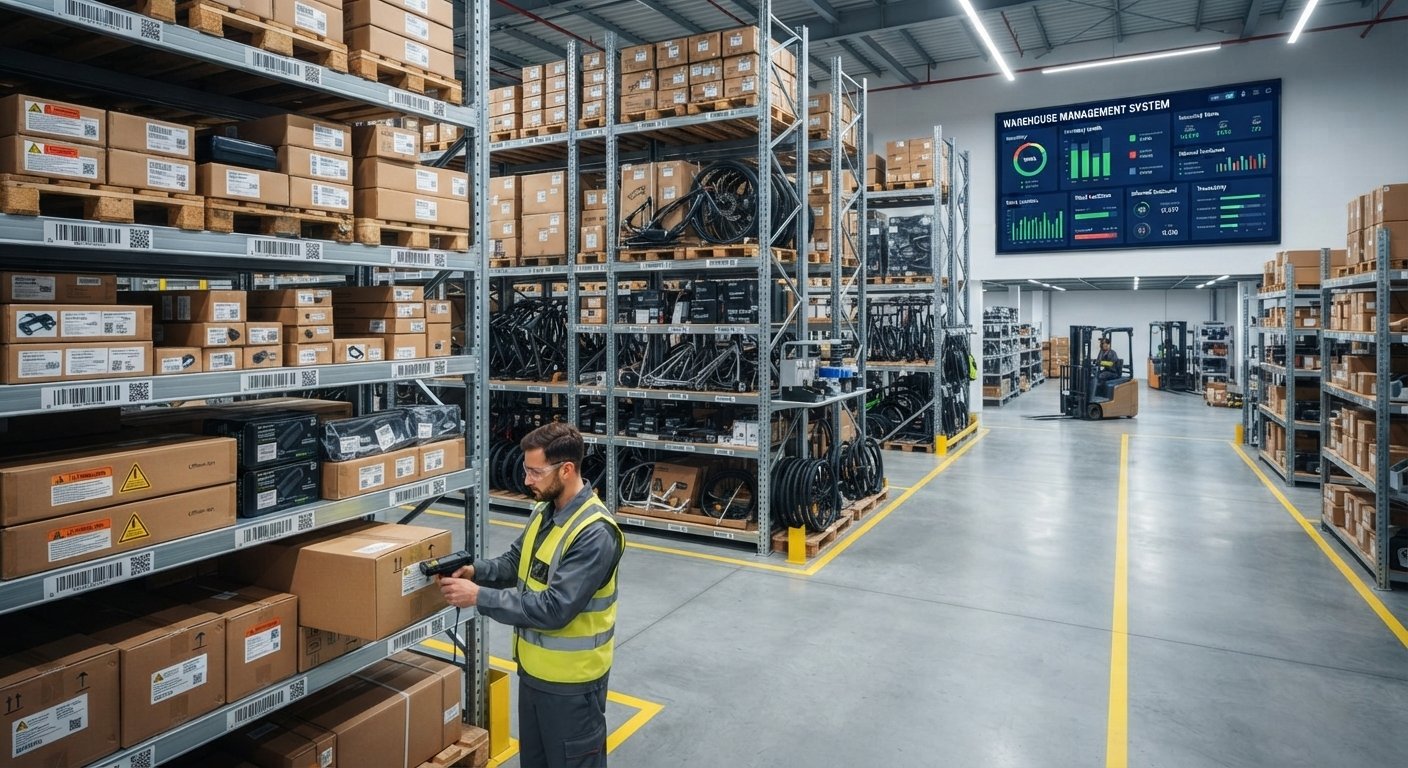
9. Warehouse Management & Traceability
Imagine one of your customers reports a serious problem with an e-bike's controller. Can your factory identify every other bike from that same batch of controllers? Without a robust traceability system, the answer is no, and you may be forced to recall everything.8
- Test the System: Give the factory manager a serial number from a finished bike in the warehouse and ask them to trace its key components (frame, motor, battery) back to their original batches.
- Check Warehouse Organization: Is the warehouse clean and organized? Are components stored in a way that protects them from damage and environmental factors? A FIFO (First-In, First-Out) system should be in use to prevent old stock from being used.
10. Social Compliance & Ethical Standards
While this might not seem like a direct quality check, it's a critical indicator of a professional and sustainable business. Factories that treat their workers fairly, provide a safe working environment, and comply with labor laws tend to have more motivated employees and lower turnover.9 For my clients in Europe and North America, a third-party social compliance audit (like BSCI or Sedex) is often a mandatory requirement. It demonstrates that the factory is a responsible partner, which protects your brand's image.
Frequently Asked Questions
How often should I audit my e-bike factory?
You should conduct a comprehensive initial audit before placing your first order. After that, a full follow-up audit is recommended annually. For critical or very large orders, you might also consider an unannounced spot-check during production to ensure standards are being maintained under pressure.
Can I hire a third-party to do the audit for me?
Yes, absolutely. Hiring a professional third-party inspection company is a common and highly recommended practice, especially if you cannot travel to the factory yourself. Ensure the firm is reputable and provide them with a detailed checklist like this one so they evaluate what matters most to you.
What are the biggest red flags during a factory audit?
The biggest red flags include a chaotic and dirty workshop, a complete lack of documented quality processes, an inability or unwillingness to show you records (like IQC reports or calibration logs), and defensive or vague answers from management when asked specific questions about how they handle defects.
Is a cheaper factory always lower quality?
Not necessarily, but extremely low prices always come from somewhere. A factory might cut costs by using lower-grade materials, skipping essential quality checks like battery batch testing, or paying below-market wages, which leads to high turnover. A thorough audit helps you understand exactly where those cost savings are coming from and what risks you are accepting.
Conclusion
Conducting a thorough audit of a potential e-bike factory is not an expense; it is a critical investment in your brand's future. It protects you from catastrophic quality failures, ensures supply chain stability, and builds a foundation for a successful long-term partnership. By moving beyond surface-level impressions and using a structured checklist to dig into a factory's true processes—from their quality management systems and production line controls to their traceability and training programs—you can confidently select a supplier that will deliver consistent quality. This allows you to focus on growing your business, not on fixing your supplier's mistakes.
If you are sourcing e-bikes or electric wheelchairs and need a partner who deeply understands these quality benchmarks, please get in touch. We help brands across Europe, North America, and the Middle East connect with vetted, reliable factories that meet the highest standards.
"Supplier Audits: A Complete Guide", https://www.deltek.com/resources/articles/supplier-audit/. Research studies have shown that structured factory audits significantly reduce risks in supplier selection by verifying quality management systems and operational capabilities. However, other methods, such as supplier performance history analysis, may also complement audits in certain contexts. Evidence role: general_support; source type: research. Supports: Factory audits are a critical tool for mitigating risks in supplier selection.. Scope note: The source may not explicitly state that audits are the 'only' method, but it supports their critical role in risk mitigation. ↩
"Factory audit services - Inspection", https://www.tuvsud.com/en-us/services/inspection/factory-audits. Educational resources on manufacturing audits outline that factory audits generally assess quality management systems, production capabilities, and operational stability to ensure compliance with client specifications. Evidence role: definition; source type: education. Supports: Factory audits typically include evaluations of quality management systems, production capabilities, and operational stability.. ↩
"analysis of limitations of iso standards implementation from the external ...", https://www.researchgate.net/publication/356461594_ANALYSIS_OF_LIMITATIONS_OF_ISO_STANDARDS_IMPLEMENTATION_FROM_THE_EXTERNAL_STAKEHOLDERS'_POINT_OF_VIEW. Studies on ISO 9001 certification highlight that while it ensures compliance during audits, it does not necessarily reflect continuous application of quality management systems. Evidence role: expert_consensus; source type: research. Supports: ISO 9001 certifications indicate compliance at the time of audit but do not guarantee ongoing adherence to quality management practices.. Scope note: The source may not specifically address e-bike factories but applies to manufacturing in general. ↩
"Quality management systems: An introduction", https://www.iso.org/quality-management/what-is-qms. Educational materials on quality management emphasize that a robust QMS ensures consistent product quality and operational reliability in manufacturing. Evidence role: general_support; source type: education. Supports: A strong QMS is critical for ensuring consistent quality and reliability in manufacturing.. ↩
"Zero Defect Manufacturing: Achievable Goal or Unrealistic ...", https://usersolutions.com/blog/zero-defect-manufacturing. Research on manufacturing processes confirms that defects are common, and effective management systems are essential for addressing and preventing recurring issues. Evidence role: general_support; source type: research. Supports: Defects are a common occurrence in manufacturing, and effective defect management is crucial for maintaining quality.. ↩
"The Hidden Risk of Unverified Suppliers: Protecting Your ...", https://www.paperindex.com/academy/the-hidden-risk-of-unverified-suppliers-protecting-your-pharmaceutical-supply-chain/. Research on supply chain management highlights that unverified sub-supplier quality can lead to increased risks, including defects and supply chain disruptions. Evidence role: general_support; source type: research. Supports: Suppliers that fail to verify sub-supplier quality increase risks for their clients, including potential defects and recalls.. ↩
"Reviewing The Benefits of Health Workforce Stability - PMC", https://pmc.ncbi.nlm.nih.gov/articles/PMC3016248/. Studies on workforce management in manufacturing show that high employee turnover correlates with increased quality issues and operational inefficiencies. Evidence role: statistic; source type: research. Supports: High employee turnover is associated with quality instability in manufacturing processes.. ↩
"Recalls and Outbreaks | FoodSafety.gov", https://www.foodsafety.gov/recalls-and-outbreaks. Case studies in manufacturing demonstrate that robust traceability systems help identify defective batches, reducing the scope and cost of recalls.. ↩
"Impact of Ethical Leadership on Employee Engagement - PMC", https://pmc.ncbi.nlm.nih.gov/articles/PMC8544222/. Research on labor practices in manufacturing shows that ethical treatment of workers correlates with higher employee motivation and lower turnover rates.. ↩