
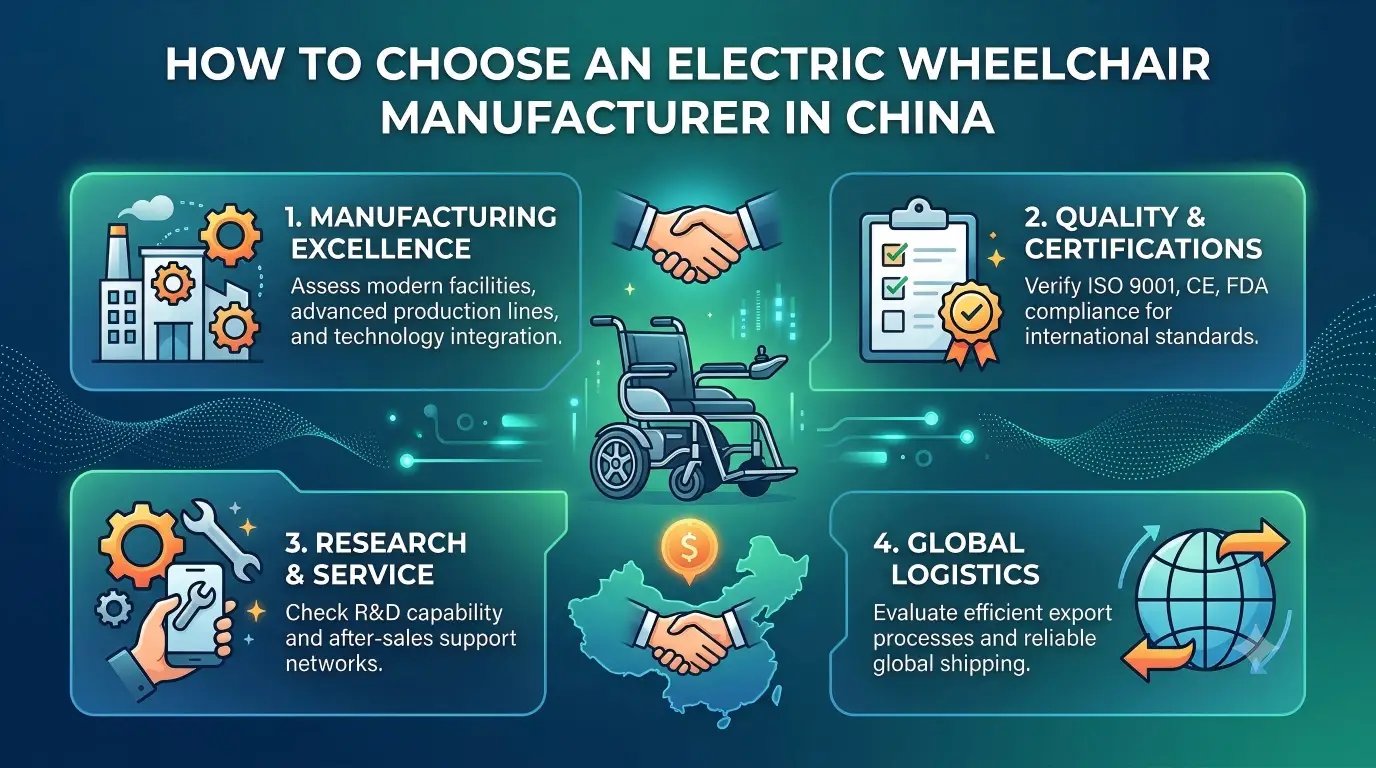
Sourcing electric wheelchairs from China is tough. You risk getting low-quality products and unhappy customers. I will show you how to find a reliable partner, looking beyond just the price tag.
To choose the right manufacturer, look past the price. You must check their quality control transparency, their ability to customize products, and how well they communicate. This process ensures you get reliable wheelchairs that are perfect for your specific market.
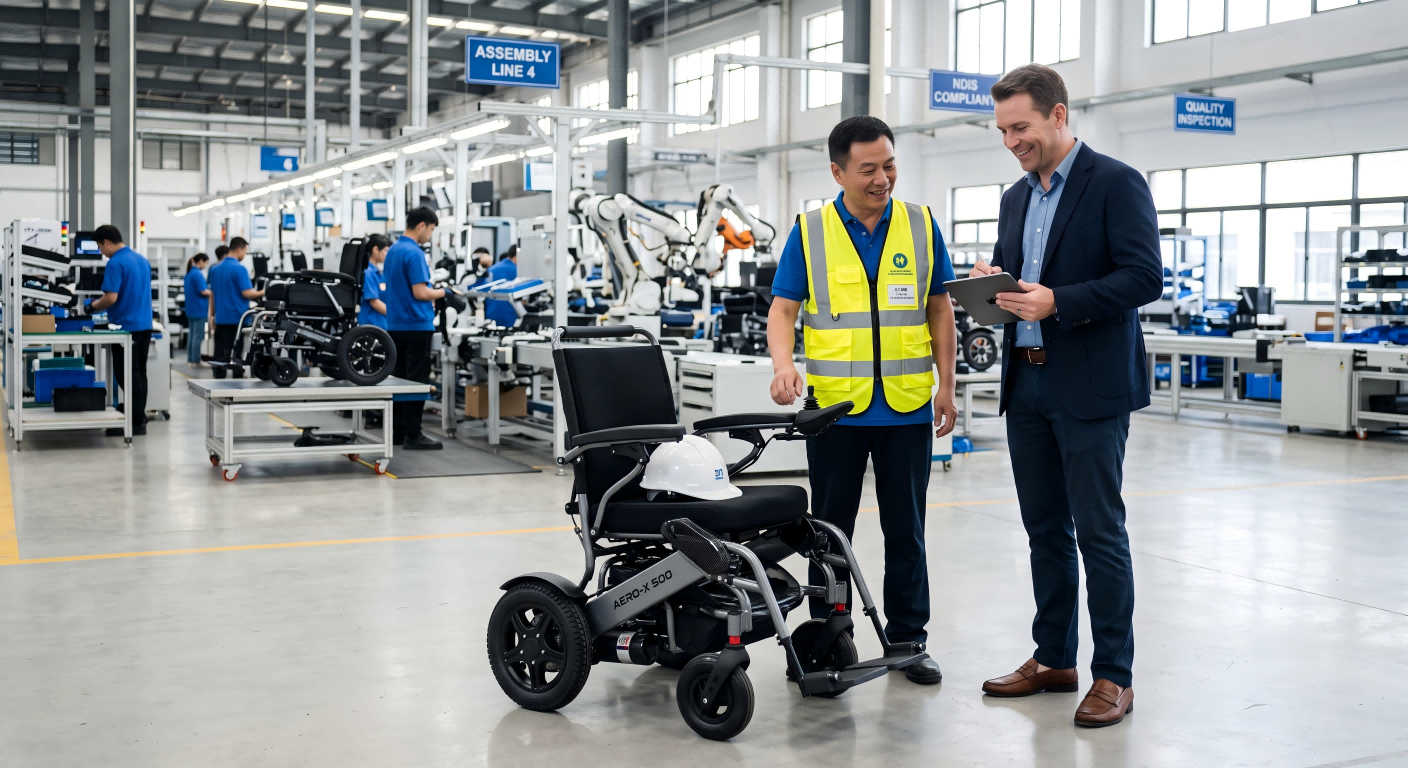
I have spent years helping international buyers source products from China. I've seen the same mistakes happen again and again. But I've also helped many clients build successful partnerships. The difference is knowing what to look for from the very beginning. It's not just about getting a good deal; it's about finding a long-term partner who will help your business grow. Let me guide you through the critical steps I use so you can find a great manufacturer for your electric wheelchairs.
Why is Focusing Only on Price a Big Mistake?
Low prices from China are tempting.1 But cheap often means poor quality and unhappy customers. I'll explain how to balance cost with value for long-term success.
Focusing only on price leads to issues with product quality, safety, and after-sales support. A slightly higher price from a reliable manufacturer often means better materials, stricter testing, and a partner you can trust.2 This saves you money in the long run.

I learned this lesson the hard way. Early in my career, I helped a client from Europe find a supplier. They chose the one with the absolute lowest price, against my advice. The deal seemed amazing on paper. When the first container of electric wheelchairs arrived, it was a disaster. Around 30% of the batteries were faulty, and some controllers would just stop working. The cheap manufacturer refused to take responsibility or offer any compensation. My client lost thousands of dollars in returns and replacements. More importantly, their brand reputation was seriously damaged. This experience taught me that the initial price is only a small part of the total cost. A reliable partner might cost 5-10% more upfront, but they save you from these costly nightmares.
Price vs. Value: A Comparison
You need to think about the total value, not just the unit cost. A good partner provides more than just a product. They provide peace of mind.
| Feature | Price-Focused Approach | Value-Focused Approach |
|---|---|---|
| Materials | Uses cheapest available parts | Uses certified, reliable components |
| Testing | Minimal or no quality checks | Rigorous testing at multiple stages |
| After-Sales | No support, blames the buyer | Offers warranty, spare parts, support |
| Relationship | Transactional, short-term | Partnership, long-term growth |
| True Cost | Low initial price, high hidden costs | Higher initial price, low long-term costs |
Choosing a supplier based on value protects your business. It ensures your customers receive a safe, dependable product, which is the foundation of a successful brand.
How Can You Verify a Manufacturer's Quality Control?
Every supplier claims to have good quality control.3 But how can you be sure from thousands of miles away? I'll share simple ways to check their processes effectively.
Ask for their quality control documentation, including ISO certifications and test reports for specific components like motors and batteries. Also, request a live video tour of their production line and QC station. A transparent manufacturer will gladly provide these things.
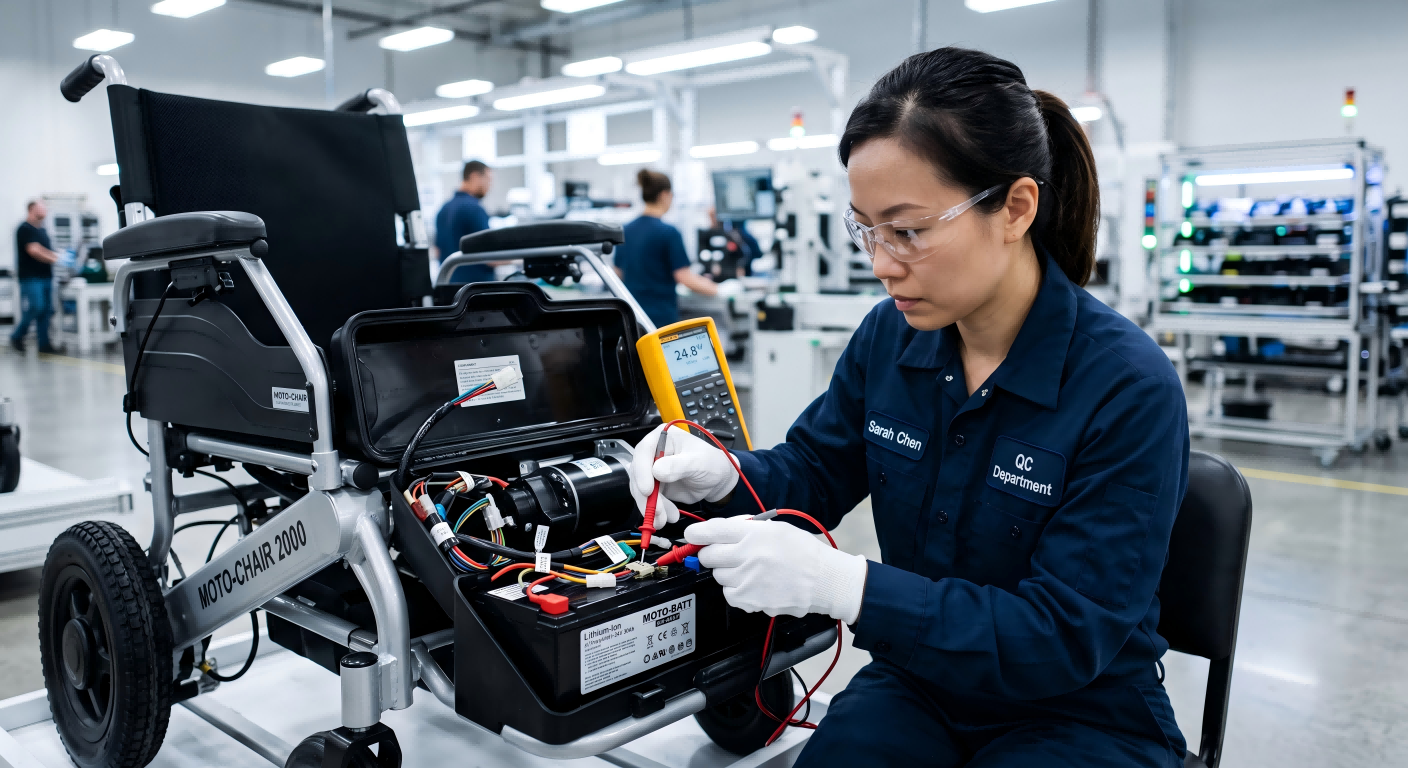
A manufacturer's willingness to be transparent is a huge indicator of their quality. I remember working with a new supplier. I asked for their ISO 9001 certificate and recent test reports for their lithium batteries. They sent them over within an hour. Then, I asked for a live video call to see their assembly line. The sales manager walked me through the entire factory on her phone. She showed me the incoming parts inspection area, the motor testing station, and the final pre-shipment inspection process. This level of openness builds incredible trust. In contrast, suppliers who make excuses or delay sending documents are hiding something. True quality control is a process, not just a promise, and you have the right to see it for yourself.
Key Documents to Request
Don't just take their word for it. Always ask for proof.
- Business License: Confirms they are a legally registered company.
- ISO 9001 Certification4: Shows they have a formal quality management system.
- Product Certifications: CE for Europe or FDA for the USA5, depending on your market.
- Component Test Reports: Specific reports for batteries, motors, and controllers.
Your QC Verification Checklist
Use this simple table to guide your evaluation during a factory tour, whether it's virtual or in person.
| QC Checkpoint | What to Look For | Red Flag |
|---|---|---|
| Incoming Materials | A dedicated area for inspecting raw parts. | Parts are moved directly to assembly. |
| Assembly Line | Workers follow standardized procedures. | Inconsistent assembly methods. |
| Function Testing | Every single wheelchair is tested. | Only random units are tested. |
| Final Inspection | A clean, well-lit area for final checks. | Checks are done quickly in a dark corner. |
A systematic approach to verifying QC is non-negotiable. It is the most important step in protecting your investment and your brand.
Is Customization Important for Your Business?
Standard wheelchairs don't fit every market.6 Your customers have unique needs. A manufacturer that can't customize limits your growth and sales potential in your local market.
Customization is key to meeting specific market demands and standing out from competitors. A good manufacturer can adjust seat size, controller type, battery range, or branding. This flexibility is a sign of a capable and customer-focused partner.
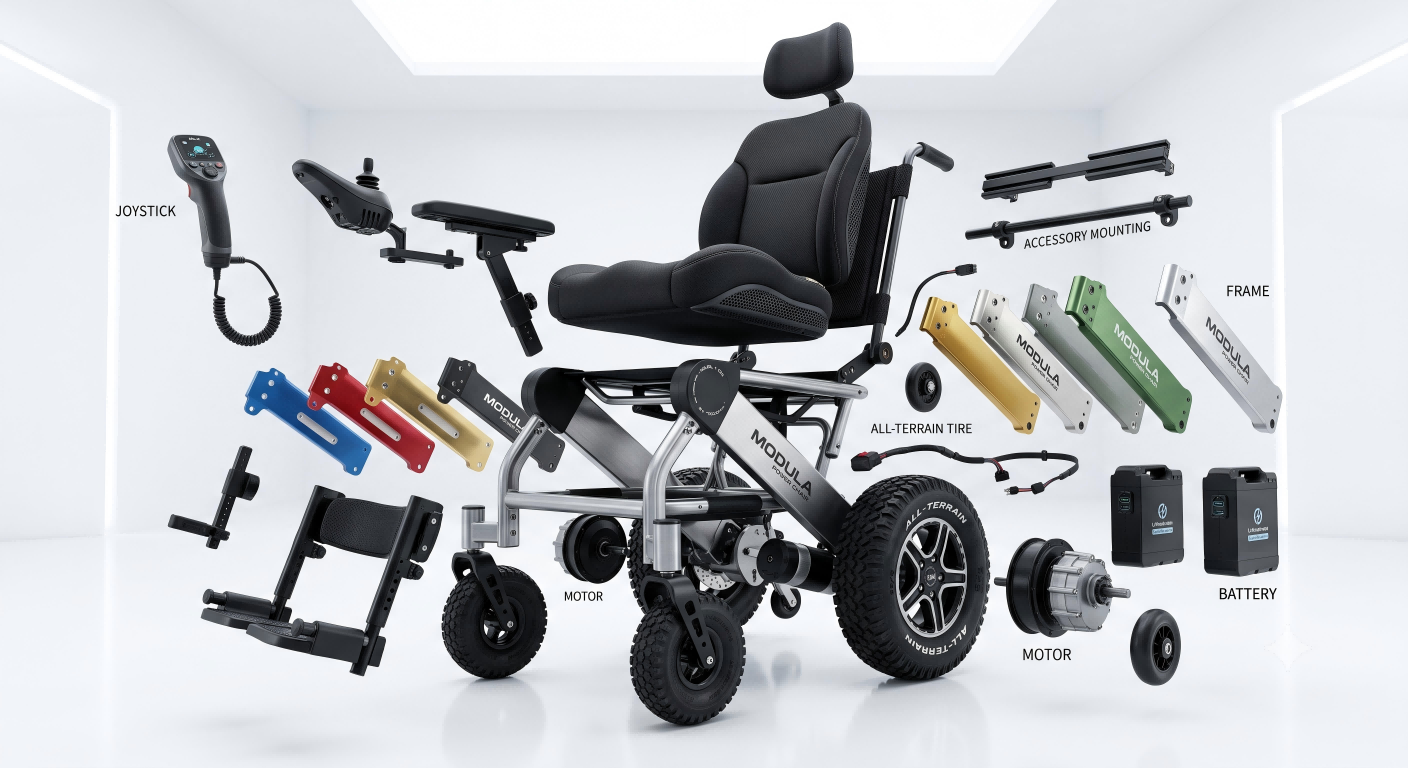
Flexibility is a sign of a strong manufacturer.7 I once had a client in Australia who needed electric wheelchairs for customers who spend a lot of time outdoors. The standard wheels from most Chinese factories were not durable enough for the rougher terrain. We found a manufacturer who was willing to work with us. They helped us source and test more robust, puncture-resistant tires. We went through several samples to get it right. This custom feature became my client’s main selling point, and they dominated their local market. A supplier who only offers a standard product is just a seller. A supplier who helps you solve your customers' problems is a true partner. Their engineering team and supply chain are strong enough to handle special requests, which shows their depth of expertise.
Why One-Size-Fits-All Fails
Every market is different.8 Your product needs to reflect that.
- Body Types: North American and European users may require wider seats and higher weight capacities.
- Terrain: Urban areas may need compact models, while rural areas need more powerful motors and better suspension.
- Regulations: Different regions have unique requirements for speed, lighting, and safety features.
Common Customization Options
Ask potential suppliers about their ability to modify these key features. A good partner will have clear processes for handling such requests.
| Customization Area | Potential Benefit |
|---|---|
| Seat Dimensions | Better comfort for your specific user base. |
| Controller Type | Left/right-hand options, simpler interfaces. |
| Battery Capacity | Offer extended range as a premium feature. |
| Tires & Wheels | Match the product to local terrain (indoor/outdoor). |
| Color & Branding | Build your own brand identity. |
Start with a small, simple customization request. How they handle it will tell you everything you need to know about their capabilities and their attitude toward partnership.
How Does Communication Affect Your Procurement Success?
Misunderstandings can cause huge delays and costly errors.9 Poor communication with a Chinese supplier is a major risk. I'll show you how to ensure everyone is on the same page.
Effective communication is vital.10 A good partner has English-speaking sales staff who are responsive and understand technical details. They should use clear language, confirm everything in writing, and be available during your business hours. This prevents costly mistakes.

Communication is about more than just language. It's about clarity. I learned this when I approved a sample of a wheelchair frame based on a photo. The color in the photo looked like a deep blue. When the bulk order arrived, the frames were a light, baby blue. The factory said it was the same color, but the lighting in their photo was misleading. It was a costly mistake. Now, I have a rule: everything must be confirmed with extreme clarity. For colors, we use Pantone codes. For dimensions, we use detailed diagrams with measurements. For every important decision, I get a clear "yes" in an email. This seems like extra work, but it has saved me from countless problems. A good supplier will appreciate this level of detail because it protects them from mistakes, too.11
Practical Tips for Clear Communication
- Use Simple English: Avoid slang, jargon, and complex sentences.
- Use Visuals: Pictures, diagrams, and videos are universal.
- Confirm in Writing: A phone call is for discussion. An email is for confirmation.
- Ask Questions: Never assume something is understood. Ask them to repeat the details back to you.
Good vs. Bad Communication
The difference is obvious once you know what to look for.
| Good Communication | Bad Communication |
|---|---|
| Response Time: Responds within 24 hours. | Takes days to reply or ignores emails. |
| Clarity: Uses lists and confirms details. | Gives vague, one-word answers. |
| Proactive: Informs you about potential delays. | Only tells you about a problem after it's too late. |
| Understanding: Asks questions to understand your needs. | Says "yes" to everything without understanding. |
If a supplier's sales team is difficult to communicate with before you place an order, imagine how difficult they will be when you have a problem. Choose a partner who values clear and honest communication from the very beginning.
Conclusion
Choosing a Chinese manufacturer is about finding a partner, not just a supplier. Focus on quality, customization, and communication to build a successful and profitable business relationship.
"Made in China 2025: Evaluating China's Performance", https://www.uscc.gov/research/made-china-2025-evaluating-chinas-performance. Research has shown that low-cost manufacturing practices can sometimes lead to compromised product quality, particularly in industries with less stringent regulatory oversight. Evidence role: general_support; source type: research. Supports: Low-cost manufacturing in China often correlates with quality issues.. Scope note: This correlation may not apply universally across all manufacturers or industries in China. ↩
"Low price doesn't always mean low quality, but it could mean a ...", https://source.washu.edu/2006/06/low-price-doesnt-always-mean-low-quality-but-it-could-mean-a-challenge-to-highend-products/. Studies suggest that manufacturers investing more in materials and quality control tend to produce more reliable products. Evidence role: general_support; source type: research. Supports: Higher manufacturing costs are often associated with better materials and quality control.. Scope note: This relationship may not hold true for all manufacturers or industries. ↩
"Supplier Assurance Remote Desk Audit - NSF", https://www.nsf.org/food-beverage/supplier-assurance-remote-desk-audit. Experts recommend verifying supplier quality control through documentation and on-site inspections to ensure compliance with stated standards. Evidence role: general_support; source type: education. Supports: Suppliers often claim to have quality control measures, but verification is necessary.. Scope note: The effectiveness of verification methods may vary depending on the supplier's transparency. ↩
"ISO 9001 explained", https://www.iso.org/home/insights-news/resources/iso-9001-explained.html. ISO 9001 is a globally recognized standard for quality management systems, ensuring that organizations meet customer and regulatory requirements. Evidence role: definition; source type: encyclopedia. Supports: ISO 9001 certification indicates the presence of a quality management system.. Scope note: Certification does not guarantee product quality but indicates adherence to management processes. ↩
"Import Certification", https://www.fda.gov/food/importing-food-products-united-states/import-certification. CE marking is mandatory for products sold in the European Economic Area, while FDA approval is required for medical devices in the USA. Evidence role: general_support; source type: government. Supports: CE and FDA certifications are regulatory requirements for products in Europe and the USA, respectively.. Scope note: Specific requirements may vary depending on the product category and market. ↩
"Customization of manual wheelchair components: a state-of-the-art ...", https://pmc.ncbi.nlm.nih.gov/articles/PMC11931783/. Studies indicate that different markets have specific requirements for wheelchair features, such as size, durability, and functionality. Evidence role: general_support; source type: research. Supports: Standard wheelchairs may not meet the unique needs of all markets.. Scope note: The specific needs may vary significantly across regions and user demographics. ↩
"Flexible Manufacturing System for Mass Customization ...", https://tsapps.nist.gov/publication/get_pdf.cfm?pub_id=822091. Research suggests that manufacturers with flexible production processes are better equipped to meet diverse customer needs and adapt to market changes. Evidence role: general_support; source type: research. Supports: Flexibility in manufacturing is an indicator of a manufacturer's capability and customer focus.. Scope note: Flexibility alone does not guarantee overall manufacturing quality or reliability. ↩
"Linking product design to consumer behavior: the moderating role of ...", https://pmc.ncbi.nlm.nih.gov/articles/PMC5957053/. Market research studies show that tailoring products to local preferences and requirements can significantly improve market acceptance and customer satisfaction. Evidence role: general_support; source type: research. Supports: Different markets have unique needs that often require product customization.. Scope note: The degree of required customization depends on the specific product and market. ↩
"What Are the Various Risks in Supply Chain Management?", https://www.apu.apus.edu/area-of-study/business-and-management/resources/what-are-the-various-risks-in-supply-chain-management/. Studies on supply chain management highlight that miscommunication is a leading cause of delays and errors in international trade. Evidence role: general_support; source type: research. Supports: Misunderstandings in communication can lead to significant delays and errors in manufacturing and procurement.. Scope note: The extent of impact may vary depending on the complexity of the supply chain and the nature of the miscommunication. ↩
"Mastering International Communication in a Global Marketplace", https://onlinemasters.jou.ufl.edu/international-communication-in-a-global-marketplace/. Research in international business emphasizes that clear and effective communication reduces errors and builds trust in supplier-buyer relationships. Evidence role: general_support; source type: research. Supports: Effective communication is crucial for successful supplier-buyer relationships.. Scope note: The effectiveness of communication strategies may depend on cultural and linguistic factors. ↩
"The Benefits of Effective Communication in the Workplace", https://www.apu.apus.edu/area-of-study/arts-and-humanities/resources/benefits-of-effective-communication/. Studies in supply chain management suggest that detailed communication helps prevent misunderstandings and errors, benefiting both parties. Evidence role: general_support; source type: research. Supports: Detailed communication benefits both buyers and suppliers by reducing errors.. Scope note: The extent to which suppliers value detailed communication may vary based on their operational practices. ↩