
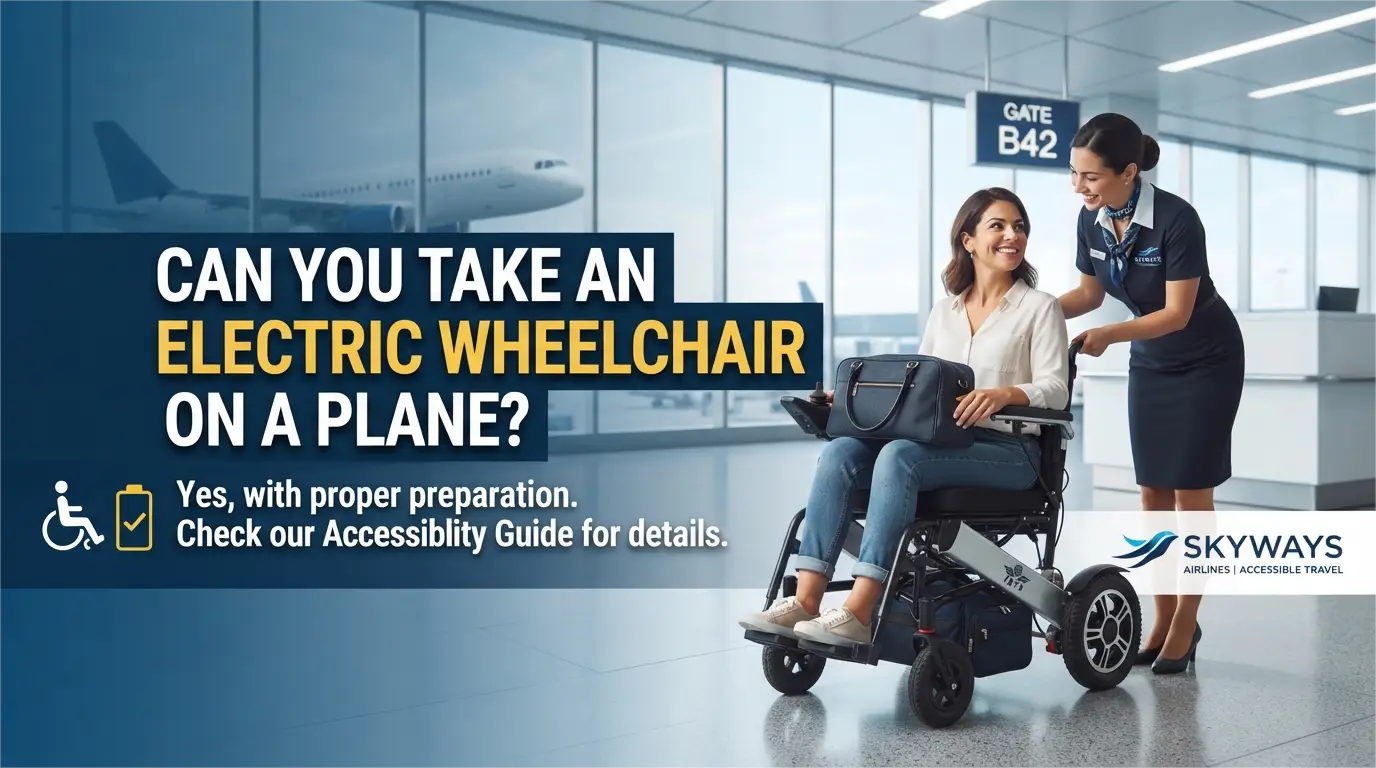
Struggling to plan a trip because you're worried your mobility aid will be rejected at the airport? The complex rules and horror stories about damaged equipment can make air travel feel impossible. You need a clear, reliable process to ensure both you and your chair arrive safely. Getting an electric wheelchair on a plane is entirely possible, but it requires careful preparation, not guesswork.
Yes, you can take an electric wheelchair on a plane, but its acceptance is conditional. Success depends on the wheelchair's battery type and size (measured in Watt-hours), whether the battery is removable, and if you have followed the airline's specific notification and preparation procedures at least 48 hours before your flight.
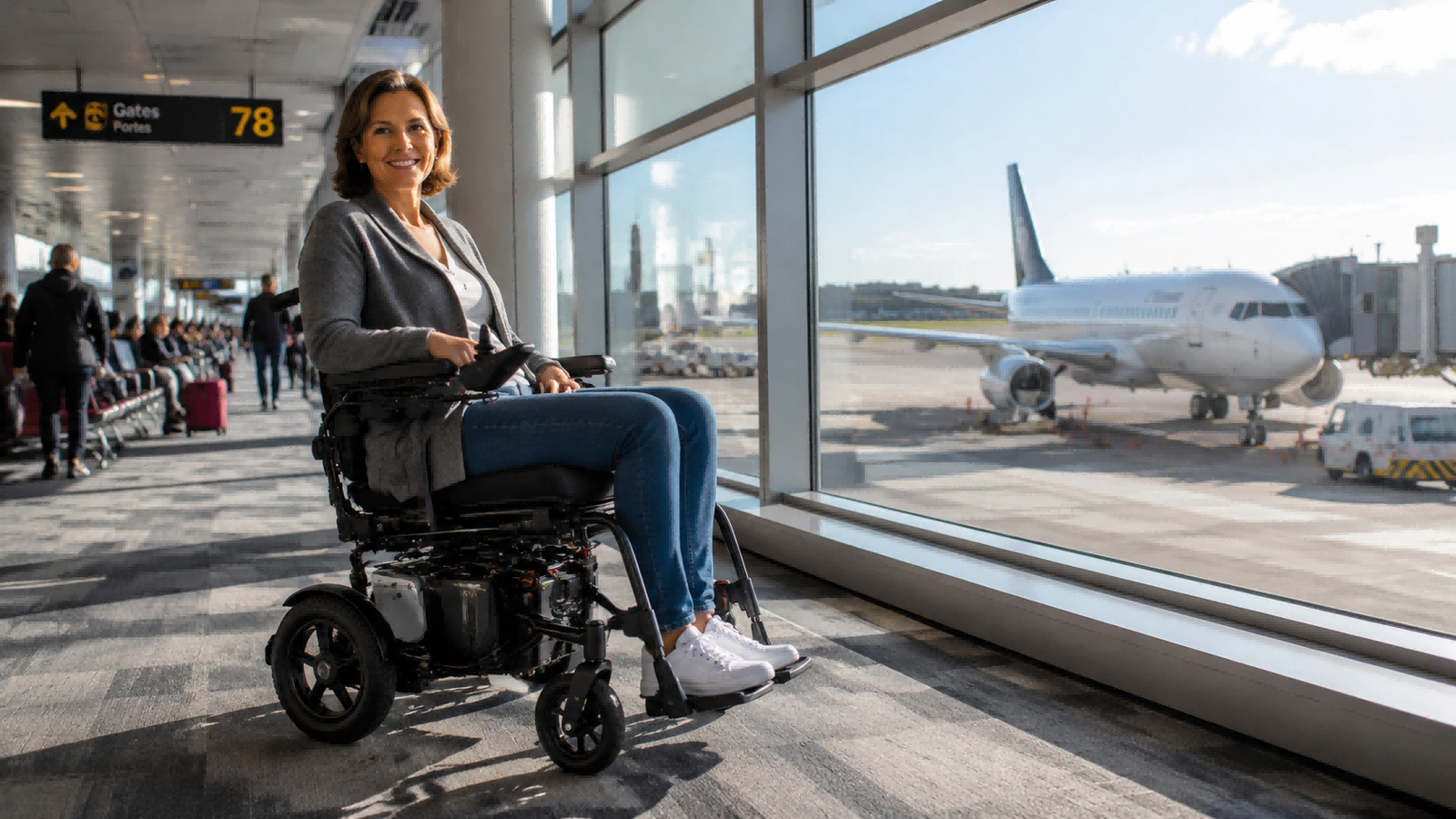
Navigating this process can feel overwhelming, but it boils down to a few critical checks and steps. Below, we'll walk through the exact parameters airlines care about, how to prepare your device for transit, and what to communicate to the airline to ensure a smooth journey from check-in to arrival.
What Are the Key Airline Rules for an Electric Wheelchair on a Plane?
Are you feeling lost in a sea of technical terms like Watt-hours, IATA regulations, and non-spillable batteries? It's easy to get confused by airline policies. The good news is that they all focus on one primary safety concern: the battery.
Airlines classify electric wheelchairs as dangerous goods due to their large batteries.1 Their rules, guided by the International Air Transport Association (IATA), are designed to minimize risk. The main factors are the battery chemistry (lithium-ion vs. other types) and its energy capacity, measured in Watt-hours (Wh).
Dive Deeper: From Parameters to Decisions
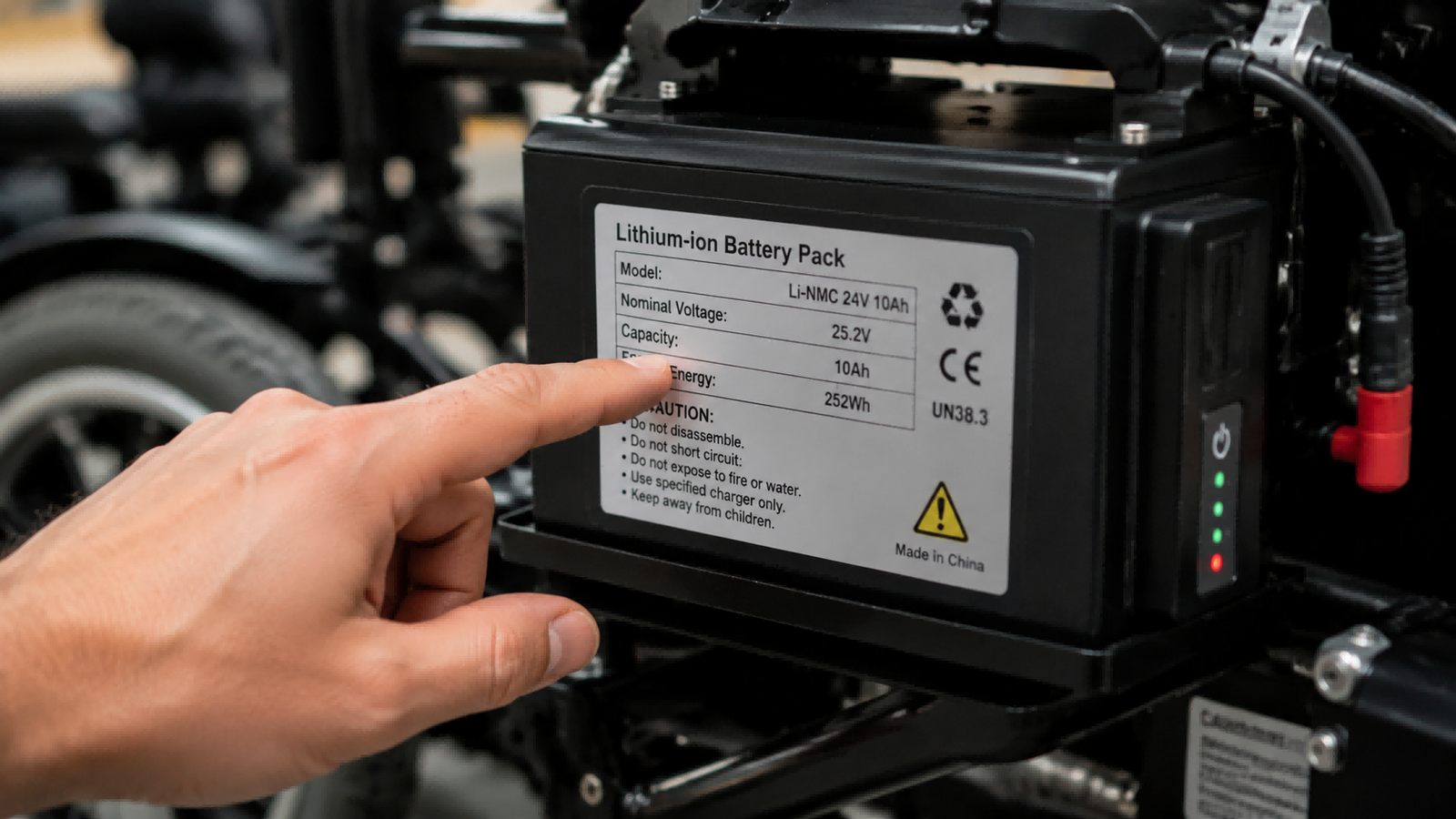
Your first task is to become an expert on your wheelchair's battery. This information is almost always printed on the battery's label. In my experience helping clients prepare for flights, this single step determines 90% of the process.
H3: Understanding Your Battery: The Most Critical Step
You need to identify three things: battery chemistry, power, and whether it's removable.
-
Battery Chemistry: Most modern, lightweight electric wheelchairs use Lithium-ion (Li-ion) batteries. Older or heavier models might use non-spillable batteries, such as Sealed Lead Acid (SLA) or Gel types. The rules for lithium-ion are much stricter.
-
Battery Power (Watt-hours): Airlines don't use volts or amp-hours; they only care about Watt-hours (Wh). If the Wh rating isn't listed, you can calculate it easily: Voltage (V) × Amp-hours (Ah) = Watt-hours (Wh) For example, a 24V, 10Ah battery is 240Wh. This number is your golden ticket.
-
Airline Thresholds (Verify These!): IATA provides guidelines that most airlines follow, but you must always confirm the exact policy with your carrier.
- Under 100Wh: Generally approved with no issue.
- Between 100Wh and 300Wh: Requires airline pre-approval. For a device with a removable battery, you can typically bring one battery up to 300Wh (or two batteries up to 160Wh each).
- Over 300Wh: A loose lithium battery over 300Wh is forbidden on passenger aircraft. If the battery is fixed (non-removable) as part of the wheelchair, it may be allowed with specific airline approval, but this requires very early communication and validation.
H3: Removable vs. Fixed Batteries: A Process-Defining Difference
How the battery is handled is the next crucial distinction.
- Removable Batteries: You must remove the battery from the wheelchair before it's checked in. The battery terminals must be protected from short-circuiting (e.g., by covering them with electrical tape). You then carry the battery with you into the aircraft cabin. The wheelchair frame is checked as baggage.
- Fixed/Non-Removable Batteries: The battery stays inside the wheelchair. Before it's loaded as baggage, the power must be isolated. This usually involves disconnecting a cable and taping the exposed connector to prevent it from reconnecting. The entire device is then checked.
Here is a quick reference table I give my clients. Always confirm these details with your specific airline.
| Battery Characteristic | What You Need to Do | Where It Goes |
|---|---|---|
| Removable Lithium-ion | Remove battery, insulate terminals with tape. | Battery in carry-on luggage; Wheelchair frame as checked baggage. |
| Fixed/Non-Removable | Isolate power, insulate connectors. | Entire wheelchair as checked baggage. |
| Non-spillable (any type) | Ensure it's secure, isolate power. | Entire wheelchair as checked baggage. |
How Do You Prepare Your Electric Wheelchair for a Flight?
Knowing the rules is one thing; executing the plan under the pressure of a busy airport is another. Are you worried that ground staff will mishandle your expensive device or that you'll be denied boarding due to a paperwork error?
The solution is a standardized preparation process. A successful journey with an electric wheelchair on a plane hinges on three actions: early and clear communication, proper physical protection of the device, and having all your documentation ready at the airport.
Dive Deeper: Your Pre-Flight Checklist for Success
Over the years, I've helped dozens of international buyers and their customers navigate this process. We've refined it into a simple, repeatable checklist that dramatically increases the chances of a smooth experience.
H3: The "Three Essentials" Communication Plan
Don't wait until you're at the check-in desk. Airlines need advance notice to make the necessary arrangements.
-
Notify the Airline (48-72 Hours in Advance):2 Call the airline's special assistance or disability services desk—not the general reservations line. I provide my B2B clients with a script to give their end-users. Have this information ready:
- Your name, flight number, and booking reference.
- Device Type: "I am traveling with a personal battery-powered wheelchair."
- Make and Model: e.g., "MorethingGO Model X1"
- Dimensions (Folded): Length x Width x Height in cm/inches.
- Weight: In kg/lbs.
- Battery Type: "Lithium-ion" or "Non-spillable."
- Battery Power: "It is a single 240 Watt-hour battery." (Be precise).
- Handling: "The battery is removable and will be carried into the cabin." Ask the agent to add this information to your booking and provide you with a reference number for the request.
-
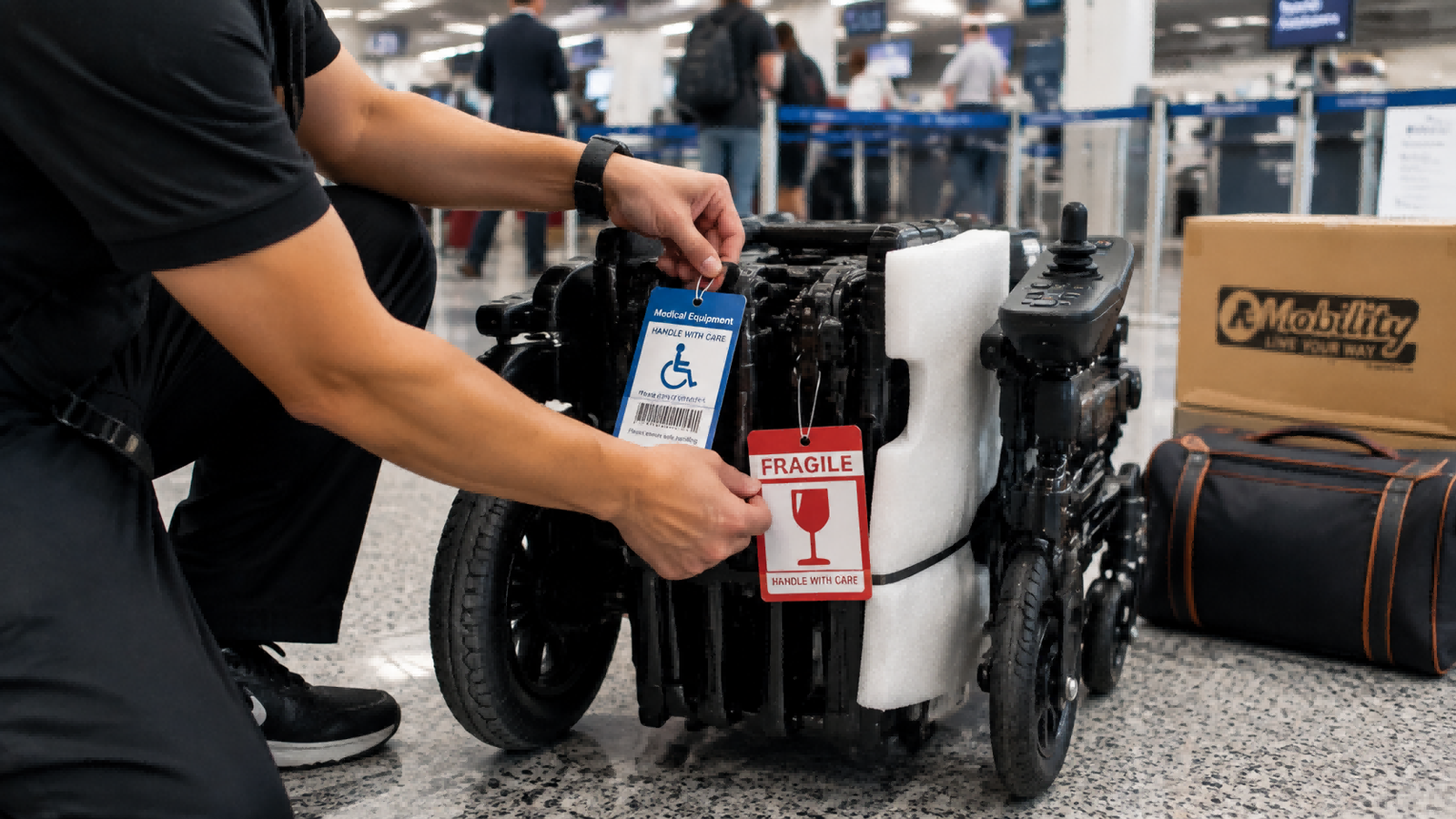
Prepare the Device for Baggage Handling: Baggage handlers are moving quickly. Make their job easy and your chair safe.
- Clean the wheelchair.
- Fold it if possible and secure it so it doesn't unfold. If it has a complex folding procedure, type out simple instructions and tape them securely to the chair.
- Remove all loose items: This includes cushions, side bags, cup holders, and the joystick/controller if possible. Take these with you in your carry-on.
- Protect vulnerable parts: Use bubble wrap or foam to cover the joystick connector and any other sensitive areas.
- Label everything: Attach a sturdy label with your name, phone number, destination address, and a large, clear message: "MEDICAL EQUIPMENT - FRAGILE - HANDLE WITH CARE."
-
Pack Your Documents: At the airport, have a folder with printed copies of:
- Your flight confirmation.
- The wheelchair's technical specifications sheet (or a link to it online).
- A photo of the battery label showing the V, Ah, and/or Wh rating.
- The email or reference number from your call with the special assistance desk.
This preparation turns a potentially stressful situation into a manageable process.
What Makes an Electric Wheelchair "Travel-Friendly"?
If you're in the market for a new mobility aid, do you know which features will prevent headaches at the airport? Choosing the right device from the start is the ultimate way to ensure you can travel with freedom and confidence.3
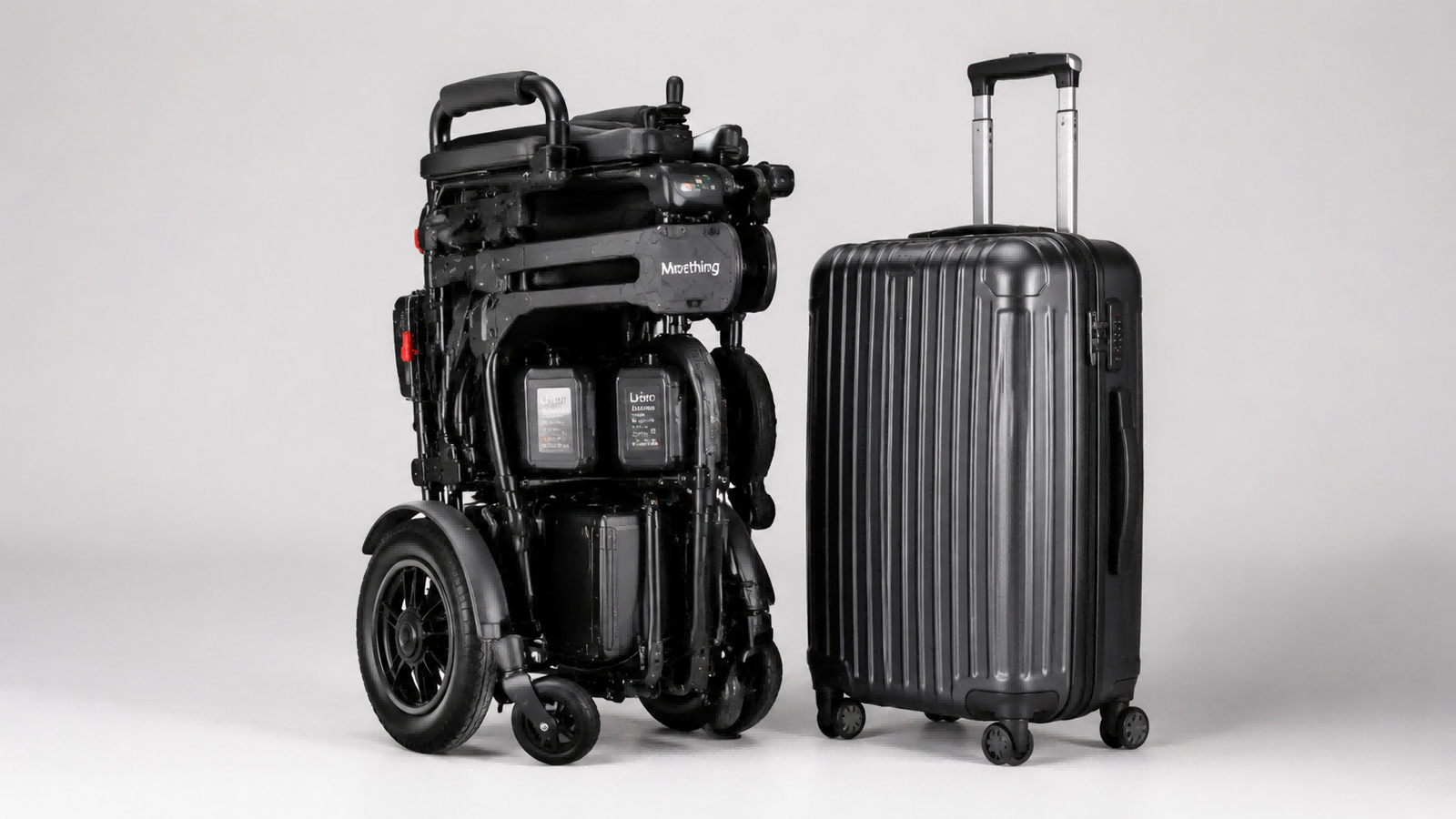
A "travel-friendly" electric wheelchair for a plane journey isn't just about being small. It’s about a design that aligns with airline regulations and logistical realities. Key features include a foldable, lightweight frame and, most importantly, one or more removable, airline-compliant lithium batteries.
Dive Deeper: Sourcing for Seamless Travel
As a B2B supplier, a significant part of my job at MorethingGO is helping procurement managers source products that solve end-user problems. A customer being denied boarding is a major post-sale failure. That's why we emphasize sourcing wheelchairs designed with air travel in mind.
H3: Key Features for Frequent Flyers
When evaluating models for your inventory or personal use, prioritize these attributes:
- Removable, Airline-Compliant Batteries: This is the most important feature. A chair with one or two removable lithium batteries, each under the 300Wh limit, is the gold standard. It allows the passenger to easily remove them and carry them into the cabin, completely separating the "dangerous goods" component from the checked frame.
- Foldable and Lightweight Frame: A chair that folds down into a compact shape (like a large suitcase) is far easier for ground crew to handle.4 It's less likely to be damaged and can often be brought right to the gate, where you transfer and they take it for loading. Lighter weights (under 30 kg / 66 lbs) are a huge bonus.
- Durable and Simple Construction: Fewer complex parts mean fewer things that can break in transit. A robust frame with simple, intuitive folding mechanisms is ideal.5
- Accessible Power Terminals: Whether the battery is removable or fixed, the terminals or power connectors must be easy to access for insulation or disconnection. A design that requires tools to get to the battery is not travel-friendly.
For our clients—purchasing managers and business owners across the globe—we focus on identifying models that tick these boxes. This foresight prevents frustrating customer service calls and builds brand trust. It addresses a key pain point for travelers: finding professional suppliers who understand the practical realities of using a mobility aid internationally.
Frequently Asked Questions
How many spare batteries can I bring for my electric wheelchair on a plane?
For lithium-ion batteries, airlines typically allow one spare battery between 100-300Wh or two spare batteries, each under 160Wh.6 These spares, like the main battery, must be in your carry-on luggage with terminals protected. Always confirm your airline's specific limit.
What if my wheelchair's battery is over 300Wh?
A fixed lithium-ion battery over 300Wh requires special approval from the airline and is handled on a case-by-case basis. Loose or spare batteries over 300Wh are strictly forbidden. If your device has such a battery, contact the airline's cargo department weeks in advance.
Do these rules also apply to mobility scooters?
The principles for batteries are very similar, as they are based on IATA dangerous goods regulations. However, mobility scooters are often larger, heavier, and require more disassembly. It's critical to identify your device as a "mobility scooter" and provide its exact dimensions when notifying the airline.
Do I need a doctor's note to fly with my electric wheelchair?
A doctor's note is generally not required for the device itself.7 However, carrying a letter from your doctor that briefly explains your medical need for the wheelchair can be helpful if you encounter any misunderstandings with airline or security staff.
Conclusion
Taking an electric wheelchair on a plane doesn't have to be a source of anxiety. With the right preparation, it can be a smooth and routine part of your travel. The entire process rests on three pillars: understanding your battery's specifications, communicating clearly and early with your airline, and physically preparing your device for safe transit. By calculating your battery's Watt-hours, following the rules for removable or fixed types, and protecting your chair for baggage handling, you take control of the situation and minimize risks.
For business buyers, procurement specialists, and distributors looking to provide end-users with mobility solutions that empower travel, selecting the right equipment is paramount. At MorethingGO, we specialize in sourcing and quality control for travel-friendly electric wheelchairs that meet international standards. Our professional buyer services ensure your inventory is reliable, compliant, and ready for a global market. Contact us today to learn how we can support your procurement needs.
"Interpretation # 10-0034 ([Global Green Services, Inc.] [Ms. L ...", https://www.phmsa.dot.gov/regulations/title49/interp/10-0034. According to the International Air Transport Association (IATA), electric wheelchairs are classified as dangerous goods primarily due to the risks associated with their batteries, such as potential short-circuiting or fire hazards. Evidence role: general_support; source type: institution. Supports: Electric wheelchairs are classified as dangerous goods by airlines due to their batteries.. ↩
"Assistive Device - Stowage, Damage, and Delay", https://www.transportation.gov/resources/individuals/aviation-consumer-protection/assistive-device-guides/assistive-device-stowage. Airline special assistance guidelines often recommend notifying carriers at least 48-72 hours in advance to ensure proper arrangements for mobility aids. Evidence role: general_support; source type: institution. Supports: Travelers should notify airlines 48-72 hours in advance when traveling with an electric wheelchair.. ↩
"Investigating the challenges of air travel in the United States", https://pmc.ncbi.nlm.nih.gov/articles/PMC11032379/. Research on mobility aids and air travel suggests that choosing a wheelchair designed for compliance with airline regulations reduces travel disruptions and enhances user confidence. Evidence role: general_support; source type: research. Supports: Selecting a travel-friendly electric wheelchair improves the air travel experience.. ↩
"Training Issues Related to Providing Assistance to ...", https://downloads.regulations.gov/DOT-OST-2022-0144-0008/attachment_1.pdf. Studies on airport logistics suggest that foldable electric wheelchairs reduce handling complexity and are less prone to damage during transit. Evidence role: general_support; source type: research. Supports: Foldable electric wheelchairs are easier for ground crew to handle.. ↩
"Travel Lightweight Electric Wheelchairs", https://www.mobilityscootersdirect.com/power-wheelchairs/travel-lightweight-electric-wheelchairs.html?srsltid=AfmBOoqzDBnTz2avX6_-RcRRnbMCcKSdMQnxkGKj3sY_h5JycKrnrpBD. Studies on wheelchair design highlight robust frames and intuitive folding mechanisms as critical features for minimizing damage during air travel. Evidence role: general_support; source type: research. Supports: Robust frames and simple folding mechanisms are ideal for travel-friendly electric wheelchairs.. ↩
"SafeTravel - Lithium Batteries", https://www.faa.gov/hazmat/packsafe/lithium-batteries. IATA guidelines specify that passengers may carry one spare lithium-ion battery between 100-300Wh or two spares under 160Wh, provided terminals are protected. Evidence role: general_support; source type: institution. Supports: Airlines allow one spare battery between 100-300Wh or two spare batteries under 160Wh.. ↩
"Airline Passengers with Disabilities Bill of Rights", https://www.transportation.gov/airconsumer/disabilitybillofrights. Airline accessibility policies often state that a doctor's note is not mandatory for traveling with electric wheelchairs, though it may be helpful in certain situations. Evidence role: general_support; source type: institution. Supports: A doctor's note is not generally required for traveling with an electric wheelchair.. ↩