
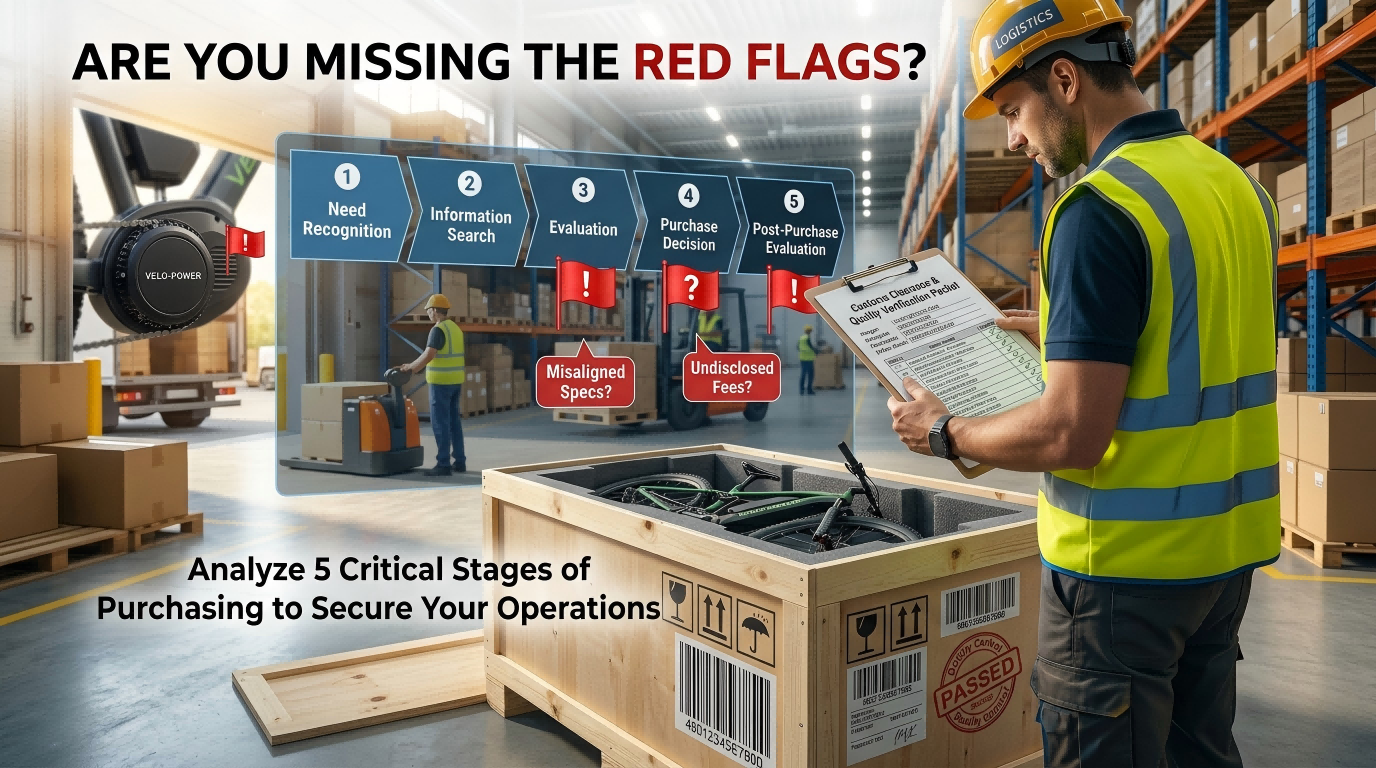
You're trying to find a reliable eBike supplier, but every website looks the same. This makes you worry about choosing the wrong partner, risking your investment and reputation.
The secret is to treat the 5 purchasing steps—inquiry, sampling, ordering, production, and delivery—as critical risk checkpoints. A qualified manufacturer's behavior at each stage reveals their true capability, separating them from risky alternatives long before you place a bulk order.
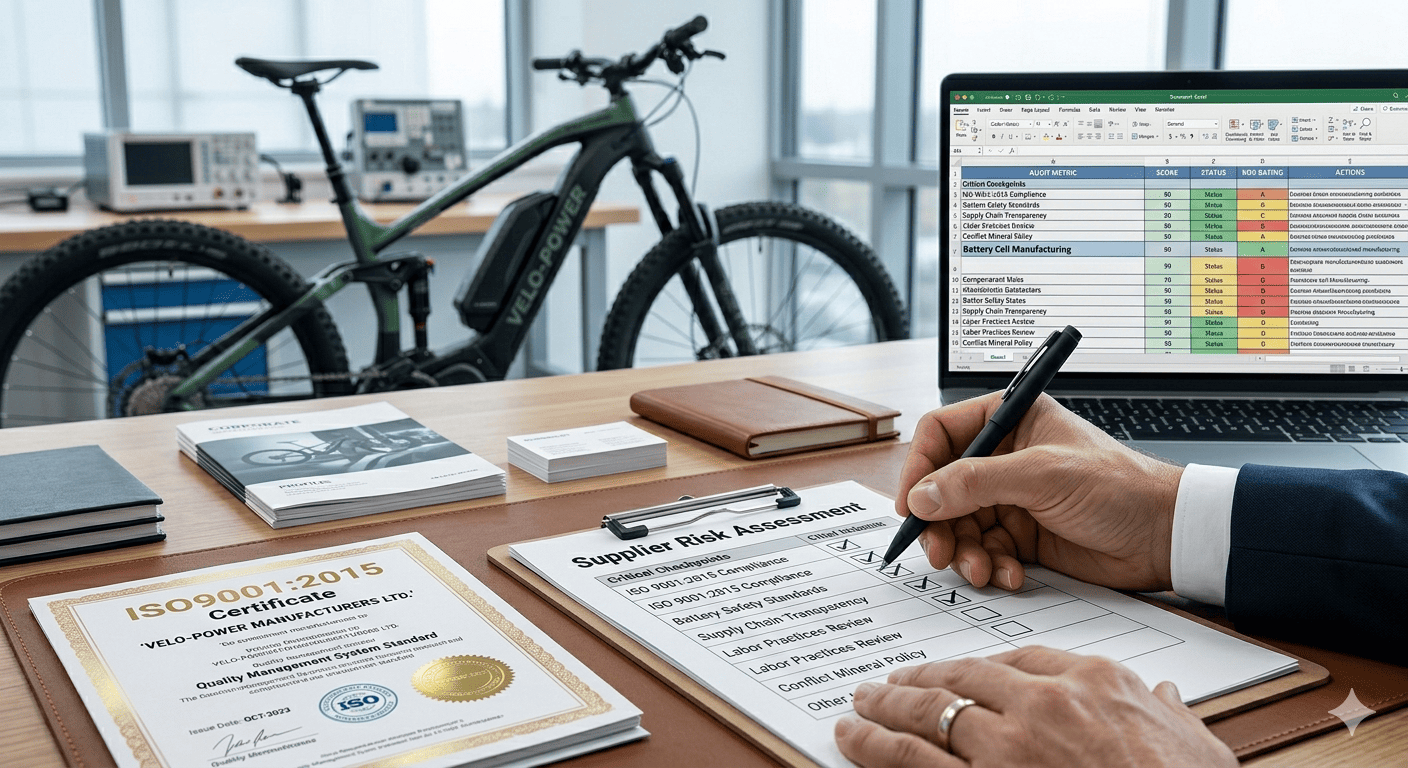
For 15 years, I've seen countless buyers navigate this process. Many focus only on the final price and spec sheet. They miss the subtle but critical signals that a supplier sends at every step. This approach is risky. It's like buying a house based only on photos without inspecting the foundation. Let's walk through each stage of the purchasing process. I'll show you what to look for, so you can identify a great partner and avoid costly mistakes.
Does Your Supplier's Inquiry Response Signal Quality or Chaos?
You send out ten inquiries and get back ten different price lists. Some are vague, some are confusing, and you worry about their professionalism. A qualified supplier's response immediately builds confidence.
A quality supplier will ask clarifying questions about your market, use case, and target customer before quoting a price. This shows they are thinking about a long-term partnership and your product's success, not just a quick, one-time sale. Their response is your first quality indicator.
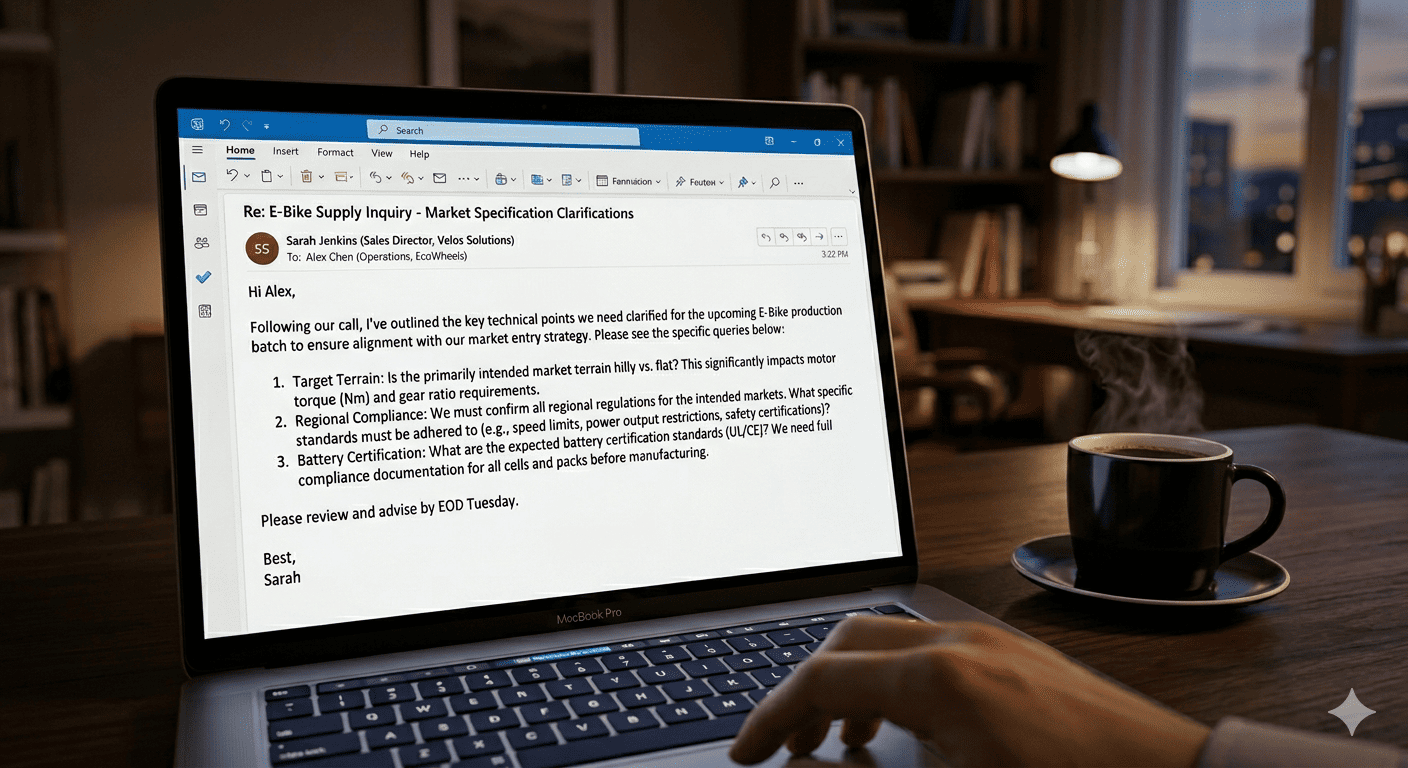
In our experience handling thousands of inquiries1, a supplier's first email tells you almost everything. A risky supplier gives you a generic price list and nothing more. They put the work on you to figure everything out. A truly qualified partner, especially one with ISO9001 certification2, has a structured process. They want to understand your business. They will ask questions about your target customers, the regulations in your country, and your sales channels. This isn't because they are nosy; it's because a successful product requires a collaborative effort. They know that the right motor for a flat city in the Netherlands is different from the one needed for the hills of San Francisco3. Their questions are the first sign they are a manufacturer, not just a trader.
| Red Flag Response | Green Flag Response |
|---|---|
| Sends only a price list. | Asks about your target market. |
| Responds with "Yes, we can do." | Asks clarifying questions about specs. |
| Ignores your specific questions. | Acknowledges your brand and goals. |
| Pushes for a quick order. | Suggests a video call to discuss details. |
Is a Perfect Sample a Guarantee of Mass Production Quality?
You finally get a sample eBike, and it's perfect. You feel relieved. But a small doubt remains: will the 500 units in your bulk order have this same quality? This is a valid fear.
No, a perfect sample is not a guarantee. It can be a "golden sample4" made by their best technicians to win your business. A reliable supplier provides documentation with the sample, outlining material specs, component sources, and test reports. This proves they have a repeatable process.
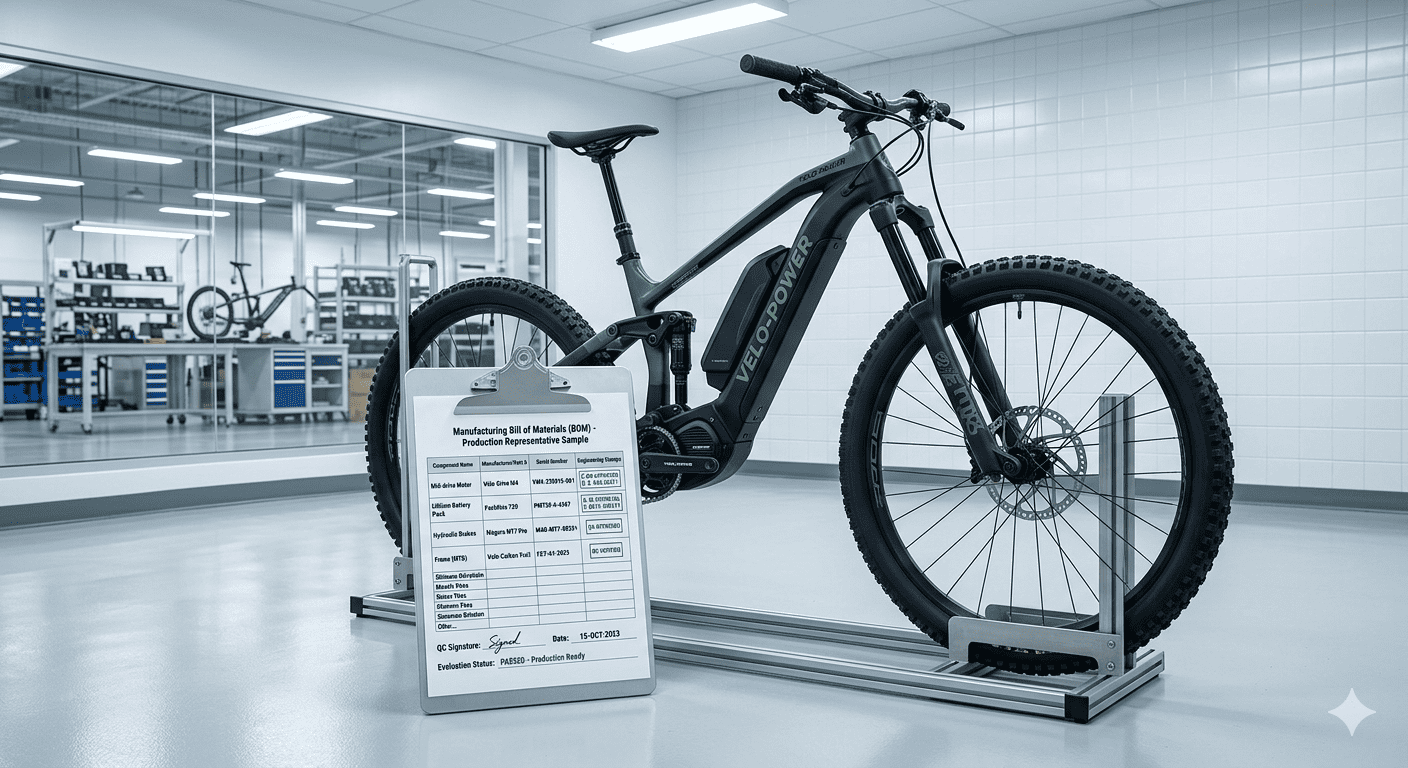
We've observed that buyers often get excited by a great sample and rush to the next step. This is a hidden decision fork where you can take on massive risk. A "golden sample" proves nothing about a factory's ability to produce at scale. A qualified manufacturer, however, provides a "production-representative sample." This means the sample was made using the same processes, components, and quality checks intended for mass production. They should be able to provide a Bill of Materials (BOM)5 for the sample. Ask them directly: "Was this sample made on your actual production line?" and "Can you share the testing data for this specific bike?" An ISO9001-certified factory must document its procedures, so asking for this paperwork is an easy test. If they hesitate or make excuses, it's a major red flag that they can't replicate the quality you're holding in your hands.
Is Your Purchase Order a Contract or Just a Wishlist?
You send your Purchase Order (PO) and feel like the deal is set. But vague terms in a simple PO leave you exposed to delays, unexpected costs, and quality problems down the line.
A simple PO is not enough protection. A professional supplier will work with you to create a detailed Proforma Invoice (PI) or contract. It must clearly define payment terms, Incoterms6, production lead time, quality standards, and warranty policies. This transparency is a key sign of a partner.
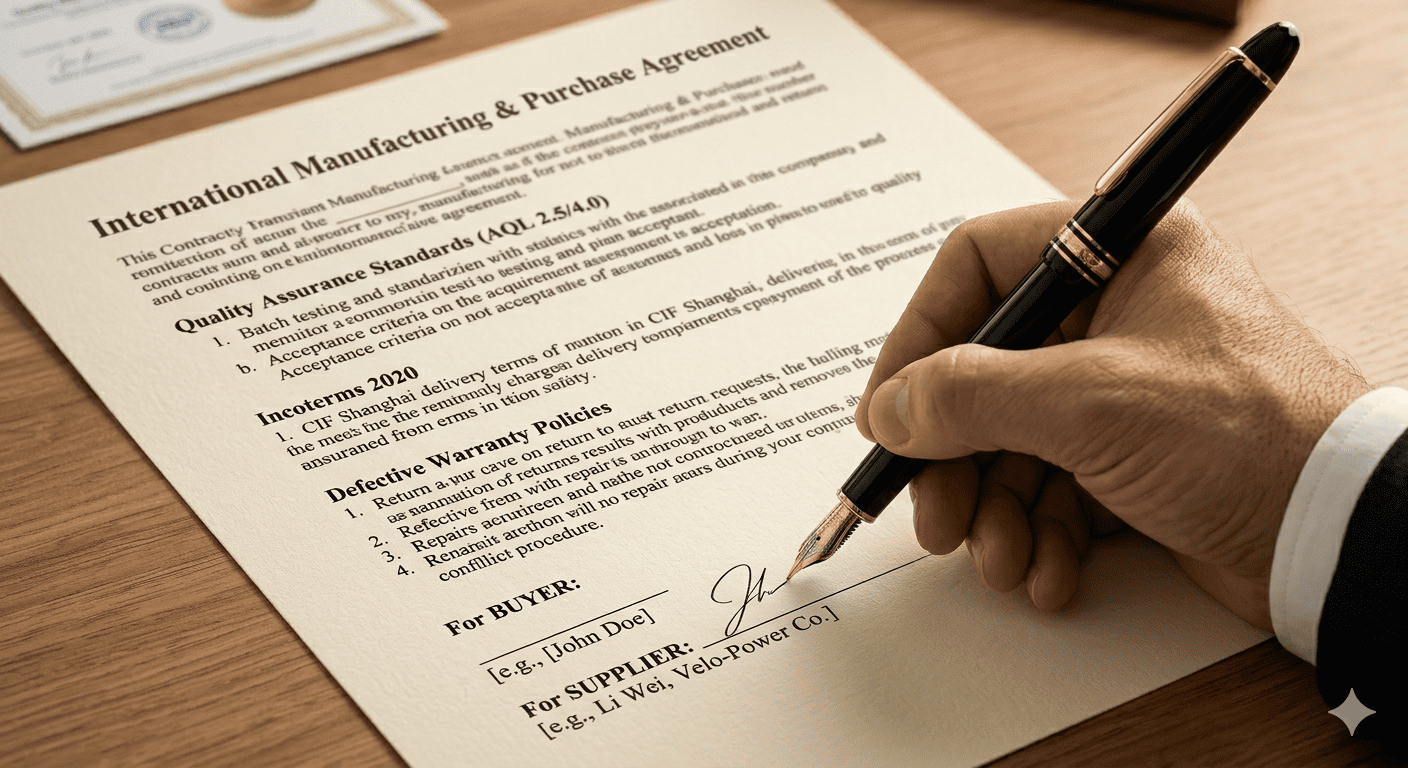
This stage is where a buyer's risk can multiply. A supplier who accepts a vague PO without question is not doing you a favor; they are leaving room for their own interpretation later. In our 15 years, the smoothest production runs always start with a rock-solid contract. This document becomes the single source of truth for both sides. A supplier compliant with BSCI (Business Social Compliance Initiative)7 understands the importance of formal, ethical agreements. They will expect to define these details clearly. If a supplier glosses over quality inspection clauses or is unclear about the warranty process, you should pause. A good partner wants these things defined just as much as you do, because it protects them from unreasonable claims, too.
| Vague PO Term | Clear Contract Clause |
|---|---|
| Quality: Standard quality | Quality: AQL 2.5 Major, 4.0 Minor8; inspection by Buyer's 3rd party |
| Lead Time: 45 days | Lead Time: 45 calendar days after deposit receipt and artwork approval |
| Payment: 30/70 TT | Payment: 30% deposit, 70% balance against copy of Bill of Lading |
| Warranty: 1 year | Warranty: 1 year on frame/fork, 6 months on battery (details in appendix) |
Does "In-Production" Mean Progress or a Black Box?
Your deposit is paid and your order is "in production." But you hear nothing for weeks. This silence creates anxiety. You start to wonder if there are problems they aren't telling you about.
"In-production" should not be a mystery. A reliable, ISO9001-certified manufacturer has defined production milestones and can provide proactive updates. They will welcome third-party inspections and share reports from their own quality control team, covering incoming materials (IQC), in-process checks (IPQC), and final products (FQC)9.
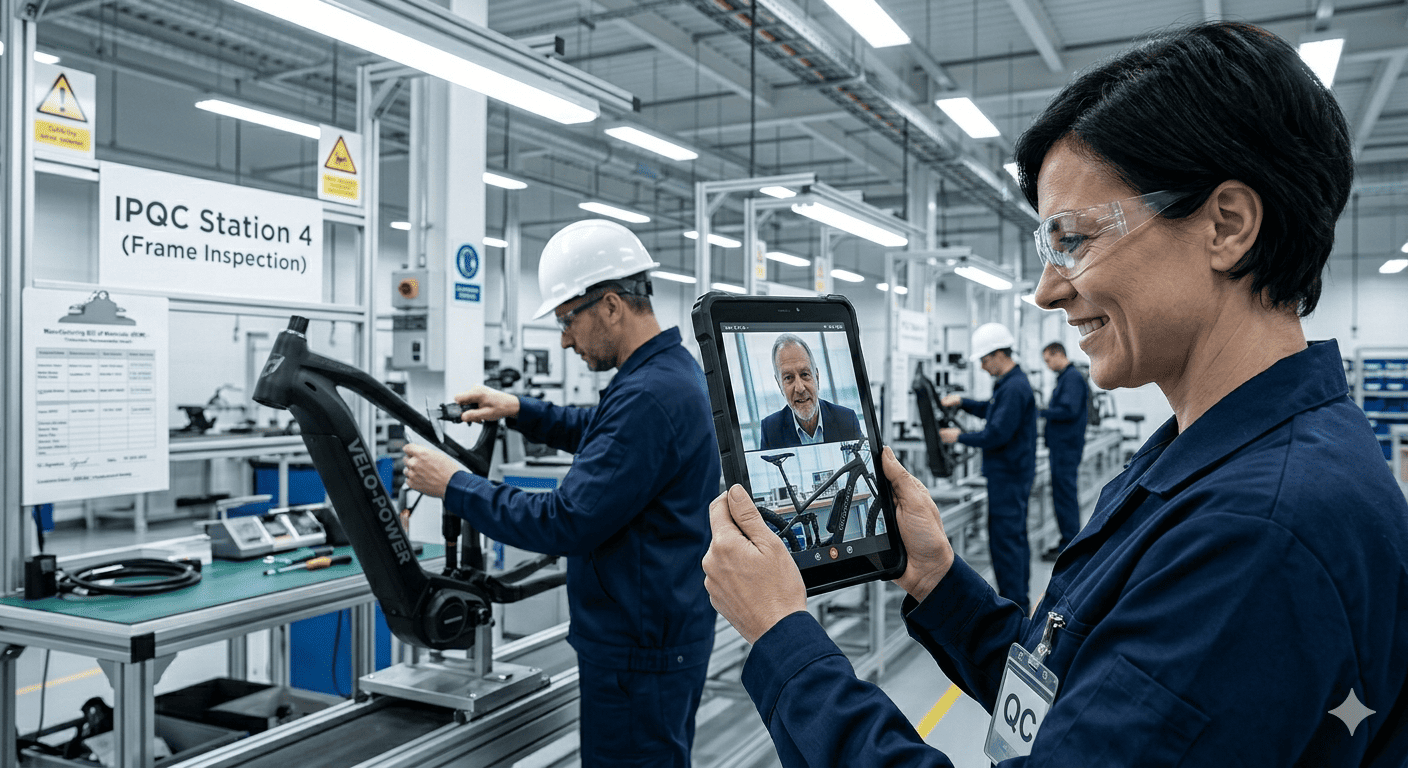
A factory that goes silent during production is often a factory that is hiding disorganization or problems. We've learned that transparency is key to building trust. A qualified manufacturer operates on a schedule with clear milestones: frame welding complete, parts arrive from subcontractors, painting begins, assembly starts. They should be able to share photos or a quick video of this progress. More importantly, they should be able to show you their quality control process in action. An ISO9001-certified factory doesn't just check the final product; they perform checks throughout the entire process. They check the raw materials when they arrive (IQC), they check components during assembly (IPQC), and they do a 100% functional test on every single eBike10 before it's packed (FQC). A good supplier isn't afraid of you sending an inspector; they welcome it as another chance to prove their quality.
Is the Deal Done Once the Goods Are Shipped?
The container is loaded, and the ship has sailed. You feel like the job is done. But the real test of a supplier relationship begins when the goods arrive. What happens if there are shipping damages or warranty issues?
For a top-tier supplier, shipping is not the end. They provide all necessary shipping documents promptly, help you track the shipment, and have a clear, pre-defined process for warranty and after-sales support. Their commitment after delivery is the ultimate test of partnership.
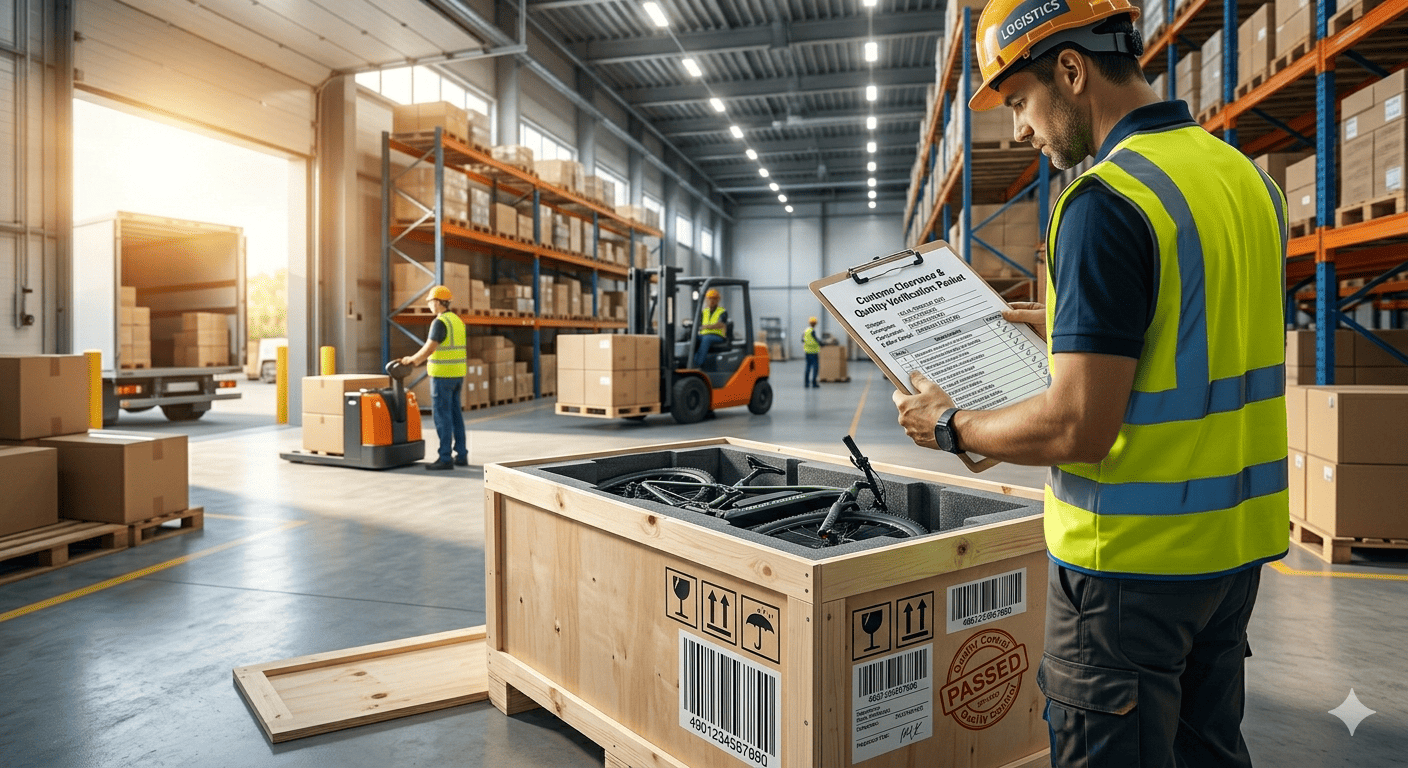
A supplier's job isn't over when the container leaves their factory. The final step of the process is often the most overlooked by buyers. Getting your products through customs requires perfect documentation: the Bill of Lading, Commercial Invoice, and Packing List must all match exactly11. A professional supplier knows this and will send you drafts to confirm before the ship even sails. A less experienced supplier can cause weeks of delays at your port. Beyond that, what is their plan for support? As a national high-tech enterprise12, we know that technical service is part of the product. Before you sign the contract, you should know exactly what the warranty process is. Who pays for shipping on a faulty part? Do they have a spare parts program? A great partner has these answers ready. Their commitment doesn't end with the sale; it extends to the entire life of the product.
Conclusion
Viewing the purchasing process as a series of risk checkpoints, not just administrative steps, empowers you. It helps you choose reliable partners who value quality, transparency, and long-term success.
"E-bike to the future: Scalability, emission-saving, and eco-efficiency ...", https://www.sciencedirect.com/science/article/pii/S1361920924002323. Research on B2B supplier selection indicates that initial communication quality, including responsiveness and information completeness, serves as a predictor of supplier reliability and relationship quality in manufacturing partnerships. Evidence role: general_support; source type: research. Supports: Inquiry response quality correlates with supplier professionalism in B2B contexts. Scope note: This supports the principle that inquiry responses indicate quality but does not validate the specific volume claim or the author's experience ↩
"ISO 9001:2015 - Quality management systems — Requirements", https://www.iso.org/standard/62085.html. ISO9001 is an international standard published by the International Organization for Standardization that specifies requirements for quality management systems, including documented procedures and process controls in manufacturing contexts. Evidence role: definition; source type: institution. Supports: ISO9001 is an internationally recognized quality management standard requiring documented procedures. ↩
"E bike motor specs for hilly areas? - Facebook", https://www.facebook.com/groups/926685377947023/posts/1791789911436561/. Electric bicycle motor specifications, particularly torque output, must be matched to terrain characteristics, with hilly environments requiring higher torque ratings than flat terrain to maintain performance. Evidence role: mechanism; source type: education. Supports: Motor torque and power requirements vary based on terrain gradient. Scope note: This supports the general principle but does not specifically compare Netherlands and San Francisco terrain requirements ↩
"What Is a Golden Sample & Why It's Essential for QC - Silq", https://www.onesilq.com/blog/what-is-a-golden-sample-in-manufacturing-for-quality-assurance. Supply chain management literature documents cases where pre-production samples exceed mass production quality due to special handling or skilled labor, emphasizing the importance of production-representative samples and process capability verification in supplier qualification. Evidence role: case_reference; source type: education. Supports: Sample quality may not represent production quality without process validation. Scope note: This confirms the general phenomenon but does not use the specific term 'golden sample' or provide statistical prevalence data ↩
"Manufacturing bill of materials - Wikipedia", https://en.wikipedia.org/wiki/Manufacturing_bill_of_materials. A Bill of Materials (BOM) is a comprehensive inventory of raw materials, components, and assemblies required to manufacture a product, serving as a fundamental document in production planning and quality control. Evidence role: definition; source type: encyclopedia. Supports: A Bill of Materials is a comprehensive list of components used in manufacturing. ↩
"Know Your Incoterms - International Trade Administration", https://www.trade.gov/know-your-incoterms. Incoterms, published by the International Chamber of Commerce, are standardized three-letter trade terms that define the responsibilities of buyers and sellers in international transactions, including risk transfer points and cost allocation for shipping. Evidence role: definition; source type: institution. Supports: Incoterms are standardized international trade terms defining responsibilities. ↩
"amfori BSCI - Business Social Compliance Initiative", https://www.amfori.org/amfori-bsci/. The Business Social Compliance Initiative (BSCI) is a European supply chain management system that supports companies in improving working conditions in their global supply chains through a code of conduct and monitoring system. Evidence role: definition; source type: institution. Supports: BSCI is a European business initiative focused on social compliance in supply chains. ↩
"Explaining Acceptance Quality Limit (AQL) for product inspection", https://www.eurofins.com/assurance/resources/articles/explaining-acceptance-quality-limit-aql/. Acceptable Quality Limit (AQL) is an international standard (ISO 2859) used in statistical quality control that defines the maximum percentage of defective items considered acceptable in a sample, with lower numbers indicating stricter quality requirements. Evidence role: definition; source type: institution. Supports: AQL is a statistical sampling standard for quality inspection. ↩
"Quality Control Checklist for IQC, IPQC, FQC - LinkedIn", https://www.linkedin.com/posts/sethi-nkn-4829b758_quality-checklist-for-iqc-ipqc-and-fqc-activity-7388775233538682880-XWpA. Manufacturing quality control typically employs three inspection stages: Incoming Quality Control (IQC) for raw materials, In-Process Quality Control (IPQC) during production, and Final Quality Control (FQC) for finished products, forming a comprehensive quality assurance system. Evidence role: definition; source type: education. Supports: Multi-stage quality inspection is a standard manufacturing practice. ↩
"[PDF] Summary of Electric and Non- Powered Bicycle Standards", https://www.cpsc.gov/s3fs-public/Electric-and-Non-Powered-Bicycle-Standards-Summary-Report.pdf?VersionId=rZGs9tSONCKqT8AEaJJMZd_S1nDJpKEW. While statistical sampling is common in manufacturing, 100% inspection may be employed for high-value products, safety-critical items, or when defect costs are high, though this approach increases production costs and time. Evidence role: general_support; source type: education. Supports: Complete inspection is used for critical or high-value products. Scope note: This describes when 100% inspection is used but does not confirm it as standard practice specifically for eBike manufacturing ↩
"Basic Importing and Exporting | U.S. Customs and Border Protection", https://www.cbp.gov/trade/basic-import-export. Customs authorities require consistent and accurate shipping documentation, including the Bill of Lading, Commercial Invoice, and Packing List, to verify cargo contents, assess duties, and clear goods for entry, with discrepancies potentially causing delays or penalties. Evidence role: general_support; source type: government. Supports: Accurate and consistent documentation is required for customs clearance. ↩
"National Accreditation of High and New Technology Enterprise", https://english.beijing.gov.cn/investinginbeijing/Start_Your_Business/focus_guide/thematic_guide/high_new_tech_enterprise/. In China, the National High-Tech Enterprise designation is a government certification granted to companies meeting criteria for R&D investment, intellectual property ownership, and technology-focused revenue, providing tax benefits and indicating innovation capacity. Evidence role: definition; source type: government. Supports: National high-tech enterprise is a Chinese government designation for technology-focused companies. Scope note: This assumes the Chinese context, as the article does not specify which country's designation is referenced ↩