
Confused by e-bike payload specs? Choosing the wrong one can lead to costly returns. We'll help you understand what that number really means for your business and your customers.
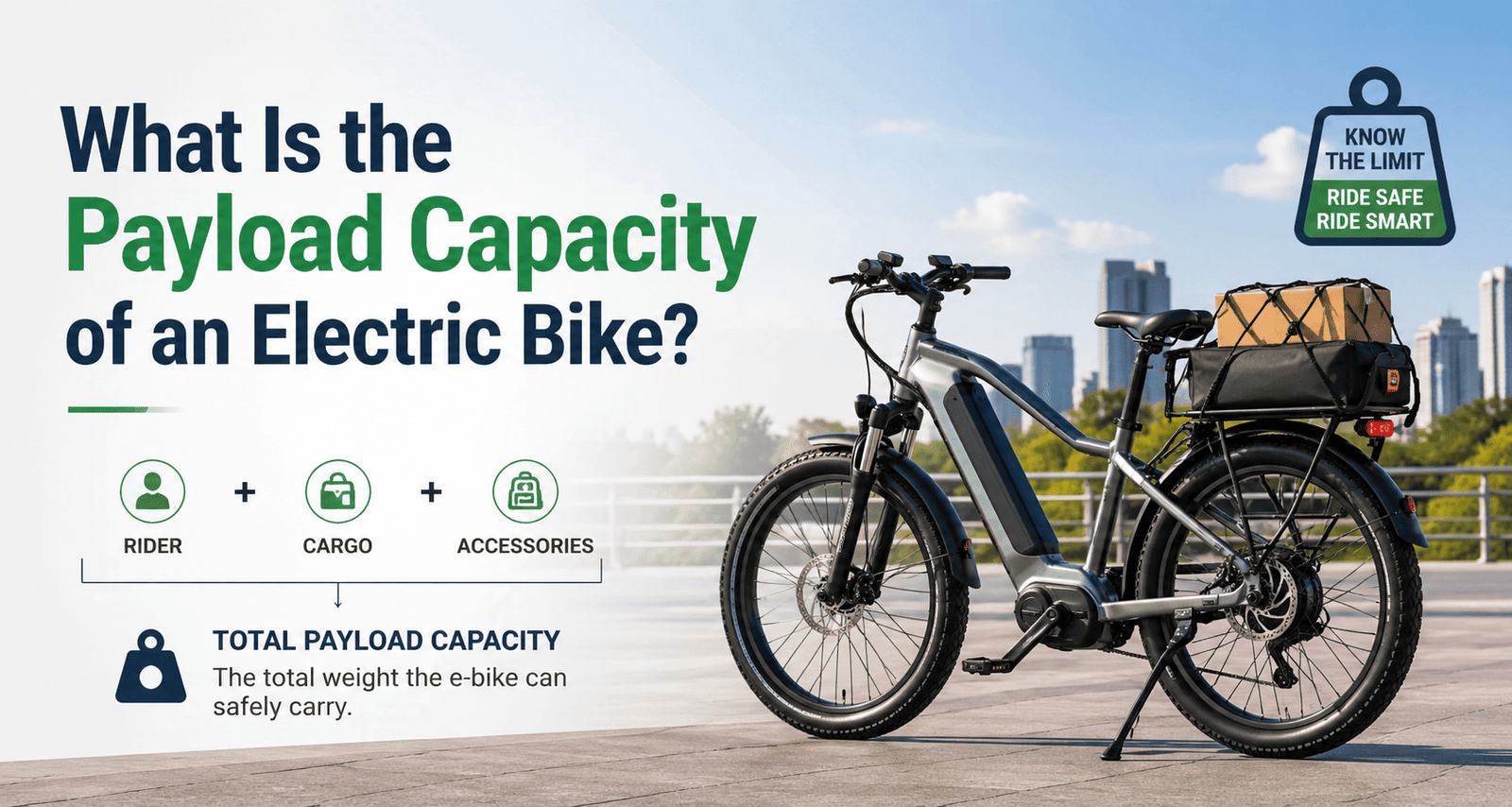
E-bike payload capacity is the total weight the bike can safely carry, including the rider, cargo, and any accessories1. It's not just the rider's weight. This figure is influenced by the frame, wheels, and motor, and affects performance, not just safety2.
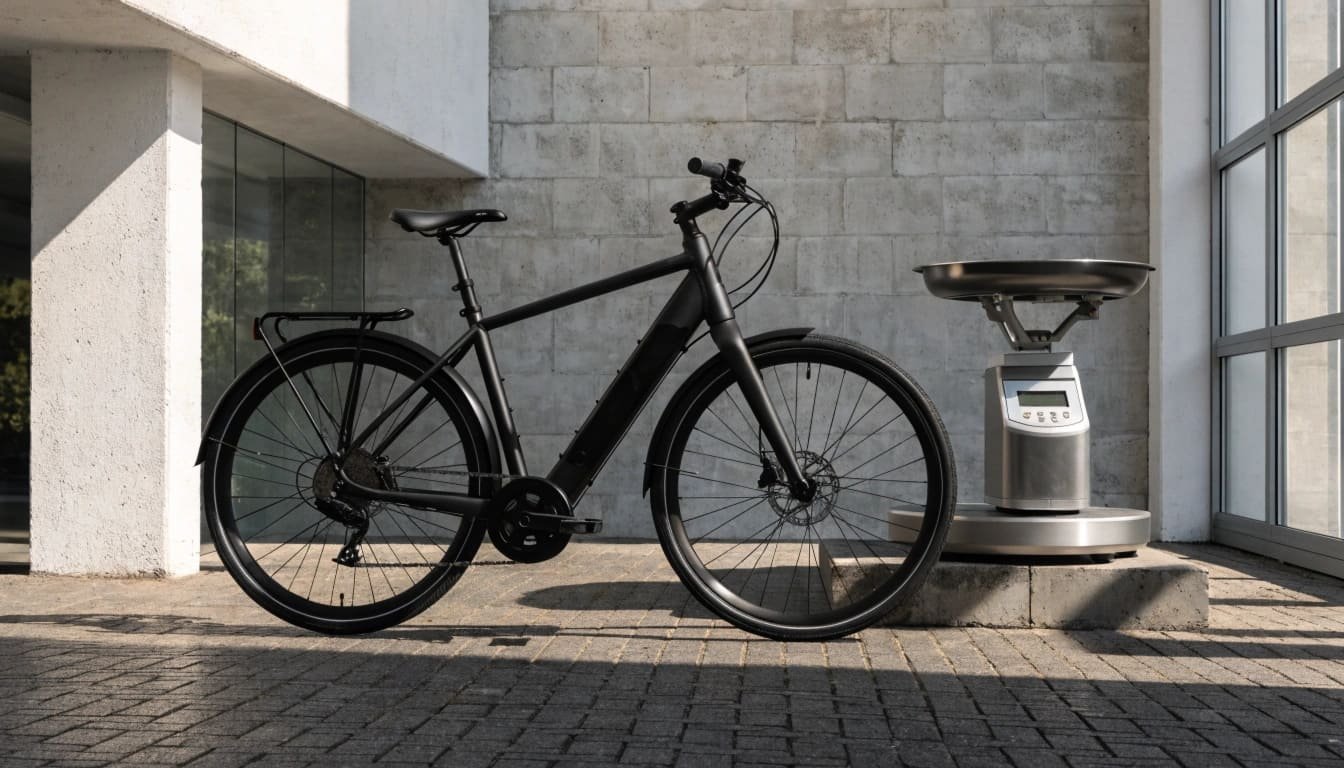
That number on the spec sheet seems simple, but in my 15 years of helping global buyers source e-bikes, I've seen it cause major problems. It's one of the most misunderstood figures in the industry. Let's break down what you really need to know to avoid costly mistakes. This will help you make better purchasing decisions for your market.
Does "Payload Capacity" Just Mean How Much the Rider Can Weigh?
Thinking payload is just for the rider? This common mistake can lead to unsafe bikes and unhappy customers. Let's clarify this crucial difference to protect your brand's reputation.
No, payload capacity is the total weight the bike can support. This includes the rider, any cargo in baskets or on racks, and accessories like locks or child seats. Always subtract cargo and accessory weight from the total payload to find the true maximum rider weight.3
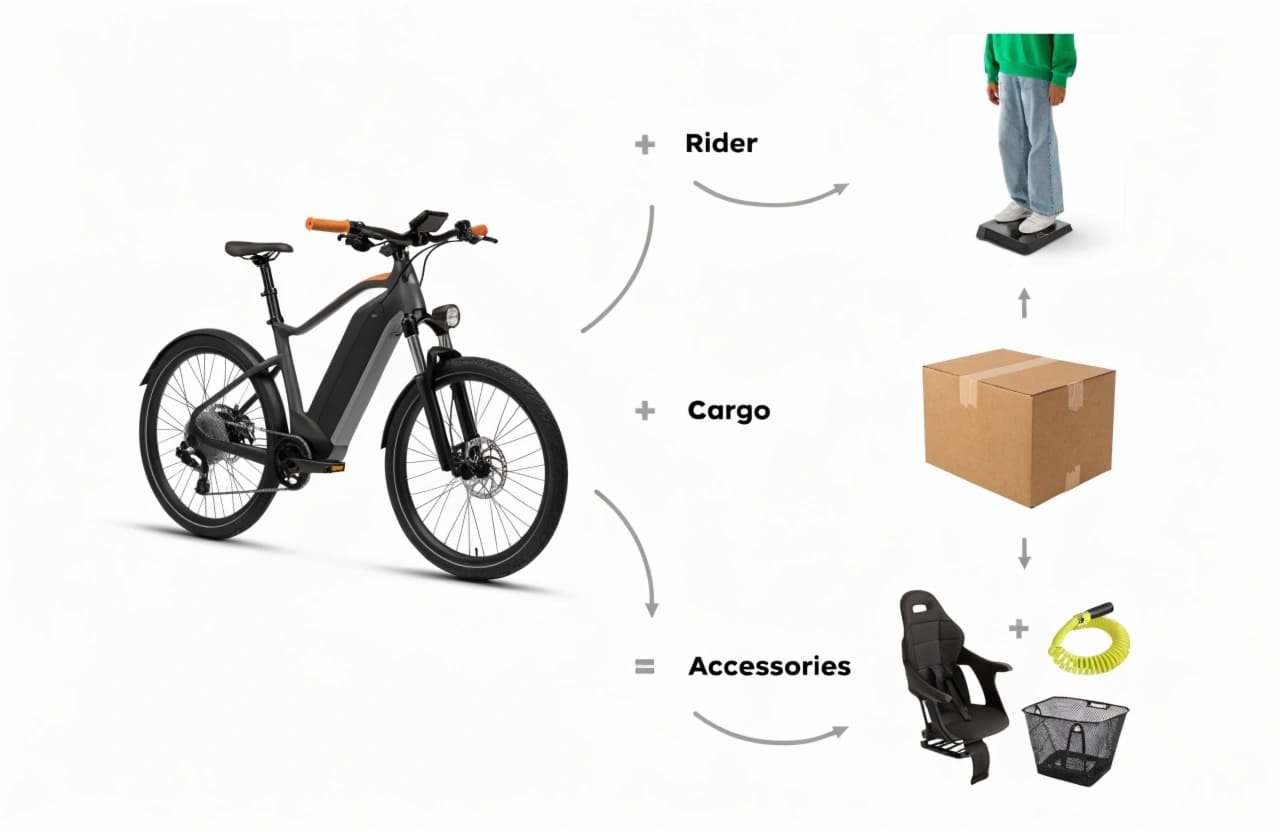
In our experience, this is the number one misconception buyers have. A common question we get during the quoting stage is, "What's the rider weight limit?" But that's the wrong question to start with. The right question is, "What is the total payload capacity?" From there, you work backward. We've seen cases where a buyer ordered bikes with a 130 kg payload, thinking it was fine for a 120 kg rider. But their customers added a 5 kg child seat and 10 kg of groceries, immediately exceeding the safe limit. This leads to warranty claims and damages your brand's reputation. It's crucial to understand all the components that make up the total load.
What's Included in Total Payload?
| Component | Description | Example Weight |
|---|---|---|
| Rider | The person operating the e-bike. | 85 kg |
| Cargo | Groceries, packages, work equipment. | 15 kg |
| Accessories | Child seat, panniers, heavy-duty lock, basket. | 5 kg |
| Total Load | Sum of all components. | 105 kg |
Failing to make this distinction clear to your end-users is a business risk. It's not just a technical spec; it's a safety and marketing issue that directly impacts how customers perceive your brand's quality and reliability.
Why Do Two E-Bikes With the Same Payload Rating Behave So Differently?
Do you trust that a 150 kg payload rating is the same everywhere? Different testing methods can hide risks. We'll show you what to ask to uncover the real story.
A "150 kg" rating isn't standardized.4 One factory might test it statically (just weight sitting on the bike), while another uses dynamic testing that simulates real riding conditions5, including bumps and stress. The testing environment—flat ground versus hills—also changes the real-world capacity.
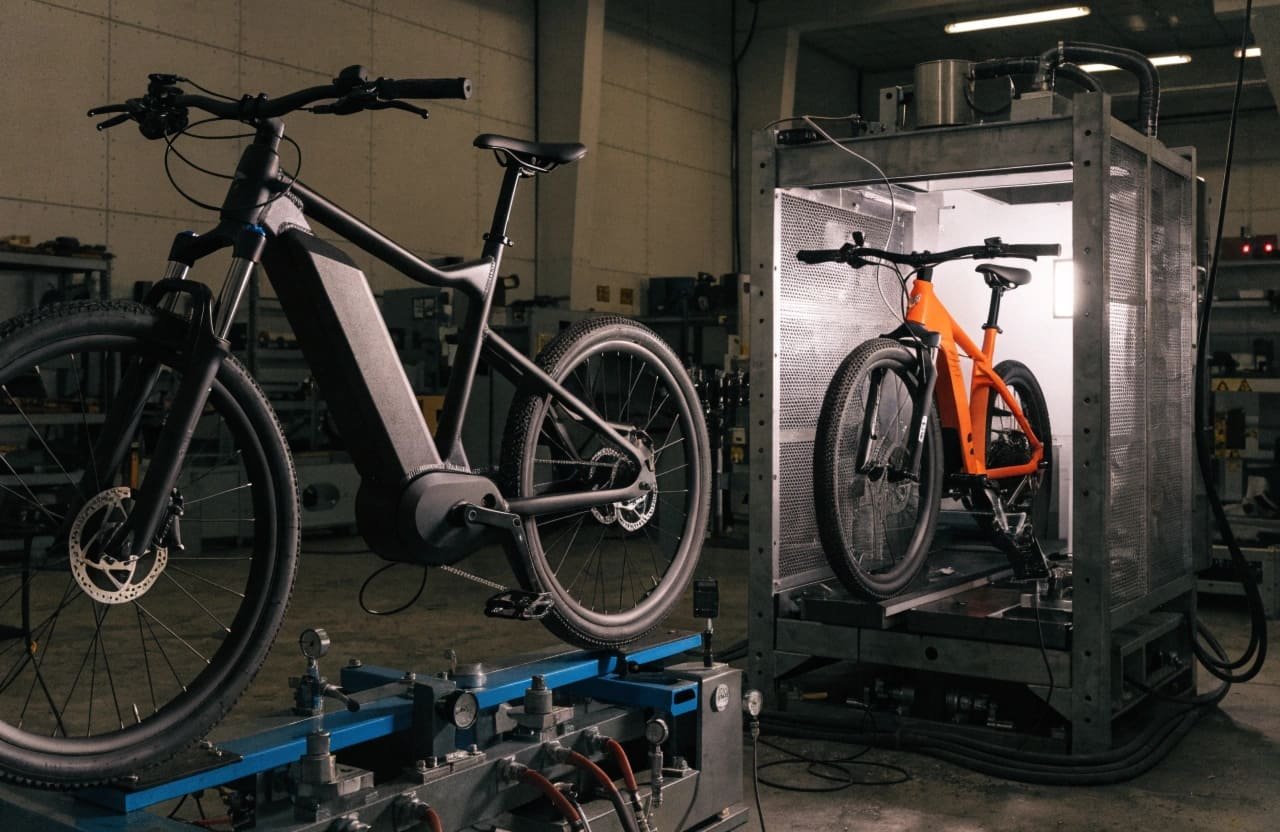
In our sourcing experience, the biggest trap for buyers is assuming a number is a universal standard. A "300 lb" payload from Supplier A is not always comparable to a "300 lb" payload from Supplier B. The difference lies in how they arrived at that number. You need to ask about their testing methodology.
Static vs. Dynamic Testing
Static testing is the simplest method. The factory essentially just places a fixed weight on the bike's frame to see if it holds. This doesn't account for the real-world forces of riding, like hitting a pothole or bouncing over a curb, which can multiply the stress on the frame and wheels6. Dynamic testing is much more rigorous and realistic. It involves machines that simulate riding conditions, including bumps, turns, and sustained vibration under load7. A bike that passes a dynamic test is significantly more robust.
Test Conditions Matter
A crucial point for our clients in North America and Europe is the difference in average rider weight compared to domestic Chinese test assumptions8. A bike might be tested in a lab using a 75 kg standard, but your target market's average might be closer to 90 kg or more. You must confirm the factory's rating accounts for your end-market demographics, not generic lab conditions. This is why you must ask suppliers for their testing protocol documentation. Don't just accept the number; understand how they got it.
How Does Exceeding the Payload Affect More Than Just the Frame?
Worried about a frame snapping? That's not the only risk. Overloading an e-bike silently degrades key components. Let's look at the hidden costs of pushing the payload limit.
Exceeding payload capacity doesn't just risk frame failure. It reduces battery range, increases wear on the motor and brakes, and can lead to spoke breakage9. Over time, this means more maintenance, higher ownership costs for your customers, and more potential warranty claims for you.
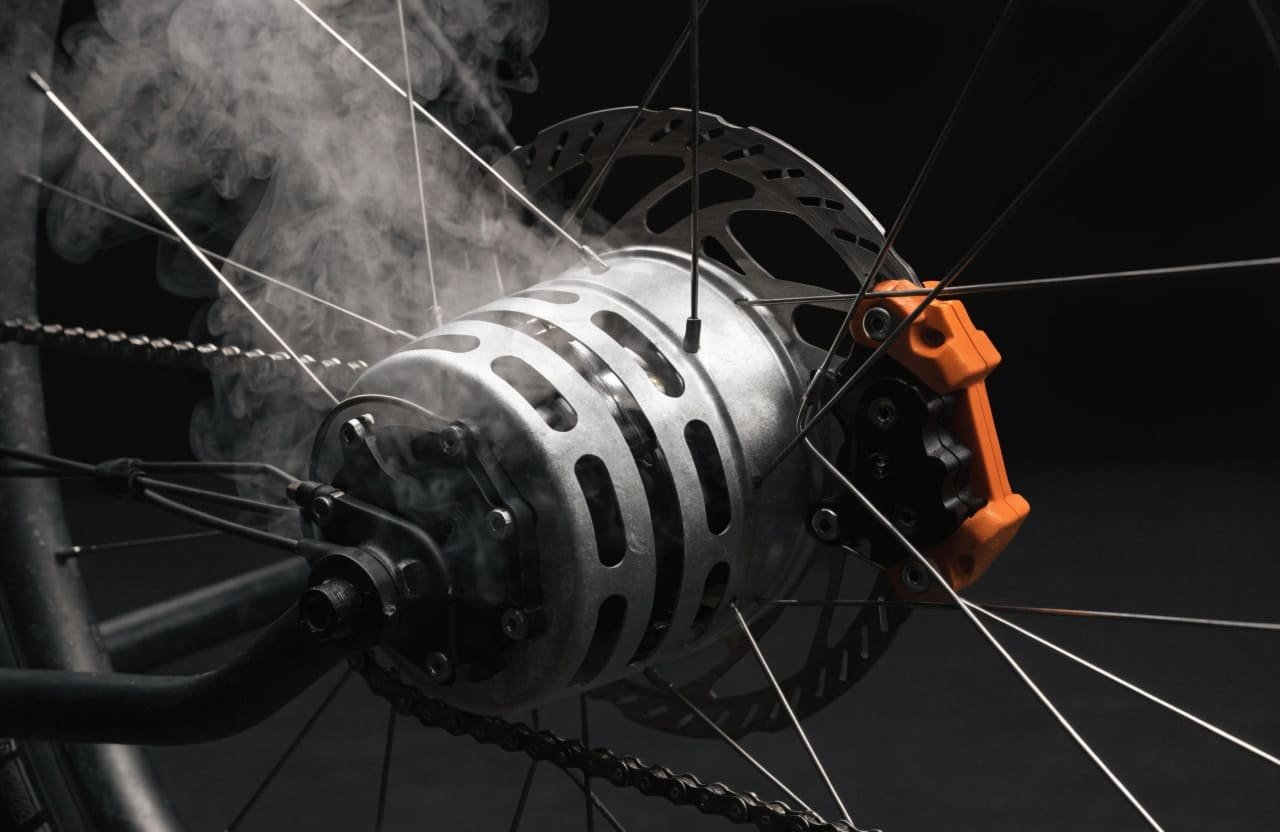
Buyers often focus on payload as a catastrophic failure point—a broken frame. But from what we've seen, the more common issues are the slow, costly ones that hurt brand perception over time. Pushing the weight limit puts a strain on the entire e-bike system, not just the structural components. This reframes payload from a simple safety spec into a critical variable for customer satisfaction and total cost of ownership. Think about it from your customer's perspective. If their e-bike's range is 30% less than advertised because they're carrying heavy loads, they won't blame their cargo. They'll blame your brand.
The Ripple Effect of Overloading an E-Bike
| Component | Impact of High Payload | Consequence for the Owner |
|---|---|---|
| Battery | Higher power draw, reduced range per charge.10 | "Range anxiety," shorter battery lifespan. |
| Motor | Increased strain and heat, especially on hills. | Accelerated wear, potential for burnout. |
| Brakes | Longer stopping distances, faster pad wear.11 | Safety risk, frequent replacement costs. |
| Wheels | Higher risk of bent rims and broken spokes. | Costly repairs, downtime, and frustration. |
These gradual failures are what lead to negative online reviews and a reputation for poor quality. Understanding the full impact of payload helps you select a bike that will perform reliably for your specific customers and their usage patterns.
Are Cargo E-Bike Payloads Calculated the Same Way as Regular E-Bikes?
Sourcing cargo e-bikes? Their payload logic is completely different. A misunderstanding here can ruin a commercial contract. Let's ensure you get the capacity your clients actually need.
No, cargo e-bike payloads are unique. The focus shifts from the rider to the cargo area's capacity and weight distribution. You must look at separate ratings for the front and rear racks12 and consider how the frame is reinforced to handle imbalanced, heavy loads safely.
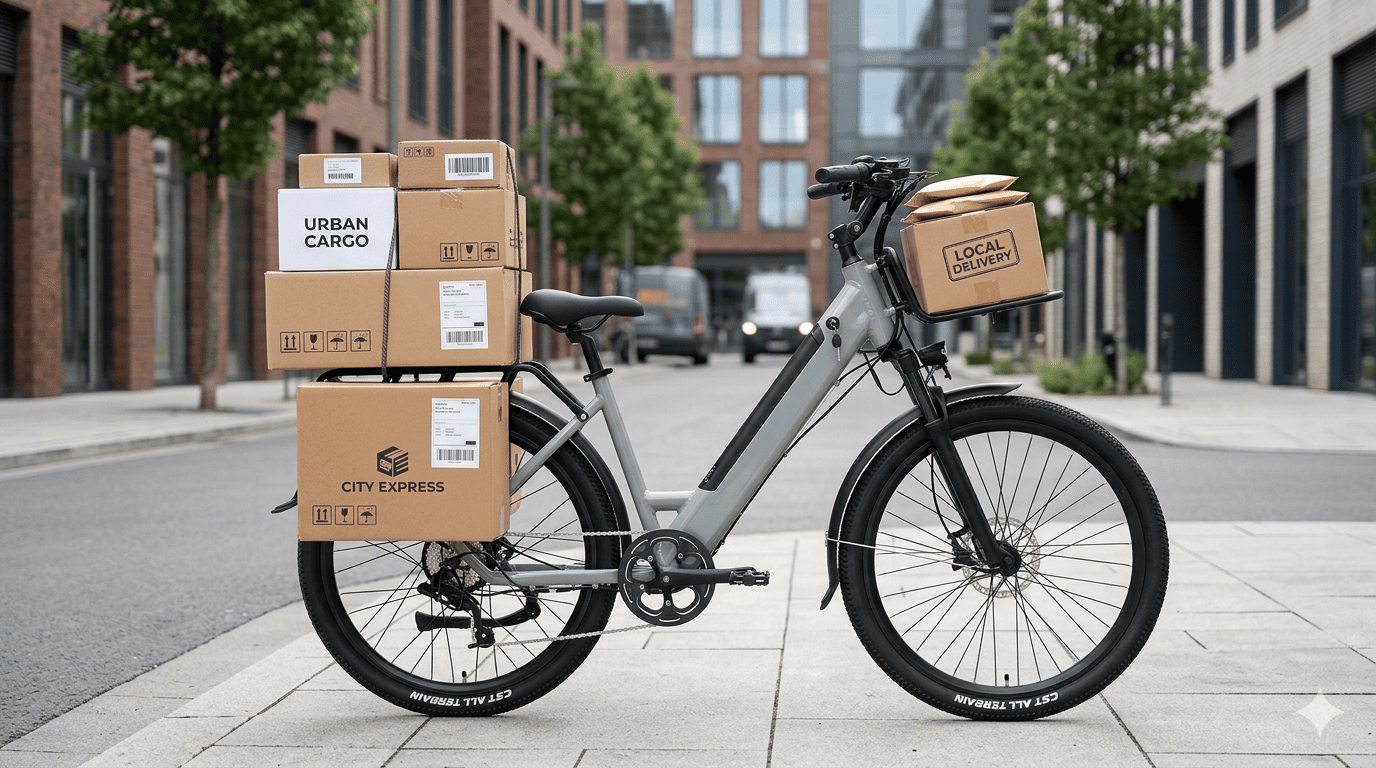
When we help clients source cargo e-bikes, the conversation changes completely. For a standard e-bike, the rider is the main load. For a cargo bike, the rider is often a small fraction of the total weight. The engineering challenges are fundamentally different, and you need to scrutinize the specs more carefully.
Weight Distribution is Key
It's not just about the total number, but where the weight goes. A bike rated for 200 kg total might only support 25 kg on the front rack and 100 kg on the rear. You need to ask for these individual capacity ratings. This is especially important for delivery businesses or parents using child seats, where the load is concentrated in one area.
Frame and Component Reinforcement
We've seen cases where a factory simply adds a large rack to a standard e-bike frame and calls it a "cargo bike." This is a major red flag. A true cargo bike is engineered from the ground up for stability under load. Look for features like thicker frame tubing, reinforced gussets at key joints, stronger wheels with more spokes, and oversized brake rotors. The geometry is also different, often featuring a lower center of gravity to improve handling when loaded. These are non-negotiable features for a safe and durable commercial-grade cargo bike.
What Questions Should You Ask Your Supplier About Payload Before You Order?
Ready to talk to suppliers? Don't just ask for the payload number. The right questions can save you from a bad investment. Here is the checklist we use with our clients.
Ask for the testing protocol: Was it static or dynamic? What rider weight was assumed? Request separate capacity ratings for any racks. Also, confirm that the payload accounts for your target market's average rider weight, not just the factory's standard assumptions. Documentation is key.

To avoid the problems we've discussed, you need to go beyond the spec sheet. Based on our experience guiding buyers, here are the essential questions to ask your potential e-bike supplier. Getting clear, documented answers can be the difference between a successful product line and a warehouse full of returns. A good supplier will have this information ready and will be transparent about their processes. If they are evasive or can't provide details, it's a significant warning sign. It suggests their payload numbers might be more for marketing than for engineering.
Your Pre-Order Payload Checklist
- "Can you provide the testing certification or report for the stated payload capacity?"
- "Was this test static or dynamic? What were the conditions (incline, surface, duration)?"
- "What assumed rider weight was used for your testing standard?"
- "What are the individual weight limits for the rear and front racks?"
- "How does the stated payload impact the warranty on the frame, motor, and wheels?"
Conclusion
Understanding e-bike payload is about more than safety; it's about performance, customer satisfaction, and your bottom line. Ask the right questions to protect your investment and your brand.
"[PDF] Eligible Cargo & Utility E-Bike Models - SLC.gov", https://www.slc.gov/sustainability/wp-content/uploads/sites/20/2025/01/Cargo-Bike-Master-List.pdf. A technical standard or regulatory guidance defining bicycle/e-bike load ratings can support that payload is treated as the combined carried load rather than rider mass alone. Evidence role: definition; source type: government. Supports: E-bike payload capacity means the total supported load, including rider, cargo, and accessories.. Scope note: Definitions vary by standard and jurisdiction, so the citation should be used to support the general meaning of payload rather than a universal legal definition. ↩
"[PDF] Summary of Electric and Non- Powered Bicycle Standards", https://www.cpsc.gov/s3fs-public/Electric-and-Non-Powered-Bicycle-Standards-Summary-Report.pdf?VersionId=rZGs9tSONCKqT8AEaJJMZd_S1nDJpKEW. Engineering or standards literature on bicycle/e-bike structural and performance requirements can substantiate that maximum load depends on structural components and propulsion/braking performance, not frame strength alone. Evidence role: mechanism; source type: paper. Supports: Payload capacity is influenced by the frame, wheels, and motor and affects performance as well as safety.. Scope note: Such sources may address bicycles or EPACs generally and may not quantify the contribution of each component for every e-bike design. ↩
"How much weight can my bike carry? : r/bikepacking - Reddit", https://www.reddit.com/r/bikepacking/comments/1ddvbzm/how_much_weight_can_my_bike_carry/. Load-rating guidance that defines total permissible load as the sum of rider, luggage, and accessories supports calculating remaining rider allowance by subtracting non-rider loads from the rated maximum. Evidence role: mechanism; source type: institution. Supports: The rider weight allowance should be calculated by subtracting cargo and accessory weight from total payload capacity.. Scope note: The arithmetic is direct, but the cited source should establish the load components included in the rating; it may not use the same commercial term “payload.” ↩
"[PDF] Summary of Electric and Non- Powered Bicycle Standards", https://www.cpsc.gov/s3fs-public/Electric-and-Non-Powered-Bicycle-Standards-Summary-Report.pdf?VersionId=rZGs9tSONCKqT8AEaJJMZd_S1nDJpKEW. A citation to e-bike and bicycle standards can show that while some standards specify test methods and maximum permissible mass declarations, manufacturer-stated payload ratings are not necessarily presented under one globally uniform consumer labeling scheme. Evidence role: historical_context; source type: institution. Supports: A stated e-bike payload number is not necessarily standardized across manufacturers or markets.. Scope note: The source may show diversity among standards rather than directly proving every supplier uses different methods. ↩
"[PDF] Summary of Electric and Non- Powered Bicycle Standards", https://www.cpsc.gov/s3fs-public/Electric-and-Non-Powered-Bicycle-Standards-Summary-Report.pdf?VersionId=rZGs9tSONCKqT8AEaJJMZd_S1nDJpKEW. Bicycle and EPAC test standards distinguish static strength tests from fatigue or dynamic tests, supporting the claim that load capacity can be evaluated by different test methods. Evidence role: mechanism; source type: institution. Supports: Manufacturers may rely on static or dynamic/fatigue testing approaches when assessing bicycle or e-bike load capacity.. Scope note: Standards describe recognized test categories; they do not necessarily document the practices of any specific factory. ↩
"[PDF] Quantification of Structural Loading During Off-Road Cycling", https://hull.bme.ucdavis.edu/files/2011/07/DeLorenzo_JBiomechEng_1999-2.pdf. Vehicle or bicycle dynamics research on impact loading can support that road shocks create transient forces exceeding the static weight of rider and cargo. Evidence role: mechanism; source type: paper. Supports: Impacts from potholes or curbs can impose loads on an e-bike frame and wheels that exceed static loading.. Scope note: The exact force multiplier depends on speed, tire pressure, suspension, obstacle shape, and load distribution, so the citation should support the principle rather than a fixed multiplier. ↩
"Static and Dynamic Fatigue Behavior of Topology Designed ... - PMC", https://pmc.ncbi.nlm.nih.gov/articles/PMC4490041/. Descriptions of bicycle fatigue and road-simulation tests can document that dynamic test rigs reproduce repeated loading, vibration, and road irregularities under specified loads. Evidence role: mechanism; source type: institution. Supports: Dynamic bicycle or e-bike testing can simulate riding conditions such as repeated bumps, vibration, and load cycles.. Scope note: Individual standards vary in which maneuvers are simulated, so the source may support the general concept of dynamic testing rather than every listed condition. ↩
"A study of trends in body morphology, overweight, and obesity in ...", https://pmc.ncbi.nlm.nih.gov/articles/PMC11874844/. National health and anthropometric data can provide contextual evidence that adult body-weight distributions differ between China, North America, and Europe, making market-specific rider assumptions relevant to load planning. Evidence role: statistic; source type: government. Supports: Average adult body weight differs across China, North America, and Europe, so payload planning may need to reflect the end market.. Scope note: Population averages do not equal actual e-bike rider weights or factory test assumptions; they only support the demographic context behind the claim. ↩
"[PDF] Bicycle Wheel Spoke Patterns and Spoke Fatigue 1 - Duke University", https://people.duke.edu/~hpgavin/papers/HPGavin-Wheel-Paper.pdf. Research on e-bike energy consumption and bicycle component fatigue can support that higher vehicle mass increases power demand and mechanical loads on drivetrain, braking, and wheel components. Evidence role: mechanism; source type: paper. Supports: Exceeding or approaching payload limits can reduce range and increase mechanical wear on e-bike components.. Scope note: A single source may not cover battery range, motor wear, brake wear, and spoke failures together; multiple technical sources may be needed for complete support. ↩
"Research on the interaction between energy consumption ... - PMC", https://pmc.ncbi.nlm.nih.gov/articles/PMC10762188/. E-bike energy-consumption studies can substantiate that increased total mass raises energy use, particularly during acceleration and climbing, thereby reducing achievable range for a given battery capacity. Evidence role: mechanism; source type: paper. Supports: Higher payload increases e-bike power demand and can reduce range per charge.. Scope note: Actual range also depends on route, wind, tire pressure, assist level, speed, and rider input, so the citation should not be read as predicting a universal percentage loss. ↩
"Auto Stopping Distance", http://hyperphysics.phy-astr.gsu.edu/hbase/crstp.html. Braking dynamics literature supports that greater mass increases the kinetic energy that brakes must dissipate and can increase stopping distance or thermal load under otherwise similar conditions. Evidence role: mechanism; source type: education. Supports: A heavier loaded e-bike can require greater braking effort, contributing to longer stopping distances and faster brake wear.. Scope note: Stopping distance also depends on tire grip, brake design, rider reaction, road surface, and brake modulation; the source supports the physical mechanism rather than a precise outcome for every e-bike. ↩
"Luggage carrier - Wikipedia", https://en.wikipedia.org/wiki/Luggage_carrier. Cargo-bike standards, rack standards, or manufacturer documentation can support that load limits may be specified separately for cargo-carrying positions such as front and rear carriers. Evidence role: definition; source type: institution. Supports: Cargo e-bikes should be evaluated using separate load ratings for front and rear racks or cargo areas.. Scope note: The exact front and rear ratings are model-specific, so the citation should support the practice of separate load limits rather than a universal value. ↩