
Choosing the wrong brakes costs you money and customer trust. Don't let a simple spec choice sink your product launch before it even begins.
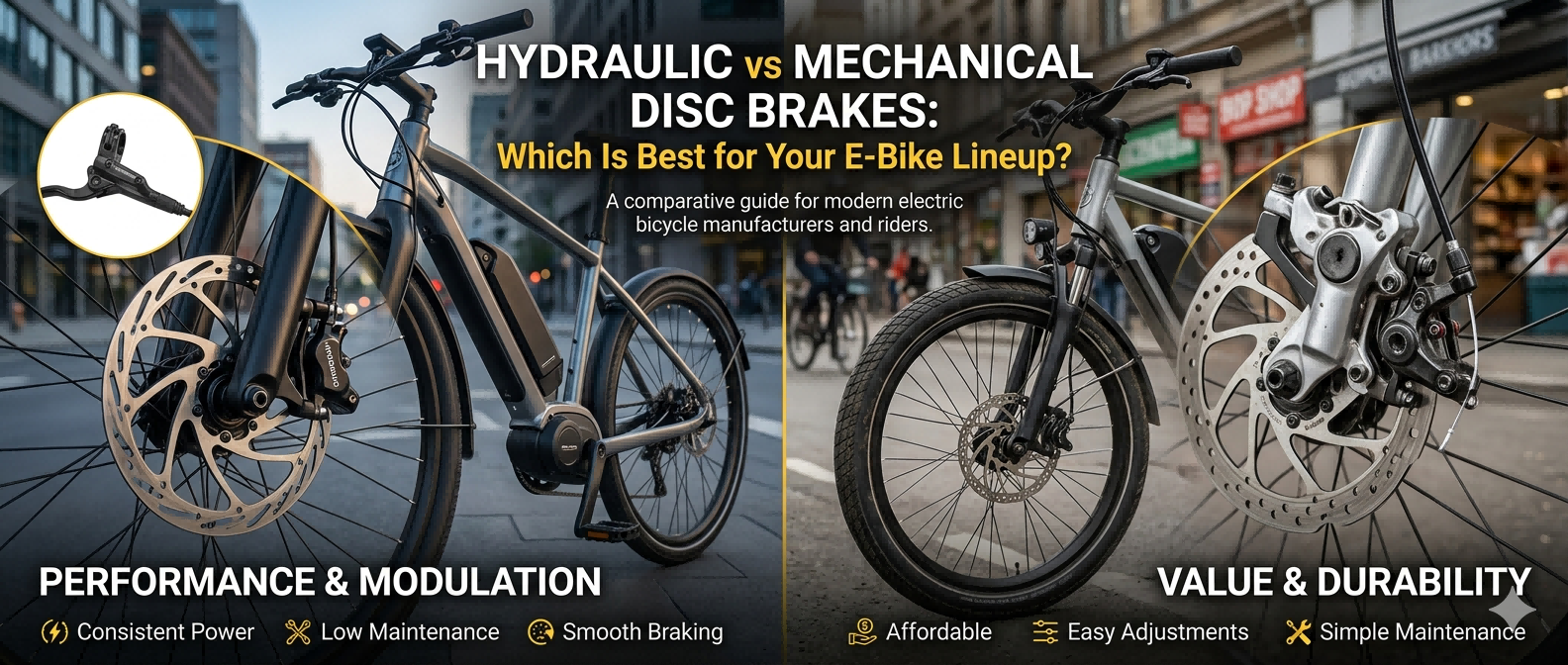
The best brake isn't always hydraulic. It's the one that perfectly matches your e-bike's price point, target market, and service capabilities. For many urban commuters, mechanical is smarter, while hydraulic suits high-performance models.
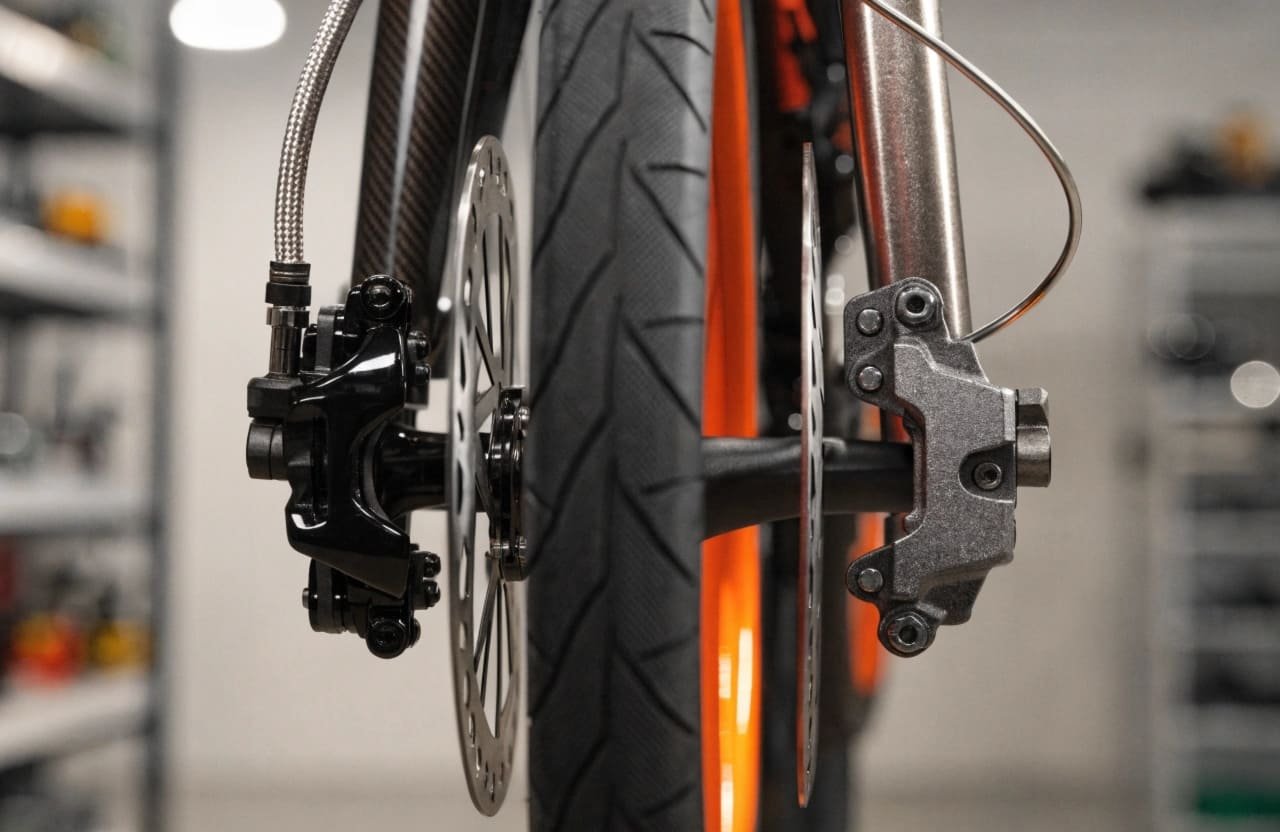
Let's move past the simple "hydraulic is better" myth that permeates our industry. As an e-bike manufacturer with over 15 years of experience advising brands on their builds, I can tell you the real decision is far more strategic. We've seen buyers default to certain specs based on marketing hype, only to face problems down the line. The smartest brands don't just pick components; they build a product strategy. Choosing your brakes is a critical part of that strategy, so let's break down how you should really be thinking about this choice.
Does "Hydraulic" Always Justify the Higher Cost?
Feeling pressured to spec hydraulic brakes on every model? This common assumption can eat into your profit margins on budget-friendly e-bikes, where every dollar on the BOM counts.
No. For urban commuter e-bikes, a quality mechanical disc brake system often provides all the stopping power needed1. The cost savings are significant2 and can be reallocated to other features, improving your bottom line without sacrificing safety.
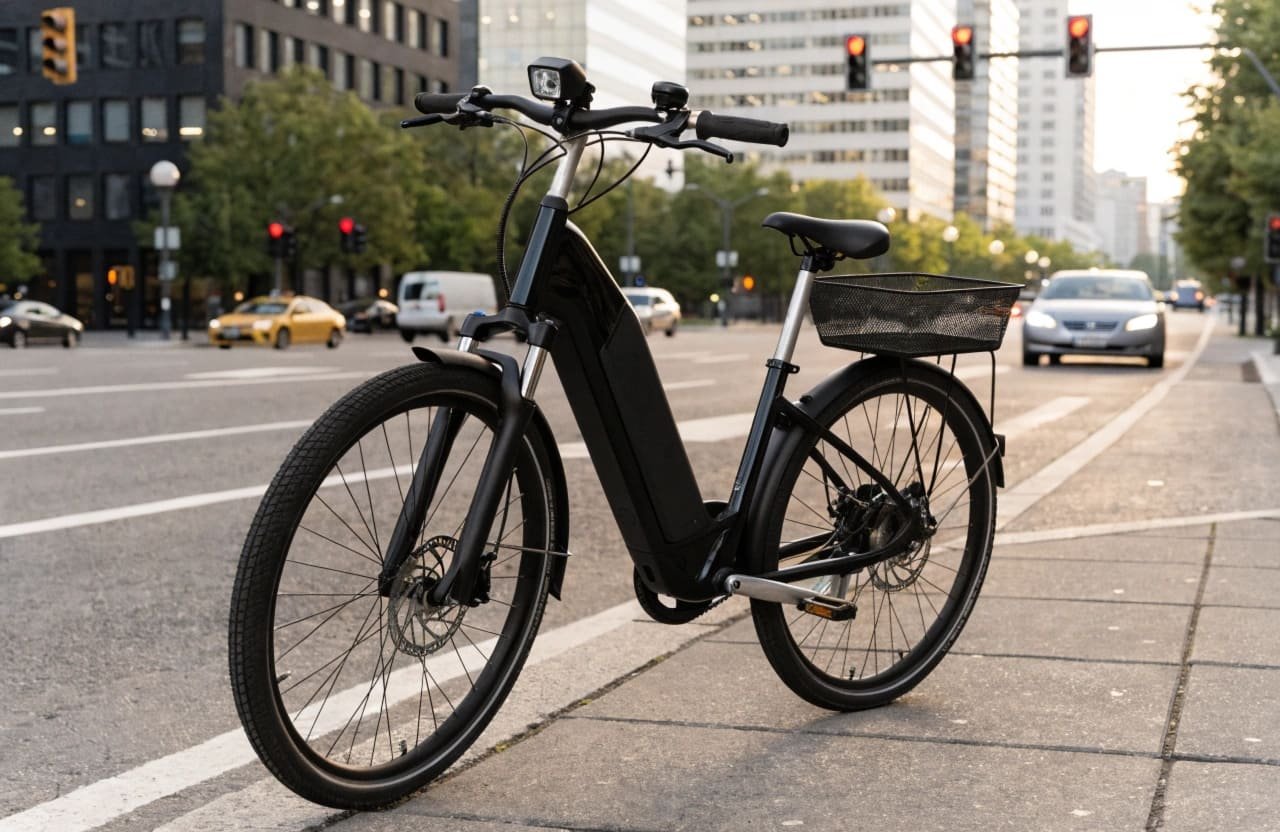
In our OEM projects, we constantly balance the bill of materials (BOM) against the final retail price. The belief that "hydraulic equals premium3" often leads brands to over-spec their bikes, especially in the highly competitive urban commuter segment. This is a costly mistake.
The Urban Commuter Case
For an e-bike intended for city riding and priced under the $1,000 mark, a well-configured mechanical brake system is more than adequate4. We're not talking about the cheapest components available, but a quality setup. By pairing a reliable caliper from a brand like Tektro with a good rotor and quality brake pads, you achieve safe, dependable stopping power. The cost savings versus a basic hydraulic system can be substantial. This money can then be invested in a better battery, a more comfortable saddle, or integrated lights—features the urban rider will notice and appreciate every day.
The Performance Threshold
So, when does hydraulic become non-negotiable? The need for hydraulic brakes is dictated by the e-bike's intended use and performance level. For high-speed Class 3 e-bikes5, heavy cargo models6, or any e-MTB designed for trail riding, the superior stopping power, modulation, and heat management of hydraulic brakes7 are essential for safety and performance. In these cases, the higher cost is not just justified; it's a requirement.
| Price Tier | Use Case | Recommended Brake Type | Rationale |
|---|---|---|---|
| Sub-$1000 | Urban Commuting | Quality Mechanical | Cost-effective, easy to service, adequate power. |
| $1000 - $2000 | Performance Commuter / Light Trail | Basic Hydraulic or High-End Mechanical | A mix of performance and value. |
| $2000+ | e-MTB / Cargo / High-Speed | Quality Hydraulic | Essential for safety and performance demands. |
How Does Your Target Market Change the Brake Equation?
You've designed the perfect e-bike on paper, but will it fail in the real world? Spec'ing brakes without considering the local service infrastructure and rider expectations is a huge risk.
The right brake choice depends entirely on where you sell. A hydraulic system is a liability in a region with no skilled mechanics, while a mechanical brake might underperform on steep North American mountain trails.

From our experience exporting to different continents, we've learned that a "one-spec-fits-all" approach is a recipe for failure. What works in Germany might be a disaster in Indonesia. The brake system must be appropriate for the environment where the end customer will be riding and, just as importantly, getting the bike serviced.
The European Commuter
In markets like Germany or the Netherlands, riders expect reliability and durability. There is a strong service culture, and bike shops are well-equipped. While a high-end mechanical system can be appreciated for its simplicity, the market perception often leans toward hydraulic systems as a sign of quality on mid-to-high-end city and trekking e-bikes.
The North American Trail Rider
For the North American e-MTB market, this isn't even a debate. Riders are tackling demanding terrain and expect high performance. Hydraulic disc brakes, often with large 180mm or 203mm rotors8, are the standard. Spec'ing a mechanical brake on a bike meant for these customers would make it seem cheap and unsafe, and your brand would lose all credibility.
The Southeast Asian City Bike
This is where I see many brands make a critical error. In many parts of Southeast Asia, the local bike shop is a small, family-run business with basic tools.9 They can fix a flat tire and replace a brake cable, but they likely do not have a hydraulic bleed kit10 or the knowledge to use one. In this context, a "premium" hydraulic brake becomes a problem. One minor leak or bubble in the line, and the customer's bike is unusable. A simple, robust mechanical brake is the far superior choice here because it's reliable and, crucially, serviceable by anyone, anywhere.
What Are the Hidden Costs of Hydraulic Brakes You're Not Seeing?
Your component price list looks good, and you've factored in the BOM cost. But are you prepared for the hidden operational costs? Hydraulic brakes can bring unexpected expenses that show up later.
Hydraulic brakes add costs far beyond the component price. You must account for increased assembly line time, a higher risk of shipping damage, and more complex, expensive after-sales support and warranty claims.
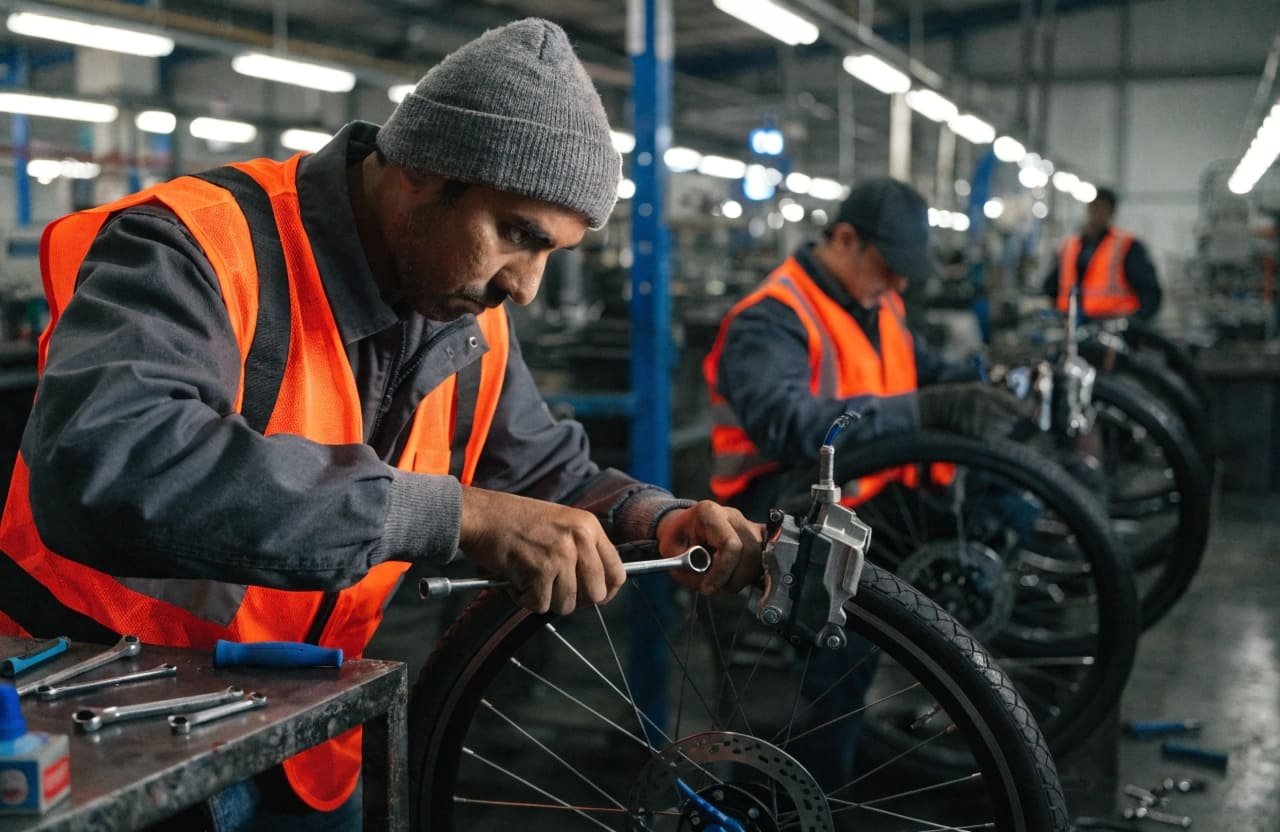
On the surface, the price difference between a mechanical and hydraulic brake set is clear. What isn't on the price sheet are the downstream costs that affect your entire operation. We've seen these costs surprise many new brands we work with.
On the Assembly Line
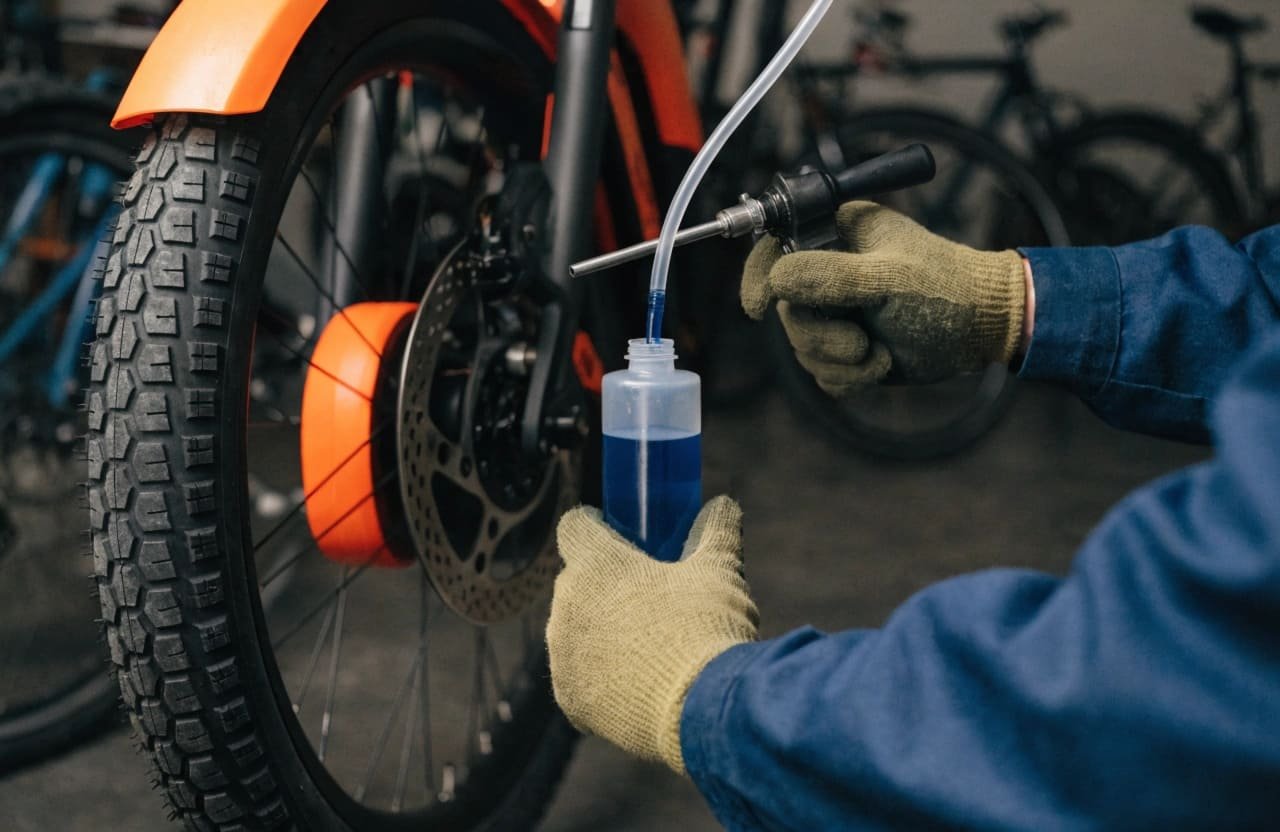
Installing a mechanical brake is simple: attach the caliper, run the cable, and adjust. Installing a hydraulic brake is more involved.11 The lines often need to be trimmed to length and then the system must be "bled" to remove any air bubbles12. This requires special tools, hydraulic fluid, and more skilled labor. It adds measurable time and cost to every single unit you produce. Proper quality control to check for leaks is also more intensive.
In Transit and at the Dealer
We've handled the aftermath of shipping containers where bikes with hydraulic brakes have arrived with issues. A small, undetected leak in the factory can become a big mess during transit. A bike that arrives at a dealership with a soft, spongy brake lever is unsellable until it's repaired. This creates delays and puts a service burden on your distributors before a customer even sees the product.
After the Sale
This is the biggest hidden cost. A customer with a mechanical brake issue can often find a solution easily. A frayed cable is a simple fix. But when a customer has a hydraulic brake problem in an area without a sophisticated bike shop, they have a serious issue. They can't fix it themselves. This leads to frustrated customers, negative reviews, and costly warranty claims or returns. That simple mechanical brake is looking a lot better now, isn't it?
| Stage | Mechanical Brake | Hydraulic Brake | Hidden Cost Impact |
|---|---|---|---|
| Assembly | Fast, simple install | Slower, requires bleeding | Higher labor cost per unit |
| Shipping | Very low risk | Risk of leaks | Cost of returns/repairs |
| Dealer Service | Basic tools | Requires bleed kits/training | Higher dealer support costs |
| End-User | Easy to adjust/repair | Difficult/impossible to self-service | High risk of customer dissatisfaction |
Conclusion
The right brake choice balances cost, performance, and market reality. Stop asking "which is better" and start asking "which is right for my customer and my business?"
"[PDF] Summary of Electric and Non- Powered Bicycle Standards", https://www.cpsc.gov/s3fs-public/Electric-and-Non-Powered-Bicycle-Standards-Summary-Report.pdf?VersionId=rZGs9tSONCKqT8AEaJJMZd_S1nDJpKEW. A bicycle safety standard or brake-performance test source can document the stopping-distance requirements that compliant bicycles and e-bikes must meet, supporting the claim that adequately specified mechanical disc brakes can be sufficient for ordinary urban use. Evidence role: general_support; source type: government. Supports: A quality mechanical disc brake system often provides enough braking performance for many urban commuter e-bikes.. Scope note: Such evidence supports minimum braking adequacy under defined test conditions; it does not prove that every mechanical brake setup is sufficient for every rider, load, or environment. ↩
"Mechanical vs. Hydraulic Disc Brakes: A Comparison Guide - Velotric", https://www.velotricbike.com/blogs/story-landing/mechanical-vs-hydraulic-disc-brakes?srsltid=AfmBOopcArDSjIQZ3iOc88db9DISGkrUVeoTCIOyNtt5BAoEQy4p2PW5. A neutral cost-analysis source or industry bill-of-materials study can substantiate that mechanical disc brake systems generally have lower component and service costs than hydraulic systems. Evidence role: statistic; source type: research. Supports: Mechanical disc brakes can offer meaningful cost savings compared with hydraulic systems in e-bike production.. Scope note: Cost differences vary by supplier, order volume, specification level, and region, so the source should be used as contextual evidence rather than a universal price comparison. ↩
"Bicycle brake", https://en.wikipedia.org/wiki/Bicycle_brake. A bicycle technology reference can explain the functional differences between hydraulic and cable-actuated disc brakes, showing why hydraulic actuation is often associated with higher-end bicycle specifications. Evidence role: definition; source type: encyclopedia. Supports: Hydraulic brakes are commonly perceived or marketed as premium components, even though suitability depends on use case.. Scope note: The source can explain market association and technical features, but it cannot establish that hydraulic brakes are always objectively premium in a given product strategy. ↩
"[PDF] Summary of Electric and Non- Powered Bicycle Standards", https://www.cpsc.gov/s3fs-public/Electric-and-Non-Powered-Bicycle-Standards-Summary-Report.pdf?VersionId=rZGs9tSONCKqT8AEaJJMZd_S1nDJpKEW. An e-bike or bicycle braking standard can show that braking adequacy is assessed by stopping performance rather than by hydraulic actuation alone, supporting the claim that a properly configured mechanical system can be adequate for lower-speed urban use. Evidence role: expert_consensus; source type: institution. Supports: A properly configured mechanical brake system can be adequate for an urban e-bike if it meets applicable braking-performance requirements.. Scope note: Standards establish compliance thresholds and test methods; they do not compare every commercial brake model or validate the article’s specific price tier. ↩
"E-bike laws to know | Marin County", https://www.marincounty.gov/departments/cda/sustainability/electrify-marin/electric-transportation/micromobility/e-bike-laws-know. A government or standards source can define Class 3 e-bikes as pedal-assist electric bicycles with motor assistance up to 28 mph, giving context for why they impose higher braking demands than lower-speed urban bicycles. Evidence role: definition; source type: government. Supports: Class 3 e-bikes are high-speed e-bikes relative to other common e-bike classes.. Scope note: A legal definition of Class 3 speed does not itself prove that hydraulic brakes are required; it only supports the high-speed context of the claim. ↩
"Accelerating and braking - Dynamics", https://dynref.engr.illinois.edu/ava.html. An engineering or vehicle-dynamics source can show that braking energy increases with vehicle mass and with the square of speed, supporting the concern that heavier cargo e-bikes impose greater thermal and stopping demands on brakes. Evidence role: mechanism; source type: education. Supports: Heavy cargo e-bikes place greater demands on braking systems because higher mass increases braking energy and stopping requirements.. Scope note: The physics supports the general relationship between mass, speed, and braking energy; it does not specify a particular brake model or threshold for all cargo e-bikes. ↩
"Mechanical vs. Hydraulic Disc Brakes: A Comparison Guide - Velotric", https://www.velotricbike.com/blogs/story-landing/mechanical-vs-hydraulic-disc-brakes?srsltid=AfmBOootrBHq33am6xC_KdTAZ4qytWcVFIRYukDigamOHKy3XvGt135K. A technical bicycle braking source can explain that hydraulic disc brakes transmit force through fluid and are commonly associated with stronger actuation, finer modulation, and better performance under sustained braking than cable-actuated systems. Evidence role: mechanism; source type: education. Supports: Hydraulic disc brakes generally provide advantages in braking force, modulation, and heat management for demanding e-bike applications.. Scope note: The evidence supports the general mechanical advantage of hydraulic systems; actual performance still depends on rotor size, pad compound, caliper design, maintenance, and test conditions. ↩
"Mountain Bike MTB DH 6inch 180/203mm Cooling Disc ...", https://www.ebay.com/itm/168282677854. A technical cycling or engineering source can explain that larger disc rotors increase braking torque and heat capacity, which is why 180 mm and 203 mm rotors are commonly used for mountain bikes and e-bikes under demanding braking conditions. Evidence role: mechanism; source type: education. Supports: Large 180 mm or 203 mm rotors are used on demanding e-MTB applications because they increase braking leverage and thermal capacity.. Scope note: The source supports the functional rationale for larger rotors, not the claim that these exact sizes are universally standard in every North American e-MTB segment. ↩
"Small Enterprise Financing: Role of Informal Credit Market", https://thedocs.worldbank.org/en/doc/088030524965304102-0560011981/original/WorldBankGroupArchivesfolder30135093.pdf. A development, transport, or small-enterprise source can document the prevalence of informal or small-scale repair businesses in parts of Southeast Asia, giving context for the article’s concern about limited specialist bicycle-service infrastructure. Evidence role: historical_context; source type: institution. Supports: In some Southeast Asian markets, repair and service businesses may be small-scale and have limited specialist equipment.. Scope note: Regional evidence will be broad and may not describe bicycle shops specifically in every Southeast Asian country or city. ↩
"How to Bleed Shimano® Flat Bar Hydraulic Brakes - Park Tool", https://www.parktool.com/en-us/blog/repair-help/shimano-hydraulic-brake-service-and-adjustment?srsltid=AfmBOoqqKn8DqR_7jAc6ink5V-88ilxfIk9Sxd5iSad_zzc2HTOODdnS. A bicycle maintenance manual or technical training source can state that servicing hydraulic disc brakes requires bleeding equipment and compatible brake fluid, supporting the distinction between hydraulic service and simpler cable-brake adjustment. Evidence role: mechanism; source type: institution. Supports: Hydraulic disc brake service generally requires a bleed kit, fluid, and specific maintenance knowledge.. Scope note: The evidence supports the maintenance requirement for hydraulic systems generally; it does not measure how many shops in a given region possess the tools or training. ↩
"Hydraulic Road Disc (HRD) Brake Hose Shortening and Bleed Manual", https://docs.sram.com/en-US/publications/2wamQedjkGP8QebD5HQiiC/BM%20-%20Hydraulic%20Road%20Disc%20(HRD)%20Brake%20Hose%20Shortening%20and%20Bleed%20Manual. A technical service source can document that hydraulic brake installation may require hose routing, hose cutting, fitting installation, leak checks, and bleeding, whereas cable-actuated systems use mechanical cable tension adjustment. Evidence role: mechanism; source type: institution. Supports: Hydraulic brake installation is generally more complex than mechanical brake installation.. Scope note: Installation complexity varies by frame design, factory pre-bleeding, and component model, so the source should be treated as general support rather than a universal assembly-time measurement. ↩
"Can you really get all the air out of hydraulic brakes? - Reddit", https://www.reddit.com/r/MTB/comments/1jdkyz6/can_you_really_get_all_the_air_out_of_hydraulic/. A hydraulic brake service reference can explain that bleeding removes air from the hydraulic line because compressible air can reduce lever firmness and braking response. Evidence role: mechanism; source type: education. Supports: Hydraulic brake systems must be bled to remove air bubbles that impair brake feel and performance.. Scope note: This supports the need to remove air during service; it does not establish how often bleeding is required in factory assembly for every brake model. ↩