
Are you confused by e-bike battery specs? You worry that a wrong choice will mean paying for a replacement in just a year. Understanding the real lifespan factors is key.
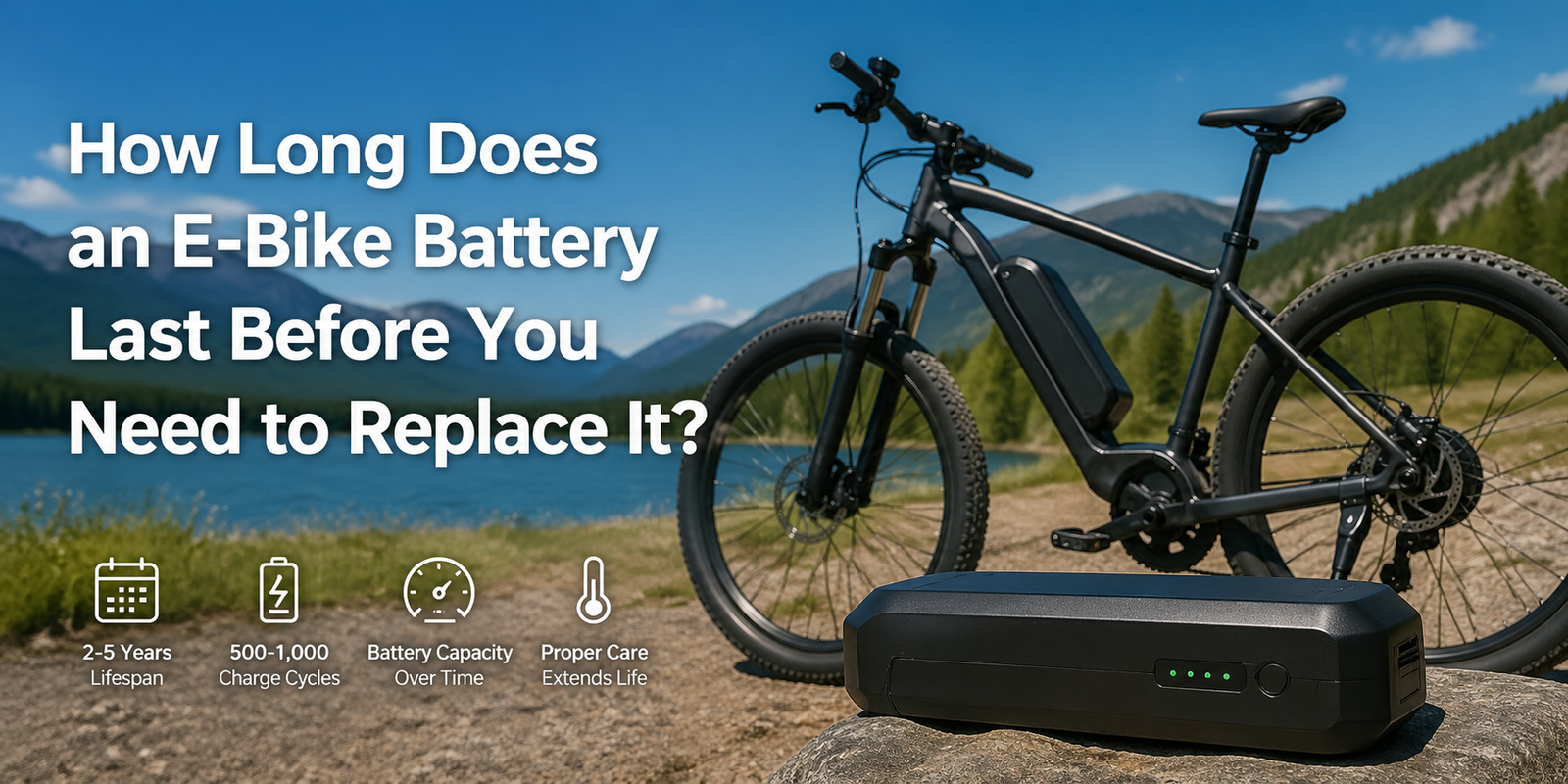
A quality e-bike battery should last between 3 to 5 years, which translates to roughly 500 to 1,000 full charge cycles1. However, this lifespan depends more on the quality of its internal components and how you use it, not just the numbers advertised on the spec sheet.
In my 15 years of helping brands source e-bikes, the biggest point of confusion is always the battery. Buyers see a range in miles and a "cycle count" and think they tell the whole story. They don't. The range tells you how far you can go on one charge. The lifespan tells you how many years you can do that before the battery's performance drops off. Let's break down what really determines whether your battery lasts for two years or five.
Do All eBike Batteries with the Same Specs Last the Same Amount of Time?
You see two batteries listed as "48V 20Ah," but one costs twice as much. You worry the cheap one is a scam or the expensive one is a rip-off.
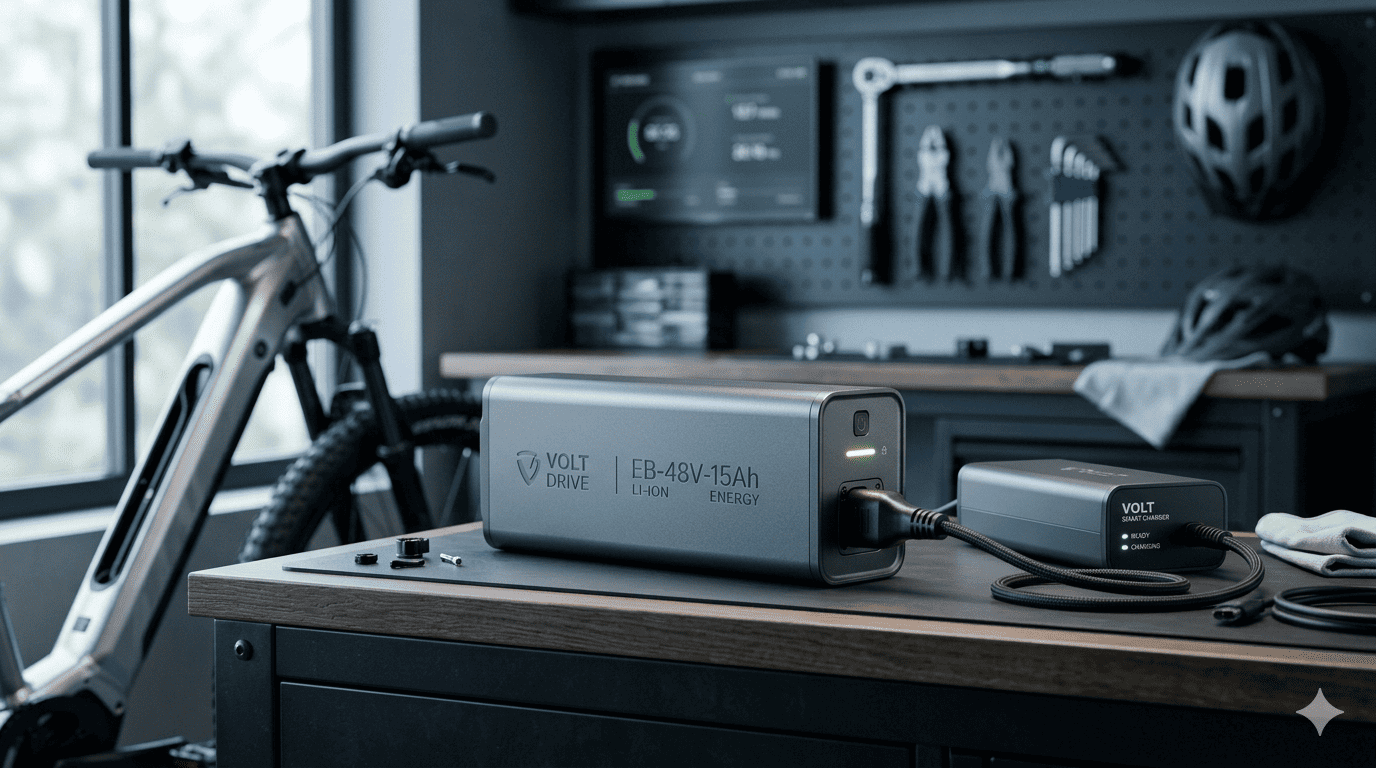
No. Two batteries with identical voltage and amp-hour ratings can have vastly different lifespans.2 The quality of the internal lithium-ion cells and the design of the Battery Management System (BMS) are what truly determine how long your battery will perform safely and effectively.3
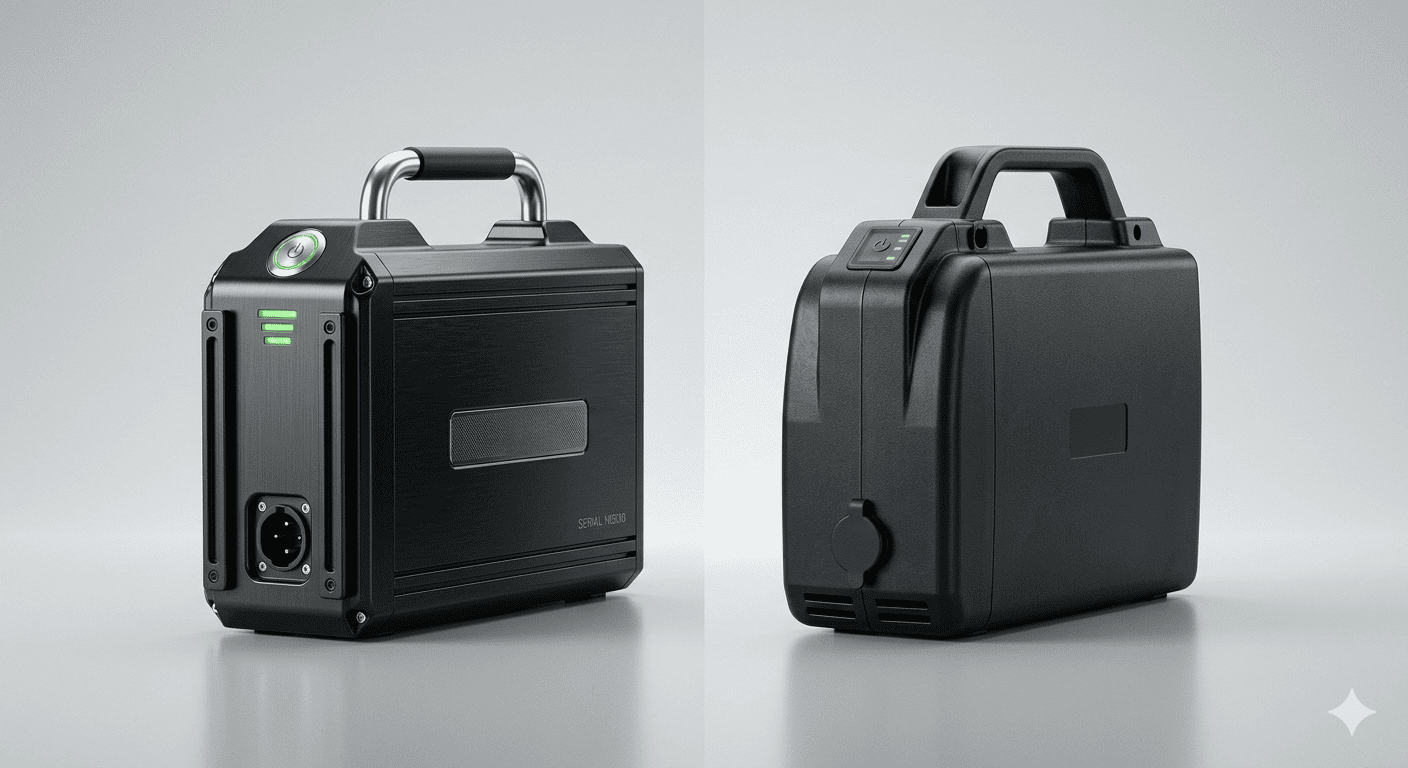
From our sourcing experience across four continents, this is the most critical lesson for our clients. A battery is more than its voltage and amp-hours. The real value is inside.
The Cells Inside Matter Most
The heart of your battery is its individual lithium-ion cells. Top-tier cells from brands like Samsung, LG, and Panasonic are more expensive for a reason. They have higher quality control, meaning their performance is consistent and they degrade slower.4 Lower-cost, generic cells can be a lottery. Some might perform well, but many will lose capacity much faster. As a manufacturer, we've seen budget cells lose 20% of their capacity in less than 200 cycles, while premium cells are still above 90% at that point5.
The Unsung Hero: The Battery Management System (BMS)
The BMS is the battery's brain. A cheap BMS just prevents catastrophic failure. A high-quality BMS actively manages the health of the cells. It ensures they all charge and discharge evenly (cell balancing), which prevents some cells from wearing out faster than others.6 It also provides more precise protection against over-charging, over-discharging, and overheating7. A poor BMS can shorten a battery's life even if it has good cells.
| Feature | Premium Battery | Budget Battery |
|---|---|---|
| Cells | Branded (e.g., Samsung, LG) | Generic / Unbranded |
| BMS | Advanced with cell balancing | Basic protection only |
| Assembly | Clean welds, secure housing | Inconsistent welds, poor wiring |
| Real Cycles | 500-1000+ cycles to 80% capacity | 250-400 cycles to 80% capacity |
| Price | Higher initial cost | Lower initial cost |
How Do Your Riding and Charging Habits Affect Battery Lifespan?
You just bought a new e-bike and love it. But you're worried you might be using it in a way that is secretly ruining the battery and your investment.
Your daily habits are critical. Consistently draining the battery to zero, storing it at the wrong charge level, or exposing it to extreme temperatures will significantly shorten its life.8 Proper care can often double the number of useful cycles you get from any battery.

We handle warranty claims and after-sales issues for clients worldwide. A surprising number of battery "failures" are not defects at all. They are the direct result of usage patterns that accelerate normal degradation. The good news is that the best practices are simple and can save you hundreds of dollars in the long run.
1. Avoid Deep Discharges
The "cycle counts" you see advertised (e.g., "1,000 cycles") are often based on shallow discharges in a lab. A full cycle is charging from 0% to 100%. Constantly running your battery flat before recharging puts a lot of stress on the cells.
- Good Practice: Try to recharge when the battery is between 20% and 30%. Partial charges are better for the battery's health than full, deep cycles.9
2. Store it Smart
Never store your battery for long periods (like over the winter) either completely full or completely empty. Both states stress the cell chemistry.
- Good Practice: For storage longer than a few weeks, aim for a charge level between 40% and 80%.10 This is the most stable state for lithium-ion cells.
3. Keep it Cool
Heat is the number one enemy of battery longevity.11 It permanently speeds up the chemical reactions that cause capacity loss.
- Good Practice: Don't leave your battery in a hot car or in direct sunlight for hours. When charging, keep it in a cool, ventilated area. While cold weather can temporarily reduce your range, charging a frozen battery (below 32°F or 0°C) can cause permanent damage12. Let it warm up to room temperature first.
What Does "End of Life" for an eBike Battery Really Mean?
Your battery doesn't seem to hold a charge like it used to. You're wondering if it's broken and needs an expensive replacement right now, or if something else is going on.
"End of life" doesn't mean the battery is dead. It means its capacity has degraded to a point where it no longer meets your needs, typically defined as 70-80% of its original capacity. For a quality battery, this usually happens after about 500 full charge cycles.
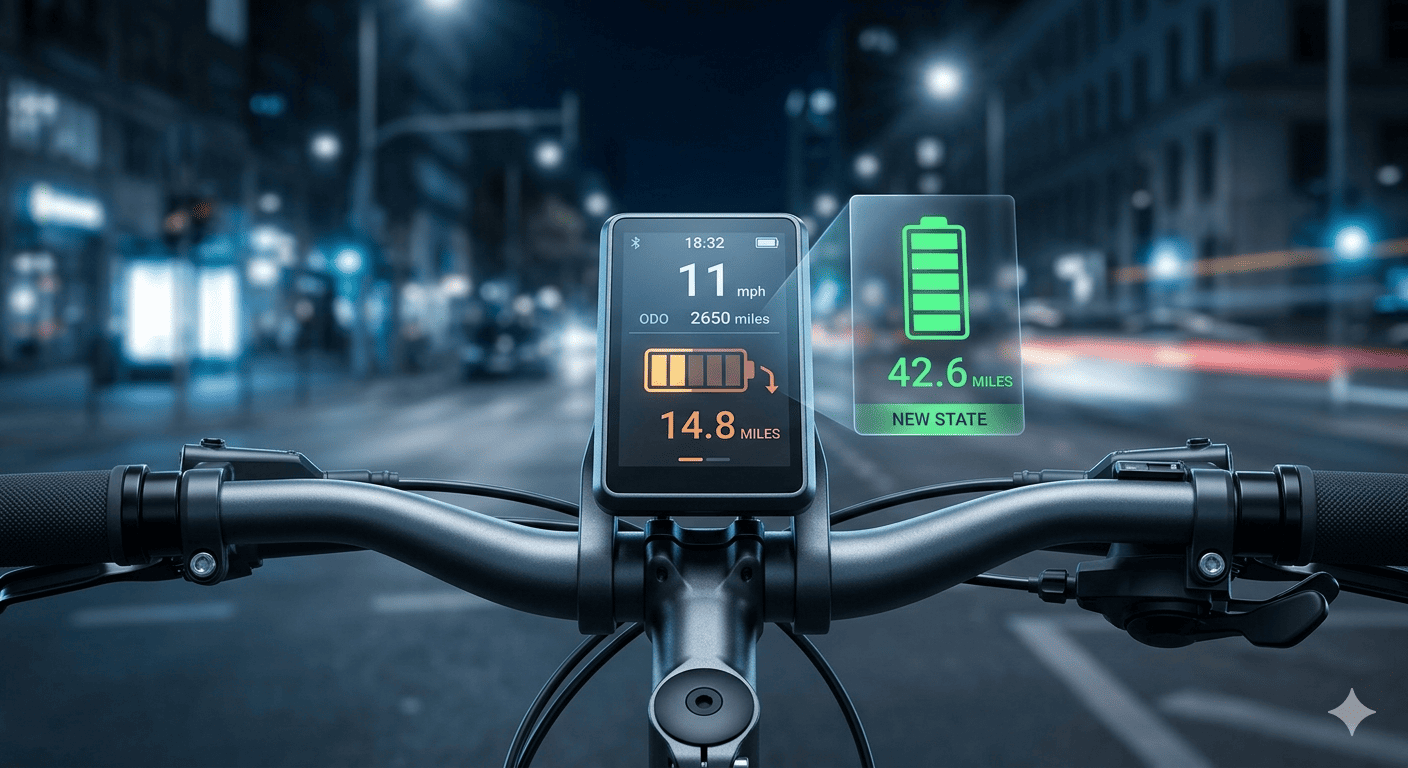
This is a critical concept we work to educate our brand partners and distributors on. Customers often expect their battery to perform like new for years and then suddenly die. That's not how it works. All lithium-ion batteries degrade slowly with every charge cycle. Think of it like the tread on a tire, not a lightbulb that burns out.
A common industry standard is that a battery has reached the end of its useful life when it can only hold 80% of its original charge. So, if your bike used to have a 40-mile range, it might now only get you 32 miles on a full charge. The battery isn't "broken"; it has simply aged. For a good quality battery used daily, hitting this point after 3-4 years is normal wear and tear. For a cheaper battery, it might happen in just 1-2 years.
This is fundamental to how warranties are structured. A warranty covers defects in manufacturing, like a battery that dies completely in six months or loses 50% of its capacity in a year. It typically does not cover the normal, expected capacity loss of 20% over several years of regular use. Understanding this difference between a defect and normal aging is key to having realistic expectations for your investment.
Conclusion
A battery's lifespan isn't a single number. It's the result of its initial build quality—the cells and the BMS—and the care you give it. Focus on these factors for a lasting investment.
"[PDF] Data-driven prediction of battery cycle life before capacity degradation", https://web.mit.edu/braatzgroup/Severson_NatureEnergy_2019.pdf. A technical or institutional source on lithium-ion traction-battery aging can support that typical useful life is often expressed in years and full-equivalent charge cycles, commonly ending when capacity falls below a specified threshold. Evidence role: statistic; source type: institution. Supports: A quality e-bike battery should last about 3 to 5 years or roughly 500 to 1,000 full charge cycles.. Scope note: Cycle-life ranges vary by cell chemistry, depth of discharge, temperature, charge rate, and end-of-life definition. ↩
"[PDF] Cycle Life of Lithium-ion Batteries in Combination with ...", https://steps.ucdavis.edu/wp-content/uploads/2017/05/BURKE-ZHAO-EVS30Lifecyclepaper2017_ver1.pdf. A battery engineering source can support that voltage and amp-hour capacity describe nominal electrical characteristics, while cycle life depends on cell chemistry, design, operating conditions, and control systems. Evidence role: mechanism; source type: education. Supports: Batteries with the same voltage and amp-hour ratings can differ substantially in lifespan.. Scope note: The source may discuss lithium-ion batteries generally rather than e-bike packs specifically. ↩
"To Balance or to Not? Battery Aging-Aware Active Cell ... - arXiv", https://arxiv.org/html/2401.03124v1. A technical review of lithium-ion battery packs and battery management systems can support that cell quality, cell balancing, thermal monitoring, and protection functions influence pack safety and aging performance. Evidence role: expert_consensus; source type: paper. Supports: Internal cell quality and BMS design are major determinants of e-bike battery safety and lifespan.. Scope note: This supports the general mechanism but does not rank specific e-bike battery models. ↩
"Challenges and opportunities for high-quality battery production at ...", https://pmc.ncbi.nlm.nih.gov/articles/PMC11725600/. Research on cell-to-cell variation in lithium-ion batteries can support that manufacturing variability affects capacity dispersion, internal resistance, and aging consistency across cells. Evidence role: mechanism; source type: paper. Supports: Higher-quality lithium-ion cell manufacturing and quality control can produce more consistent performance and slower apparent pack degradation.. Scope note: Neutral literature is likely to support the principle of manufacturing variability rather than directly compare named commercial cell brands. ↩
"Lithium - Wikipedia", https://en.wikipedia.org/wiki/Lithium. A comparative laboratory study of lithium-ion cell cycle aging can contextualize that capacity retention after 200 cycles varies widely across cells and test conditions. Evidence role: case_reference; source type: paper. Supports: Budget and premium lithium-ion cells can show markedly different capacity retention after a few hundred cycles.. Scope note: The article’s exact sourcing-experience figures would require internal test data; external studies can only contextualize that such variation is technically plausible. ↩
"To Balance or to Not? Battery Aging-Aware Active Cell ... - arXiv", https://arxiv.org/html/2401.03124v1. A battery management systems review can support that cell balancing reduces state-of-charge imbalance in series-connected lithium-ion cells and helps prevent individual cells from being overcharged or over-discharged. Evidence role: mechanism; source type: paper. Supports: BMS cell balancing helps keep cells operating evenly and reduces stress on individual cells.. Scope note: The source may describe balancing as a protective and performance-maintenance function rather than quantify lifespan improvement for e-bike packs. ↩
"[PDF] Li-Ion Battery Thermal Characterization for Thermal Management ...", https://docs.nrel.gov/docs/fy24osti/89032.pdf. A lithium-ion battery safety source can support that BMS protection circuits commonly monitor voltage, current, and temperature to reduce risks associated with overcharge, overdischarge, and thermal abuse. Evidence role: mechanism; source type: institution. Supports: A BMS protects lithium-ion batteries against overcharging, over-discharging, and overheating.. Scope note: This supports the protection principle but not the quality of any particular e-bike BMS. ↩
"Unraveling capacity fading in lithium-ion batteries using ... - PMC - NIH", https://pmc.ncbi.nlm.nih.gov/articles/PMC10504543/. Lithium-ion aging studies can support that depth of discharge, storage state of charge, and temperature are major stress factors associated with accelerated capacity fade. Evidence role: expert_consensus; source type: paper. Supports: Deep discharge, unsuitable storage state of charge, and extreme temperature exposure shorten lithium-ion battery life.. Scope note: The magnitude of life reduction depends on chemistry, cell design, and operating profile. ↩
"[PDF] Maximizing Lithium Ion Vehicle Battery Life Through Optimized ...", https://eecs.wsu.edu/~bakken/IEEE-PES-ISGT-2013/files/ISGT2013-000143.PDF. Cycle-aging research can support that shallower depth-of-discharge cycling generally increases lithium-ion cycle life compared with repeated full-depth cycling. Evidence role: mechanism; source type: paper. Supports: Partial, shallower cycling is generally less stressful for lithium-ion batteries than repeated full deep cycles.. Scope note: Benefits depend on chemistry, charge voltage, temperature, and whether partial charging still reaches high states of charge. ↩
"The Methods for Estimating State of Charge in Lithium-Ion ...", https://pubmed.ncbi.nlm.nih.gov/41900756/. Lithium-ion storage-aging guidance or research can support that moderate state of charge is preferred for storage because high and very low states of charge can accelerate degradation or create safety and recovery issues. Evidence role: mechanism; source type: research. Supports: Lithium-ion batteries should generally be stored at a moderate state of charge rather than full or empty.. Scope note: The exact 40–80% range is a practical guideline; some technical sources recommend narrower ranges such as around 40–60% depending on storage duration and chemistry. ↩
"Unraveling capacity fading in lithium-ion batteries using ... - PMC", https://pmc.ncbi.nlm.nih.gov/articles/PMC10504543/. Lithium-ion calendar- and cycle-aging studies can support that elevated temperature accelerates parasitic reactions and capacity fade in lithium-ion cells. Evidence role: mechanism; source type: paper. Supports: Heat substantially accelerates lithium-ion battery degradation and reduces longevity.. Scope note: The phrase “number one enemy” is rhetorical; the evidence supports heat as a major degradation factor, not necessarily the single largest factor in every use case. ↩
"[PDF] Fast charging of lithium-ion batteries at all temperatures - ECEC", https://ecec.me.psu.edu/Pubs/2018_June_PNAS.pdf. Electrochemical studies of low-temperature lithium-ion charging can support that charging near or below 0°C increases the risk of lithium plating, which can cause irreversible capacity loss and safety concerns. Evidence role: mechanism; source type: paper. Supports: Charging a lithium-ion e-bike battery at or below freezing can cause permanent damage.. Scope note: Actual damage risk depends on charge rate, cell chemistry, temperature, and BMS safeguards. ↩