
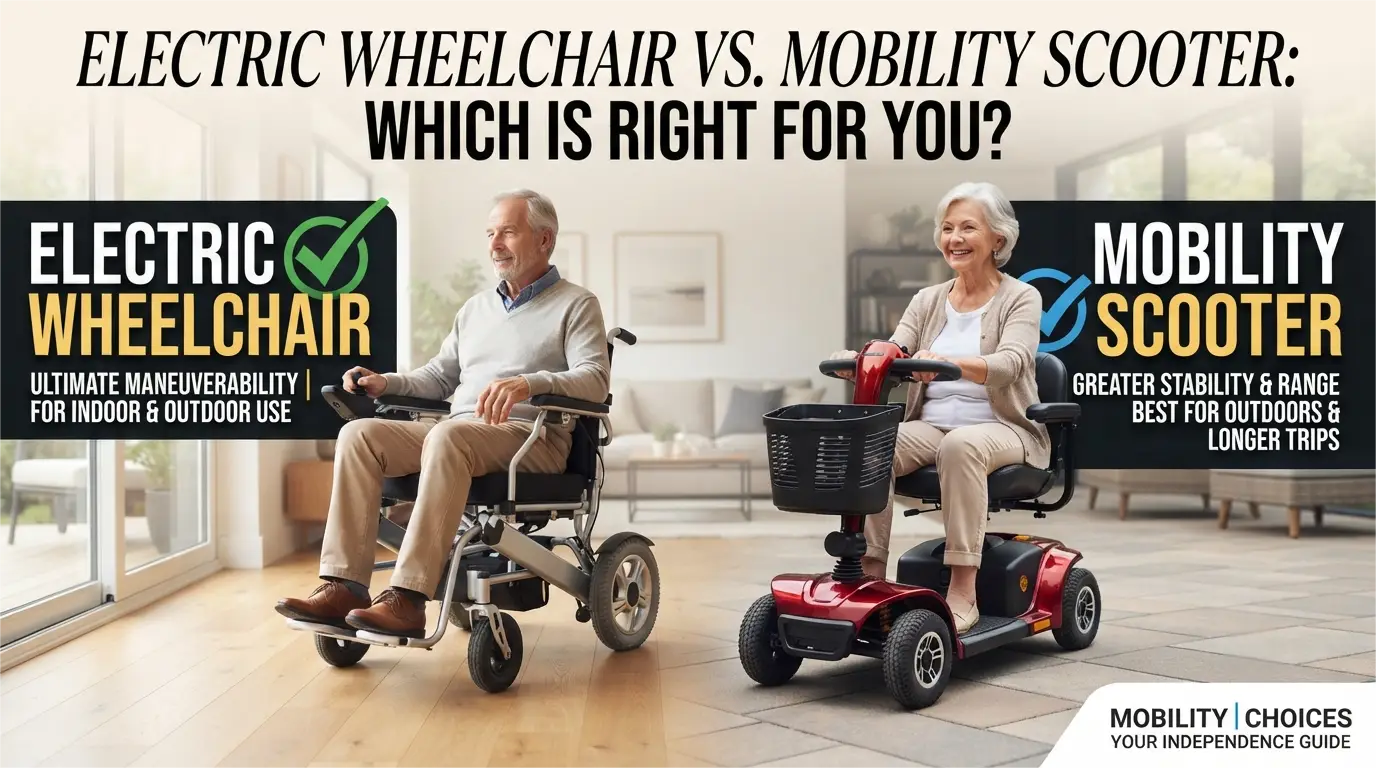
Deciding between an electric wheelchair vs. a mobility scooter is a critical choice for any B2B purchaser sourcing mobility aids. The wrong decision can lead to dissatisfied end-users, logistical headaches, and a poor return on investment. As a professional in the mobility solutions trade, I've seen how understanding the fundamental differences ensures you procure the right device for the right application, guaranteeing both user satisfaction and business success.
The primary difference is that electric wheelchairs are designed as comprehensive mobility replacements1, often for users with significant physical limitations who need all-day support indoors and out. Mobility scooters, in contrast, are designed as mobility aids for users who can walk short distances2 but need assistance for longer trips, primarily outdoors.
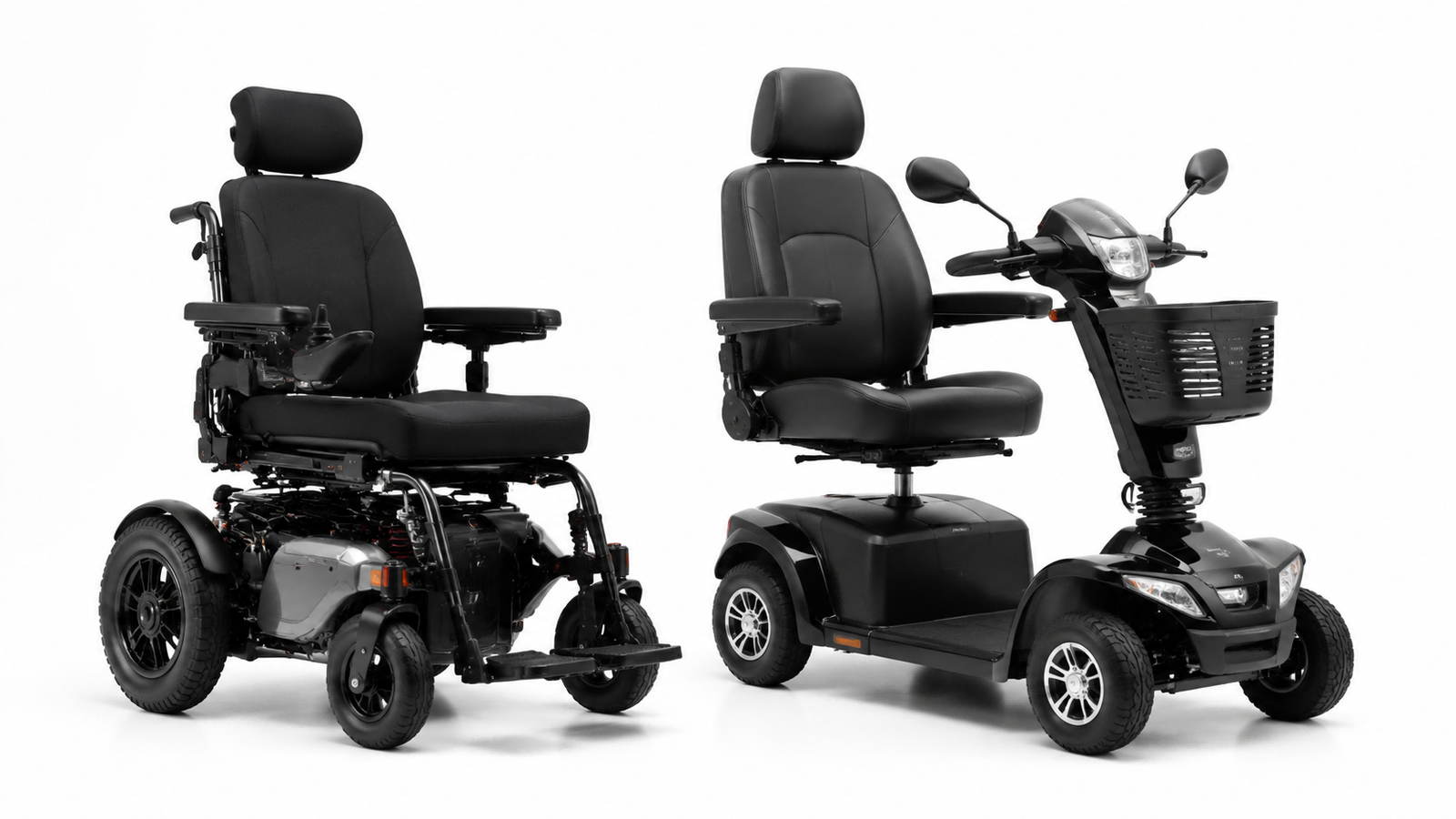
This distinction might seem subtle, but it has massive implications for user experience, safety, and suitability. Let's dive deeper into the specific scenarios, design philosophies, and procurement considerations that will help you make an informed choice for your clients or organization.
What Is the Core Design Difference Between Them?
Are you sourcing a full-time mobility solution or a part-time travel aid? This question gets to the heart of the design philosophy. Confusing the two can lead to significant procurement errors that impact the end-user's quality of life and your business reputation. The choice isn't just about features; it's about matching the device's purpose to the user's daily reality.
An electric wheelchair is fundamentally a medical device, engineered to provide postural support and maneuverability for individuals with limited to no independent mobility. A mobility scooter is a recreational and convenience vehicle, built for people who can manage their mobility in the home but want help covering longer distances outdoors.
Dive Deeper: Medical Necessity vs. Lifestyle Convenience
The divergence in design starts with the intended user. Understanding this is the first step in any procurement process.
H3: The Electric Wheelchair: A True Mobility Extension
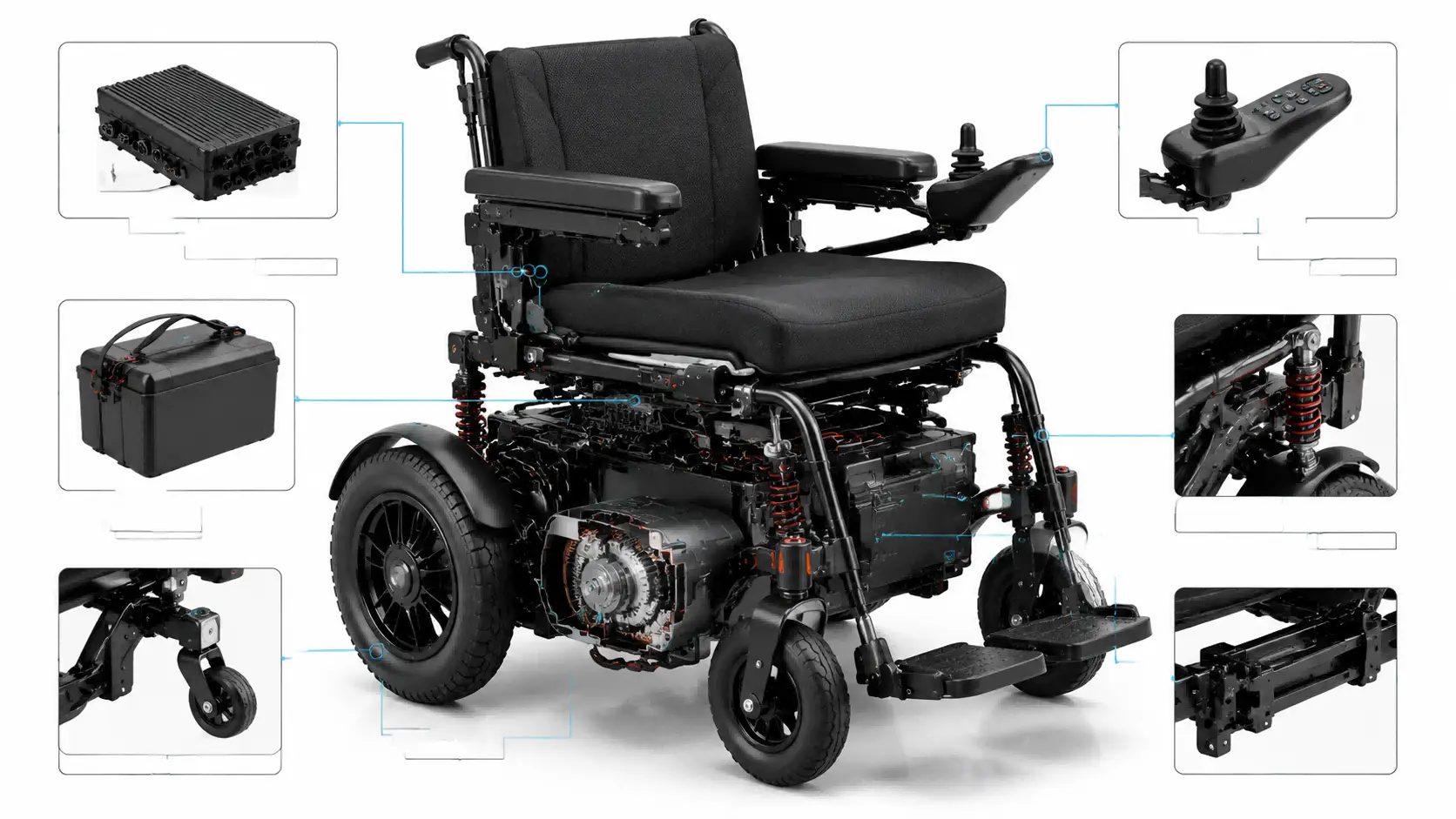
Electric wheelchairs, often called powerchairs, are built around the user's body. The focus is on support, stability, and intuitive control, often through a joystick. Key characteristics include:
- Integrated Seating Systems: These are not just simple seats. They often feature options for tilt, recline, and leg elevation to manage pressure and improve circulation for users who are seated for most of the day. As a buyer, you should inquire about the level of customization available for seating.
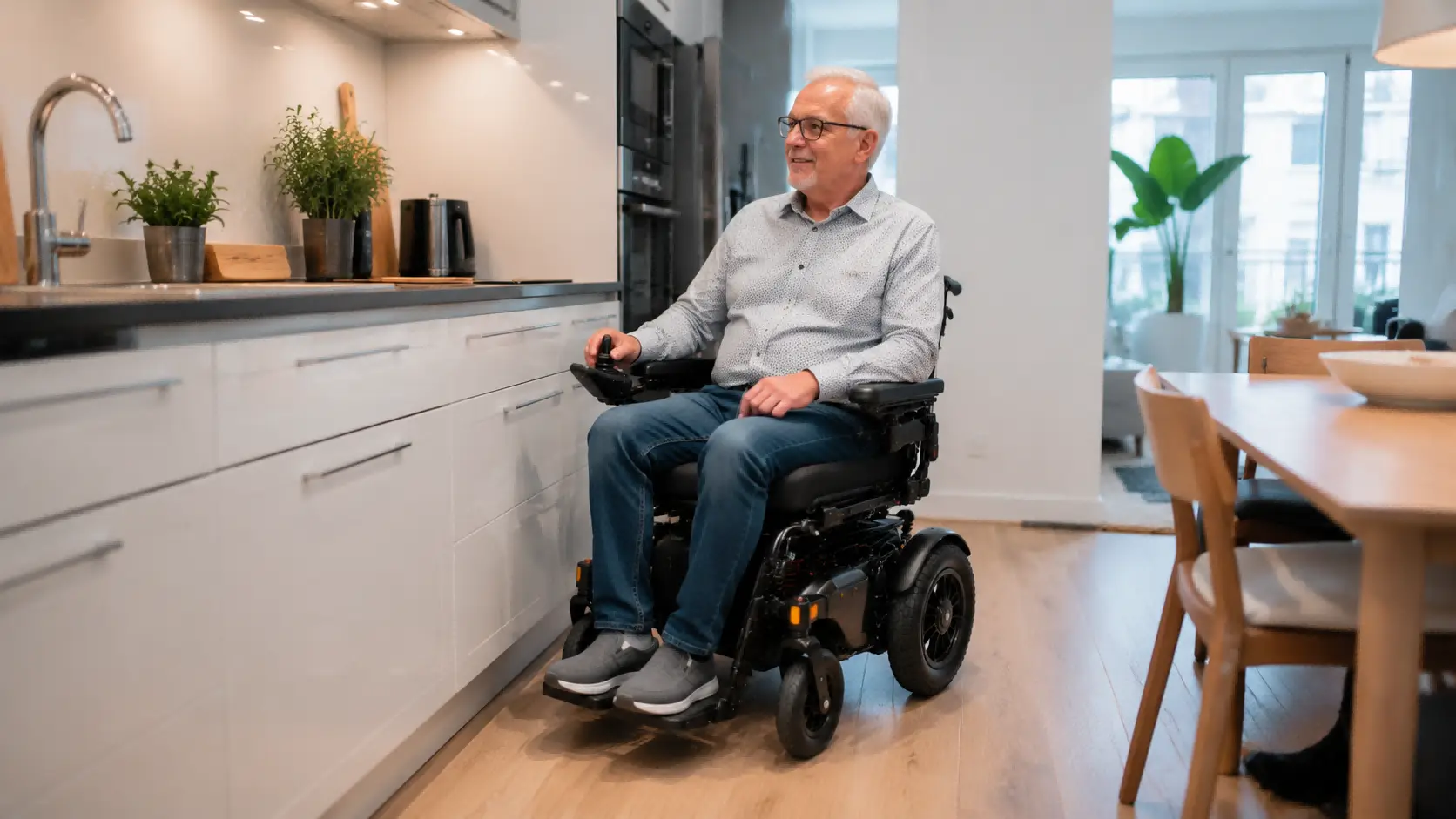
- Maneuverability: Most electric wheelchairs have a much smaller turning radius than scooters3. Mid-wheel drive models can essentially turn on the spot, making them ideal for navigating tight indoor spaces like kitchens, bathrooms, and narrow hallways. In my experience, this is the single most important feature for indoor use.
- Control Interface: The joystick control is highly intuitive and can be mounted on either side. For users with more complex needs, alternative control systems (like head or chin controls) can be integrated4. This adaptability is crucial for users with progressive conditions.
H3: The Mobility Scooter: An Outdoor Travel Companion
Mobility scooters operate more like a small vehicle. They are steered with a tiller system, similar to a bicycle or moped, which requires more arm strength and dexterity than a joystick. Their design prioritizes outdoor travel:
- Tiller Steering: This front-mounted steering column requires the user to have good upper body strength, coordination, and the ability to sit upright without support.
- Larger Footprint: Scooters are typically longer and wider than powerchairs5. This provides stability at higher speeds outdoors but makes them impractical for most indoor environments. I once had a client who bought scooters for an assisted living facility, only to find they couldn't navigate the residents' doorways.
- Prioritized for Portability: Many scooter models are designed to be disassembled into several lighter pieces for transport6 in a car trunk. While some foldable powerchairs exist, scooters generally have more options in the portable category.
Here’s a quick comparison table for procurement managers:
| Feature | Electric Wheelchair | Mobility Scooter | Procurement Takeaway |
|---|---|---|---|
| Primary Use | Indoor & Outdoor (All-day use) | Primarily Outdoor (Occasional use) | Match the device to the user's primary environment. |
| Control System | Joystick | Tiller (Handlebars) | Assess the user's upper body strength and dexterity. |
| Turning Radius | Very Small (Excellent) | Large (Poor for indoors) | Critical factor for indoor navigation. |
| Seating | Supportive, often customizable | Basic Captain's Seat | Consider the user's need for postural support. |
| Transport | Heavier, often requires a lift | Can be disassembled/folded | Evaluate how the user will transport the device. |
When Is an Electric Wheelchair the Right Choice?
Does the end-user spend the majority of their day in the device? If the answer is yes, you are almost certainly looking for an electric wheelchair. Procuring a scooter for someone who needs full-time mobility support is a common but serious mistake that can compromise their health and safety.
An electric wheelchair is the correct choice when the user has significant mobility challenges, requires postural support, and needs to navigate indoor environments seamlessly. It is a tool for daily living, not just for occasional trips.
Dive Deeper: Scenarios Demanding a Powerchair
In my role at MorethingGO, I guide international purchasers through these decisions daily. The conversation always comes back to the end-user's specific needs and environment. An electric wheelchair is non-negotiable in several key scenarios.
H3: Full-Time Users and Progressive Conditions
For individuals who cannot walk or can only take a few steps, a powerchair is their primary means of getting around. This includes users with conditions like:
- Cerebral Palsy
- Advanced Multiple Sclerosis (MS)
- Spinal Cord Injuries
- Muscular Dystrophy
In these cases, the chair isn't just for movement; it's an integrated part of their life. The advanced seating functions help prevent pressure sores and manage fatigue. A scooter simply cannot provide this level of medical support. When sourcing for healthcare facilities or as a durable medical equipment (DME) provider, this distinction is paramount.
H3: The Need for Indoor Maneuverability
This is a major point of differentiation in the electric wheelchair vs. mobility scooter debate. Think about a typical home or apartment layout:
- Narrow hallways
- Doorways (often less than 32 inches wide)
- Furniture to navigate around
- Tight corners into bathrooms or bedrooms
A mid-wheel drive electric wheelchair, with its ability to pivot 360 degrees from a central point, excels here7. A scooter, with its long wheelbase and wide turning radius, would be constantly bumping into walls and unable to access many parts of the home. I always advise clients to measure the tightest corners and doorways in the user's environment before making a final procurement decision.
H3: Requirement for Customization and Support
The seating and positioning capabilities of an electric wheelchair are critical. Buyers should look for suppliers who can offer:
- Power Tilt/Recline: Shifts the user's weight to relieve pressure.
- Elevating Leg Rests: Helps manage edema and comfort.
- Custom Backrests and Cushions: Accommodates spinal deformities or provides specific support.
- Alternative Controls: For users who cannot operate a standard joystick.
A mobility scooter offers none of this. It has a simple seat and is designed for users who can sit upright without assistance for the duration of their trip.
When Does a Mobility Scooter Make More Sense?
Is the primary goal to help someone get to the local shop, visit a park, or navigate a large resort? If the user is mobile at home but struggles with distances, a scooter is likely the better fit. It empowers them to stay active in their community without the medical complexity of a powerchair.
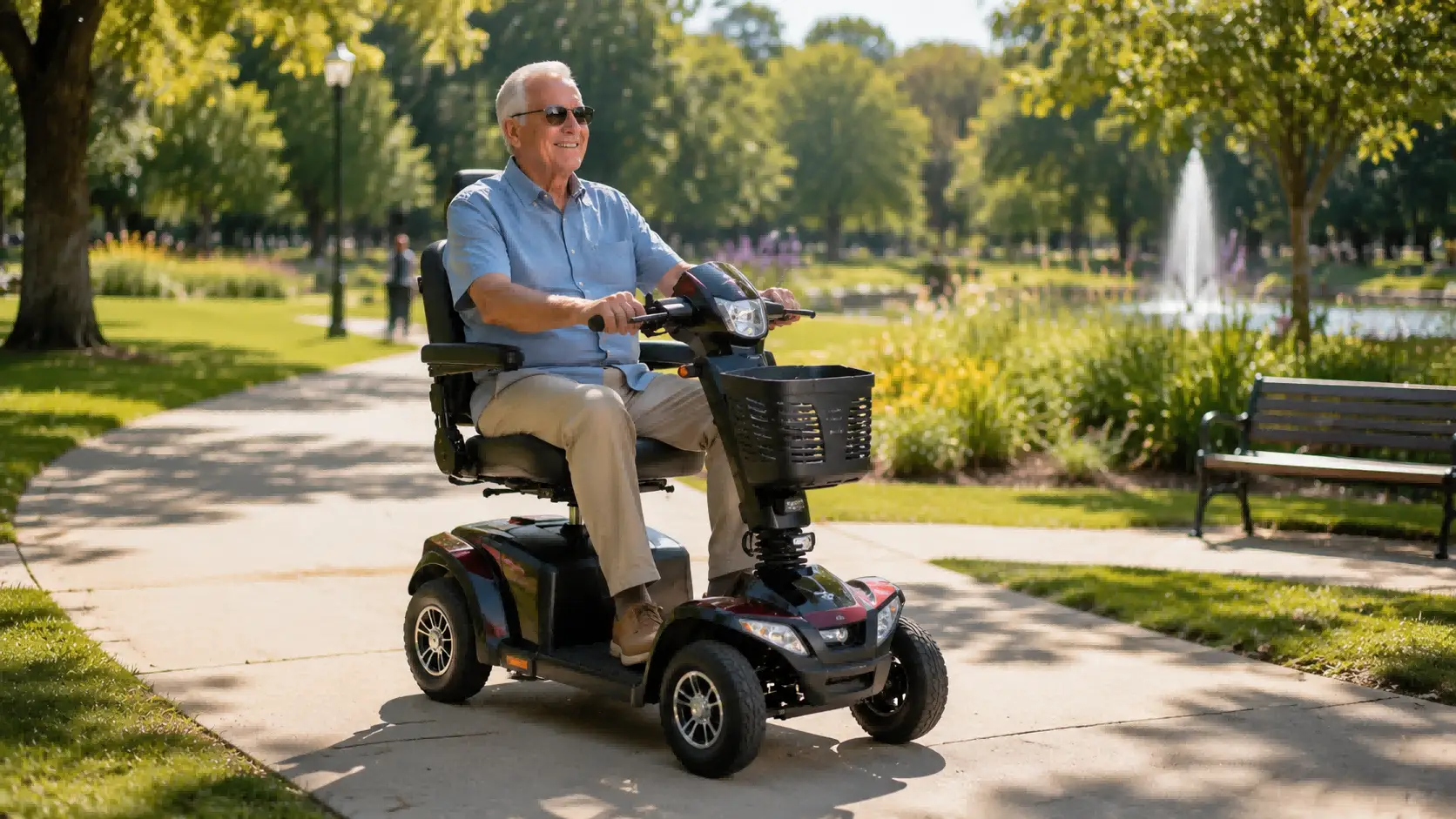
A mobility scooter is the ideal solution for users who have good balance and upper body strength but limited stamina for walking. It's a lifestyle-enabling device for outdoor travel over smooth, predictable terrain.
Dive Deeper: Scenarios Suited for a Scooter
When advising business buyers, I frame the mobility scooter as a "distance multiplier." It's not for getting from the bed to the kitchen; it's for getting from the home to the world outside.
H3: The "Good Walker, Bad Walker" Profile
This is a term we often use in the industry. It describes someone who is perfectly fine walking around their own home but finds a trip to the supermarket or a walk in the park daunting. For this user, a scooter is liberating. Key characteristics of a good scooter candidate include:
- Ability to stand and walk independently, even for short distances.
- Sufficient arm and hand strength to operate the tiller steering.
- Ability to get on and off the scooter safely.
- Good trunk control and ability to sit upright without support.
This user doesn't need the complex seating of a powerchair. Procuring a more expensive and complex electric wheelchair for them would be over-engineering the solution.
H3: Outdoor and Community Use
Mobility scooters are built for the outdoors8. Their features reflect this focus:
- Larger Wheels: Provide a smoother ride over uneven pavement, grass, and small bumps.
- Longer Battery Range: Often designed to cover several miles on a single charge.
- Higher Top Speeds: Typically faster than electric wheelchairs, making them more practical for covering ground.
- Onboard Storage: Most models come with a front basket, perfect for shopping.
They are an excellent choice for large campuses, retirement communities, and tourist attractions. As a procurement manager, if you are sourcing a fleet of devices for this type of environment, scooters are almost always the more cost-effective and appropriate choice over electric wheelchairs.
H3: Portability and Travel
For users who want to take their mobility aid with them in a car, a scooter often presents a simpler solution.
- Travel Scooters: These are lightweight and designed to be quickly disassembled into 3-4 pieces (e.g., seat, battery pack, front section, rear section). No single piece is excessively heavy.
- Folding Scooters: Some models fold into a compact, suitcase-like shape for easy transport.
While folding electric wheelchairs exist, they tend to be heavier and more expensive. For the user who wants to drive to a mall and use their device for shopping, a portable scooter is often the most practical option.
Frequently Asked Questions
Can a mobility scooter be used indoors?
While some very compact mobility scooters exist, they are generally not recommended for indoor use. Their larger turning radius makes it difficult to navigate tight spaces like doorways, hallways, and bathrooms. For regular indoor use, an electric wheelchair is a much better choice.
Is an electric wheelchair harder to transport than a scooter?
Generally, yes. Standard electric wheelchairs are heavy and built as a single unit, often requiring a specialized vehicle lift or ramp for transport. While portable scooters can be disassembled, some folding electric wheelchairs are now available that offer a good compromise, though they may still be heavier than their scooter counterparts.
What is turning radius and why does it matter?
Turning radius is the smallest circular turn a device can make. A smaller radius means better maneuverability. A mid-wheel drive electric wheelchair can have a turning radius of just 20-25 inches, allowing it to turn in its own footprint. A scooter might need 50-60 inches, which is why it struggles indoors.
How do I choose between a 3-wheel and a 4-wheel mobility scooter?
A 3-wheel scooter offers a tighter turning radius and more legroom9, making it more maneuverable. A 4-wheel scooter provides a wider base of support, making it more stable, especially over uneven outdoor terrain. The choice depends on prioritizing maneuverability vs. maximum stability.
Conclusion
The debate over an electric wheelchair vs. a mobility scooter is not about which device is better, but which is the right tool for the job. An electric wheelchair is a medical necessity for users needing full-time support and indoor maneuverability. A mobility scooter is a lifestyle convenience for those who are mobile at home but need help covering longer distances outdoors. As a purchasing manager, your most important task is to understand the end-user's daily reality. By focusing on the use case—indoor vs. outdoor, medical need vs. convenience—you can avoid costly procurement mistakes and source a solution that truly enhances someone's life.
At MorethingGO, we specialize in helping international B2B buyers navigate these choices. With our professional QC, photography, and contact services, we ensure you source the right product with confidence. If you're looking for a reliable partner in China for your mobility product needs, contact us today to discuss how we can support your business.
"Power Wheelchair Coverage Overview", https://www.cms.gov/files/document/powerwheelchairpdf. According to Wikipedia, electric wheelchairs are designed to assist individuals with severe mobility impairments, providing both indoor and outdoor support. This aligns with their role as comprehensive mobility replacements. Evidence role: general_support; source type: encyclopedia. Supports: Electric wheelchairs are designed for users with significant physical limitations requiring all-day support.. Scope note: The source provides general information but may not address specific design features or medical standards. ↩
"Mobility scooter", https://en.wikipedia.org/wiki/Mobility_scooter. Research studies on mobility aids indicate that mobility scooters are primarily designed for users with limited walking stamina, enabling outdoor travel over longer distances. Evidence role: general_support; source type: research. Supports: Mobility scooters are intended for users who can walk short distances but require assistance for longer outdoor trips.. Scope note: The study may focus on general user profiles rather than specific design features. ↩
"Design of built environments to accommodate mobility ...", https://pubmed.ncbi.nlm.nih.gov/21657823/. Educational resources on mobility devices note that mid-wheel drive electric wheelchairs often have turning radii as small as 20-25 inches, compared to 50-60 inches for scooters. Evidence role: statistic; source type: education. Supports: Electric wheelchairs generally have a smaller turning radius compared to mobility scooters.. Scope note: The data may vary depending on specific models and configurations. ↩
"Powered Wheelchair | US Department of Transportation", https://www.transportation.gov/resources/individuals/aviation-consumer-protection/assistive-device-guides/powered-wheelchair. Research on adaptive technologies confirms that electric wheelchairs can integrate head and chin controls to accommodate users with limited hand mobility. Evidence role: mechanism; source type: research. Supports: Electric wheelchairs can be equipped with alternative control systems like head or chin controls.. Scope note: The availability of these systems may depend on specific manufacturers and models. ↩
"The impact of mobility scooters on their users. Does ... - PMC", https://pmc.ncbi.nlm.nih.gov/articles/PMC4510203/. Educational comparisons of mobility devices highlight that scooters often have larger dimensions and wider wheelbases, enhancing outdoor stability but restricting indoor maneuverability. Evidence role: statistic; source type: education. Supports: Mobility scooters are generally larger than powerchairs, offering outdoor stability but limiting indoor use.. Scope note: Specific dimensions may vary across models and manufacturers. ↩
"Portable Mobility Scooters for Sale", https://www.scootaroundstore.com/collections/portable-mobility-scooters?srsltid. Institutional guides on mobility aids confirm that many scooter models are designed for disassembly, allowing users to transport them in car trunks. Evidence role: mechanism; source type: institution. Supports: Mobility scooters can be disassembled into lighter pieces for easier transport.. Scope note: The ease of disassembly may vary depending on the model and user capability. ↩
"Wheelchair Navigation System for Disabled and Elderly People", https://pmc.ncbi.nlm.nih.gov/articles/PMC5134465/. Educational resources on mobility devices explain that mid-wheel drive electric wheelchairs are designed for tight indoor navigation, with the ability to pivot within their own footprint. Evidence role: mechanism; source type: education. Supports: Mid-wheel drive electric wheelchairs can pivot 360 degrees, enhancing indoor maneuverability.. Scope note: Specific maneuverability may vary by model and user skill. ↩
"Wheelchairs, Mobility Aids, and Other Power-Driven ...", https://www.ada.gov/resources/opdmds/. Research on mobility aids confirms that scooters are optimized for outdoor travel, with design elements like larger wheels and extended battery life. Evidence role: general_support; source type: research. Supports: Mobility scooters are designed for outdoor use, featuring larger wheels, extended battery ranges, and higher speeds.. Scope note: Specific features may vary across models and manufacturers. ↩
"Renting 3-Wheel vs. 4-Wheel Mobility Scooters", https://scootaround.com/en/renting-3-wheel-vs-4-wheel-mobility-scooters. Educational comparisons of mobility scooters indicate that 3-wheel models offer improved maneuverability and legroom due to their design. Evidence role: statistic; source type: education. Supports: 3-wheel scooters generally have a tighter turning radius and more legroom than 4-wheel models.. Scope note: The advantages may vary depending on specific models and user needs. ↩