
Struggling to sell to budget-strapped nursing homes? They hesitate on large purchases, leaving you with stalled deals. What if you could offer a solution that bypasses their capital expenditure limits1?
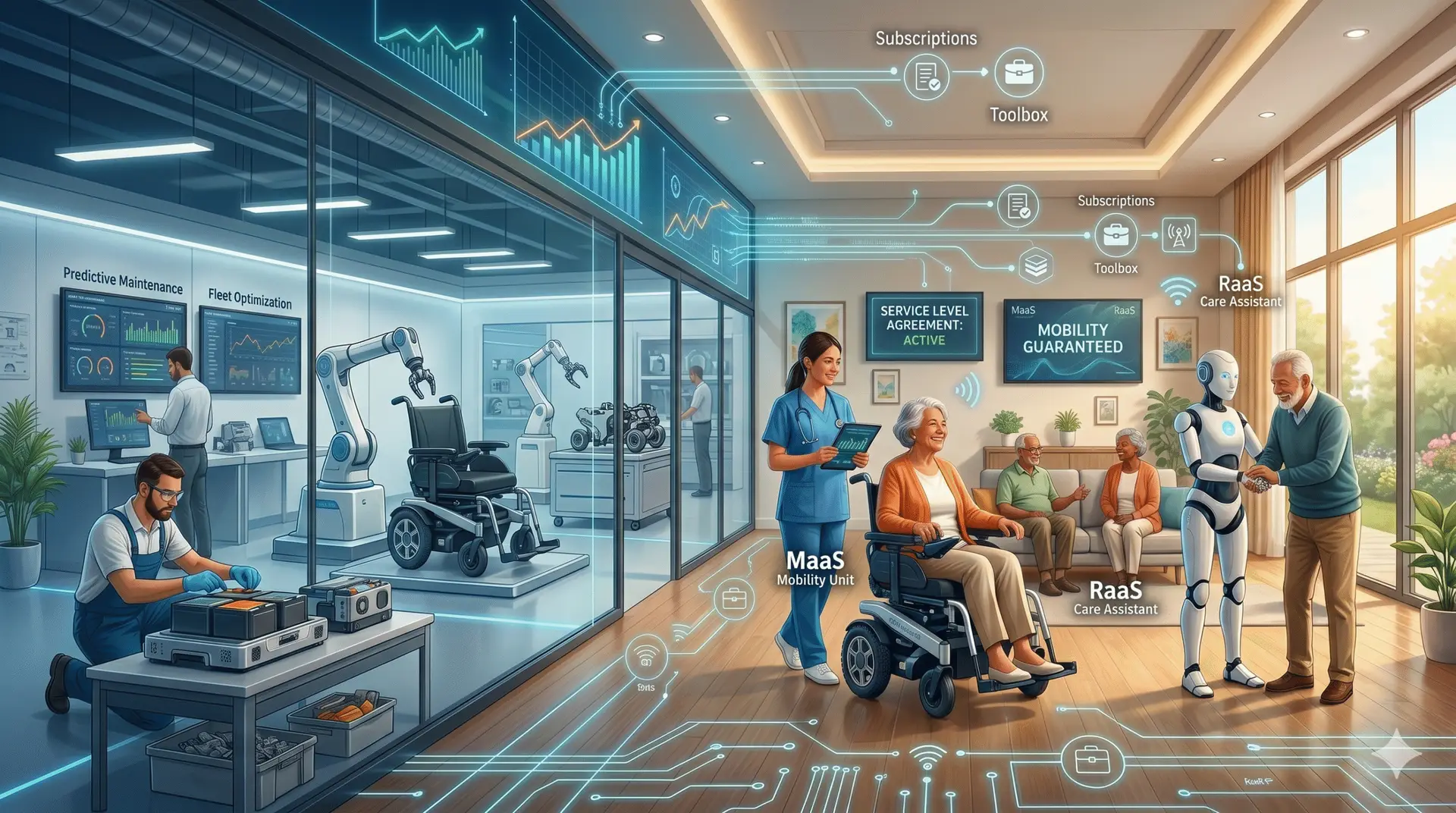
The Mobility-as-a-Service (MaaS) or Robotics-as-a-Service (RaaS) model2 offers a new path. Instead of selling wheelchairs, you provide mobility as a subscription. This solves your client's cash flow problems and creates a steady revenue stream for you.
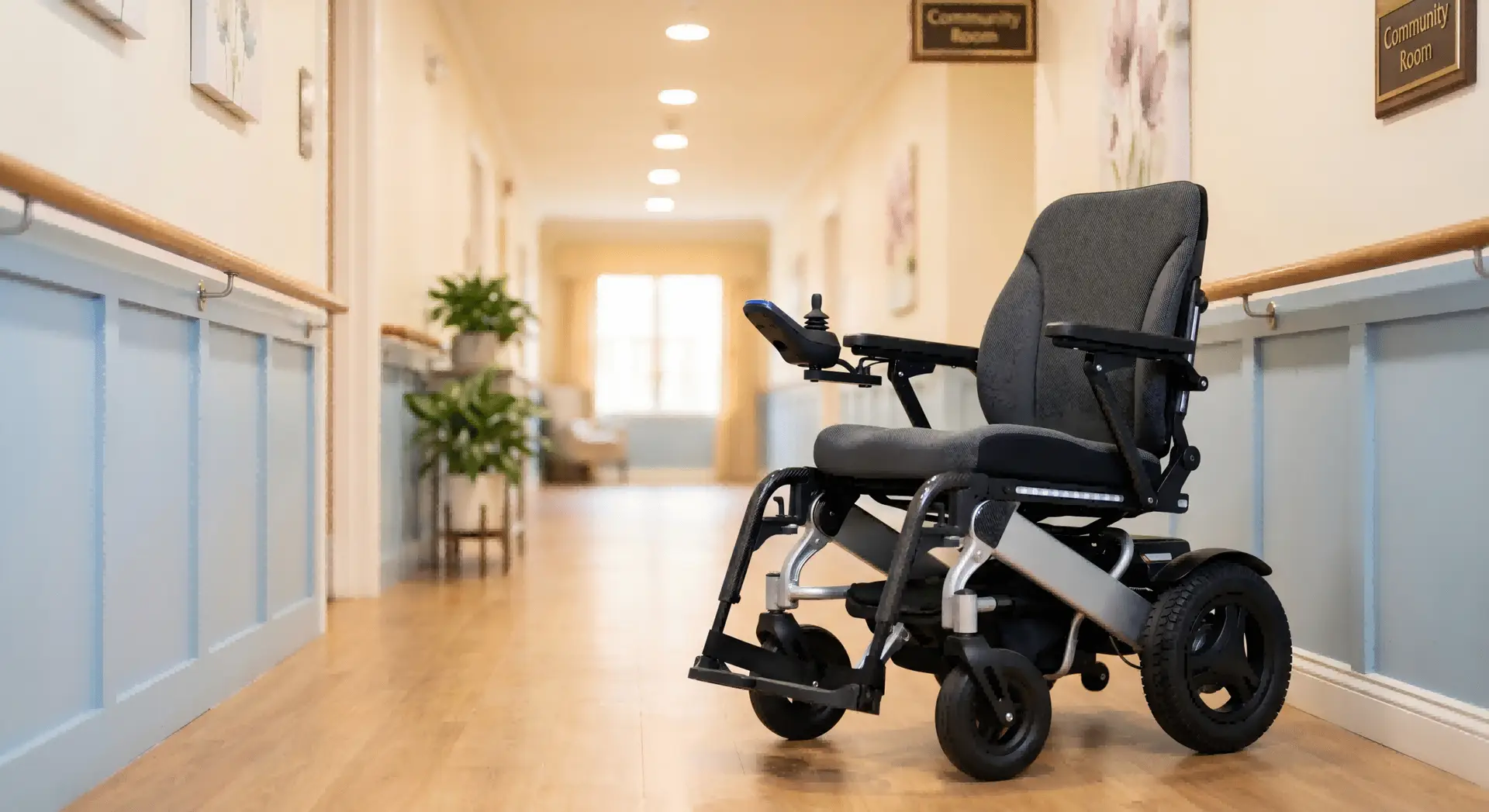
Over my 15 years manufacturing electric wheelchairs, I've seen countless distributors hit a wall with institutional buyers. These facilities have a clear need for our products, but they just don't have the upfront cash. It’s a frustrating cycle. We decided to run several pilot projects to test a new model, and the results were eye-opening. We learned that this isn't about a simple payment plan. It’s a complete shift in how we think about assets, risk, and service. This model requires a new approach, but it can open up a market that has been traditionally difficult to penetrate. Let's break down what this really means for your business and your clients.
Is MaaS Just a Fancy Term for Renting or Installment Payments?
Your clients hear "subscription" and think it's just a more expensive rental. This misunderstanding can kill a deal before it even starts. How do you explain that MaaS offers a fundamentally different value?
Absolutely not. MaaS transfers the total cost of ownership—including maintenance, repairs, and replacement—from the facility to the provider3. It's not about financing a product; it's about guaranteeing uptime and operational capacity for a fixed monthly fee, removing major risks for the client.
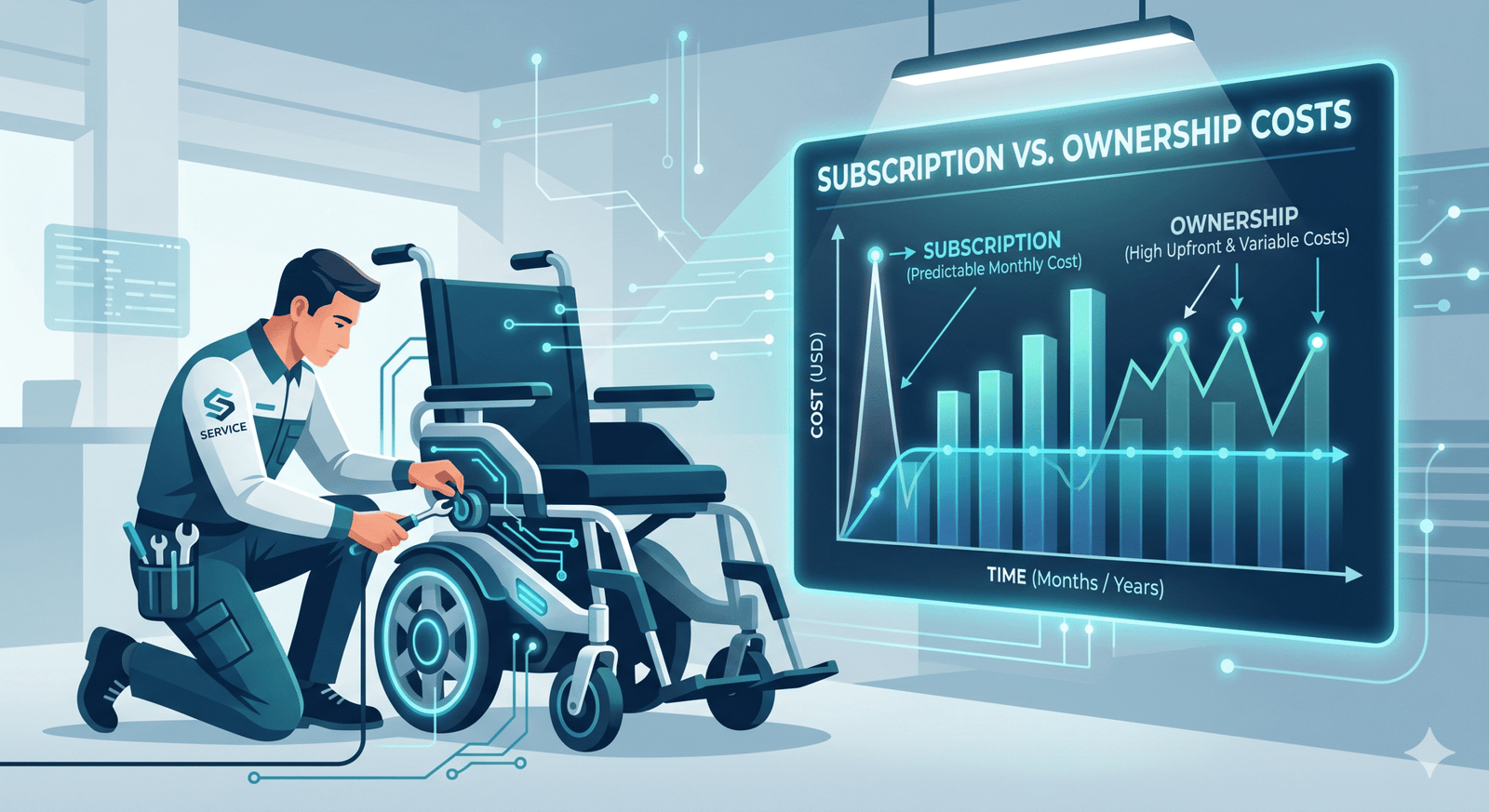
During one of our pilot project negotiations, a procurement manager for a nursing facility was stuck on this exact point. He said, "Why would I pay you monthly forever when I can just own the chair after three years of payments?" It’s a fair question, and it forced us to clarify the real value proposition. The difference isn’t in the financing; it’s in the transfer of risk and operational burden. When a facility buys a wheelchair, they buy all the problems that come with it. They are responsible for every breakdown, every battery replacement, and all the staff time spent managing repairs. In five years, when that chair is obsolete, it's their problem to dispose of it and fund a new one. MaaS completely removes these unpredictable costs and headaches. We aren’t just providing a chair; we are providing a Service Level Agreement (SLA) that guarantees mobility4. If a chair breaks, it's our responsibility to fix or replace it within a specified time. The facility is buying peace of mind and a predictable budget line item.
| Feature | Traditional Purchase | MaaS/RaaS Model |
|---|---|---|
| Upfront Cost | High (Full Price) | Low or Zero |
| Maintenance & Repairs | Facility's Responsibility | Provider's Responsibility |
| Equipment Obsolescence | Facility's Risk | Provider's Risk |
| Fleet Management | Facility's Responsibility | Provider's Responsibility |
| Budget Impact | Capital Expenditure (CapEx)5 | Operational Expenditure (OpEx) |
Why Does MaaS Appeal to Nursing Homes If It's Not About Getting a Cheaper Wheelchair?
You pitch a great product, but the nursing home director says, "It's not in the budget this year." This capital expenditure (CapEx) hurdle is a common and frustrating dead end. How can you reframe the conversation to address their real problem?
MaaS solves a cash flow and capacity planning problem, not a product cost problem. Nursing facilities face fluctuating occupancy rates and tight operational budgets (OpEx)6. MaaS aligns your solution with their financial reality by converting a large, risky CapEx into a predictable, manageable OpEx.
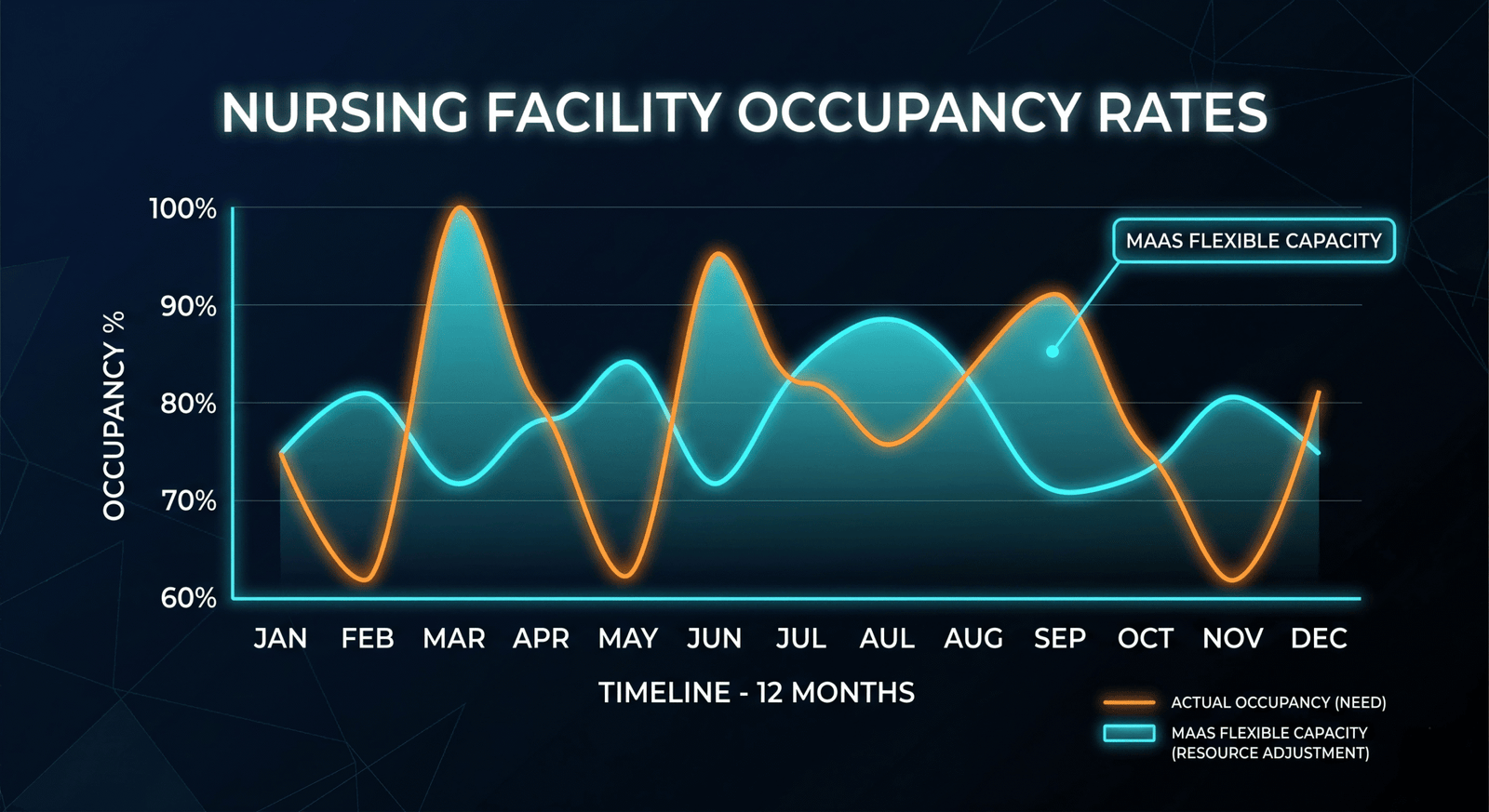
The core business challenge for many nursing and rehabilitation centers is volatility. A 100-bed facility might have 95 residents in January but only 80 in April7. If they purchase 95 wheelchairs to meet peak demand, they have 15 expensive assets sitting idle and depreciating during slower months. If they only buy 80, they can't properly serve their residents when they are at full capacity. This creates a huge planning dilemma. MaaS solves this by introducing flexibility. In our pilot programs, we developed contracts that included a core fleet of chairs for a fixed fee, plus a "burst capacity" option. This allowed the facility to add a few extra chairs on a short-term basis during high-occupancy periods and send them back when demand subsided. They only paid for the capacity they actually used. This model shifts the conversation from "how many chairs can you afford to buy?" to "what level of mobility do you need to guarantee for your residents?" It fits their financial world perfectly. I remember a facility’s Chief Financial Officer finally understanding this. He said, "So I'm not buying a wheelchair; I'm buying a predictable mobility budget." That was the moment the deal was made.
What Must Manufacturers and Distributors Change to Make MaaS Work Operationally?
Thinking of offering a subscription model? If you just slap a monthly price on your existing wheelchairs and hope for the best, you are setting your business up for failure. The operational costs of service and repairs will quickly destroy your profit margins.
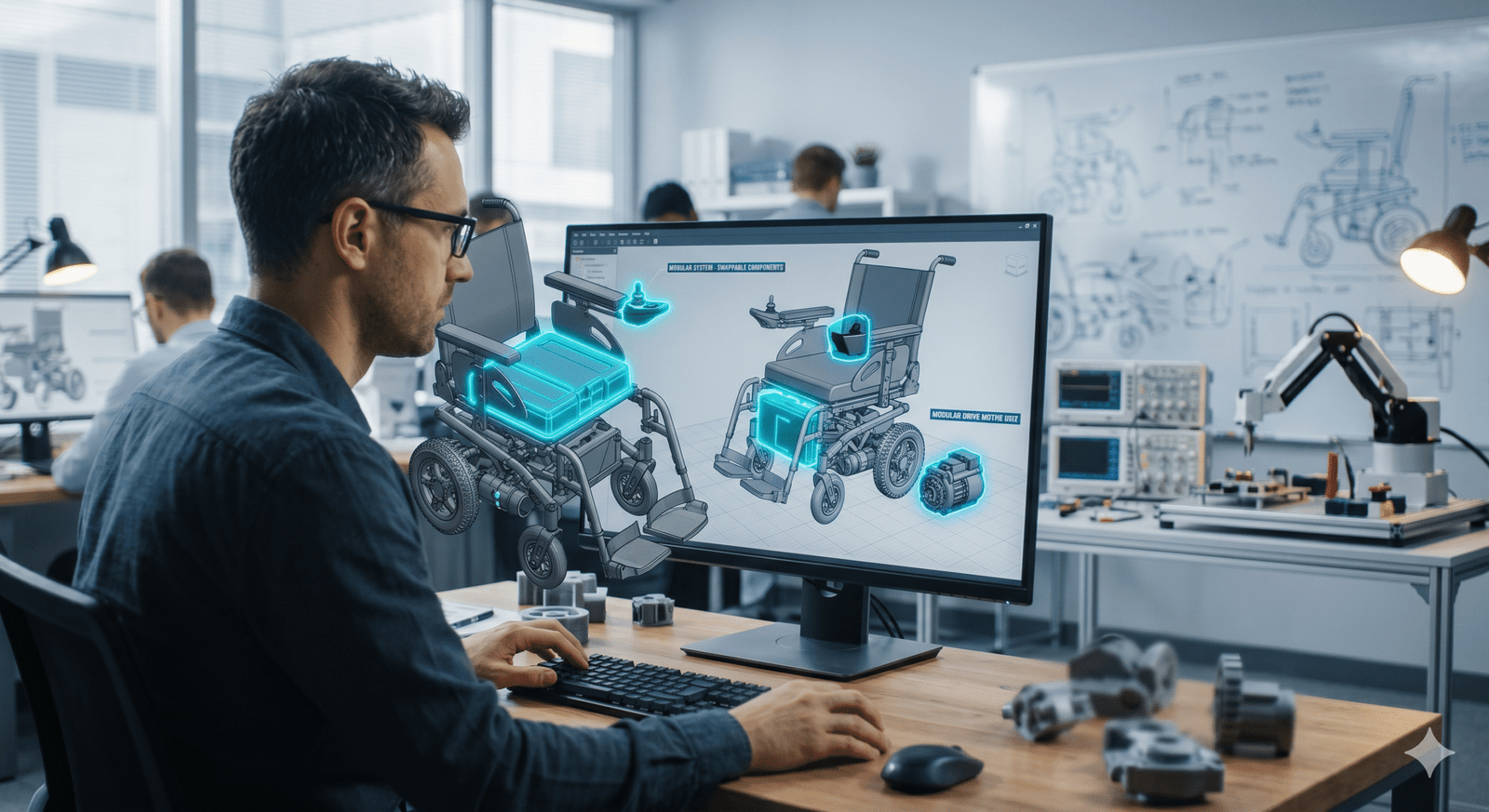
A successful MaaS model requires a total operational shift. Products must be redesigned for durability, remote diagnostics (IoT), and easy modular repairs8. Distributors must transform into service providers with robust asset management systems and a dense network of technicians to guarantee uptime.
This was the biggest lesson from my 15 years of manufacturing experience and our recent pilot projects. You cannot treat MaaS as just a financial tool. The entire operation has to support it, starting with the product itself. A standard wheelchair is not designed for the high-utilization life of a rental fleet, where the provider—not the customer—is on the hook for every failure.
Product-Level Changes
We had to go back to the drawing board.
- Durability and Modularity: We reinforced frames and used tougher components. More importantly, we redesigned our chairs with swappable modules9. A broken controller or depleted battery pack can now be replaced on-site in under 15 minutes by a technician with basic training. This drastically reduces downtime and repair costs.
- IoT for Proactive Maintenance: We integrated simple IoT sensors into our fleet10. This isn't for tracking users; it's for managing our assets. The sensors report location, battery health, and error codes directly to our system. This allows us to schedule maintenance before a chair breaks down11, ensuring the facility always has a working fleet.
Distributor Transformation
The role of the distributor changes completely. They are no longer just selling boxes; they are managing a service. This means investing in new capabilities, including an asset management system to track every single chair's status and maintenance history12, a well-stocked inventory of spare parts for quick fixes, and a trained team of local technicians who can meet the SLA's response times. It's a significant investment, but it creates a powerful, long-term, and defensible business model built on service, not just sales.
Conclusion
MaaS is not a simple sales tactic; it is a strategic partnership. It aligns your business with your clients' operational needs, turning a one-time transaction into a long-term service relationship.
"United States' Nursing Home Finances: Spending, Profitability, and ...", https://pmc.ncbi.nlm.nih.gov/articles/PMC10955796/. Healthcare facilities commonly face capital expenditure constraints due to tight operating margins and competing investment priorities, a challenge documented in long-term care financial management literature. Evidence role: general_support; source type: research. Supports: that healthcare facilities, including nursing homes, face capital budget constraints. Scope note: Supports general healthcare facility budget constraints; may not specifically quantify wheelchair purchase barriers ↩
"Business models for Mobility as an Service (MaaS) - ScienceDirect", https://www.sciencedirect.com/science/article/pii/S0191261522000236. The 'as-a-Service' model represents a shift from product ownership to service subscription, where providers retain asset ownership while customers pay for usage or outcomes, a framework documented across multiple industries including mobility and robotics. Evidence role: definition; source type: encyclopedia. Supports: that MaaS/RaaS represents an established business model category. Scope note: General business model definition; specific application to nursing home wheelchairs may not be directly addressed ↩
"Service-level agreement - Wikipedia", https://en.wikipedia.org/wiki/Service-level_agreement. In subscription-based service models, providers typically assume responsibility for maintenance, repairs, and asset replacement, shifting total cost of ownership from customer to vendor as a core value proposition. Evidence role: mechanism; source type: research. Supports: that service-based models typically transfer ownership costs and operational risks to the provider. Scope note: Describes general as-a-service model characteristics; specific application to medical equipment may vary by contract ↩
"Service Level Agreements for 5G-Enabled Healthcare Systems - PMC", https://pmc.ncbi.nlm.nih.gov/articles/PMC9087298/. A Service Level Agreement (SLA) is a contractual commitment that defines specific, measurable service performance metrics such as availability, response time, and resolution time, commonly used to guarantee service quality in outsourcing arrangements. Evidence role: definition; source type: encyclopedia. Supports: that Service Level Agreements define measurable service commitments including uptime and response times. ↩
"capital expenditure | Wex | US Law | LII / Legal Information Institute", https://www.law.cornell.edu/wex/capital_expenditure. Capital expenditure (CapEx) refers to funds used by organizations to acquire, upgrade, or maintain physical assets such as equipment or buildings, recorded on the balance sheet and depreciated over time, as distinct from operational expenditure (OpEx) which covers day-to-day operating costs. Evidence role: definition; source type: encyclopedia. Supports: that capital expenditure represents funds used to acquire or upgrade physical assets, distinct from operational expenses. ↩
"United States' Nursing Home Finances: Spending, Profitability, and ...", https://pmc.ncbi.nlm.nih.gov/articles/PMC10955796/. Nursing facility occupancy rates demonstrate seasonal and market-driven variation, with facilities facing ongoing financial pressures from reimbursement constraints and operating cost increases, as documented in healthcare utilization data. Evidence role: statistic; source type: government. Supports: that nursing facilities experience occupancy rate variations and financial pressures. Scope note: Supports general occupancy variation; specific monthly fluctuation ranges (e.g., 80-95 beds) are illustrative examples rather than industry averages ↩
"Long-Term Care Facility Characteristics - CMS Data", https://data.cms.gov/quality-of-care/long-term-care-facility-characteristics. Nursing facility occupancy rates vary due to seasonal patterns, local market conditions, and patient flow dynamics, though the magnitude of variation differs by facility type, location, and market characteristics. Evidence role: statistic; source type: research. Supports: that nursing facilities experience occupancy variations throughout the year. Scope note: The specific example of 95 to 80 residents (15.8% decline) represents a plausible scenario rather than a documented industry average ↩
"A secure remote health monitoring model for early disease ... - PMC", https://pmc.ncbi.nlm.nih.gov/articles/PMC7667219/. Successful equipment-as-a-service models typically require product design strategies that prioritize durability, ease of maintenance, and remote monitoring capabilities to manage total cost of ownership and ensure service level compliance. Evidence role: mechanism; source type: research. Supports: that as-a-service models benefit from product designs emphasizing durability, serviceability, and remote monitoring. Scope note: Describes general design principles for service-based models; specific technical requirements vary by equipment type and service context ↩
"Field-replaceable unit - Wikipedia", https://en.wikipedia.org/wiki/Field-replaceable_unit. Modular product design with standardized, field-replaceable components enables faster repairs by allowing technicians to swap defective modules on-site rather than performing complex repairs, reducing both downtime and service costs in equipment service models. Evidence role: mechanism; source type: research. Supports: that modular product architectures with field-replaceable components reduce repair time and service costs. ↩
"IoT Fleet Management: Benefits and Tips for Fleet Managers - Geotab", https://www.geotab.com/blog/iot-fleet-management/. Internet of Things (IoT) sensors embedded in equipment enable real-time monitoring of location, operational status, and component health, supporting predictive maintenance strategies and asset management across distributed fleets. Evidence role: mechanism; source type: research. Supports: that IoT sensors enable remote monitoring and predictive maintenance in equipment fleet management. Scope note: Describes general IoT fleet management capabilities; specific implementation in wheelchair applications may have unique technical and regulatory considerations ↩
"Predictive maintenance in Industry 4.0: a survey of planning models ...", https://pmc.ncbi.nlm.nih.gov/articles/PMC11157603/. Predictive maintenance strategies, enabled by condition monitoring and data analytics, allow organizations to identify and address potential equipment failures before they result in unplanned downtime, though effectiveness depends on sensor quality, data analysis capabilities, and maintenance response processes. Evidence role: mechanism; source type: research. Supports: that predictive maintenance approaches can reduce unplanned downtime by identifying potential failures before they occur. ↩
"What is Asset Management? System & Definition", https://safetyculture.com/topics/asset-management-system. Asset management systems provide essential capabilities for service-based business models, including real-time asset tracking, maintenance history documentation, and service scheduling, enabling providers to manage distributed equipment fleets and meet service level commitments. Evidence role: mechanism; source type: research. Supports: that asset management systems are essential infrastructure for tracking equipment location, status, and maintenance in service-based business models. ↩