
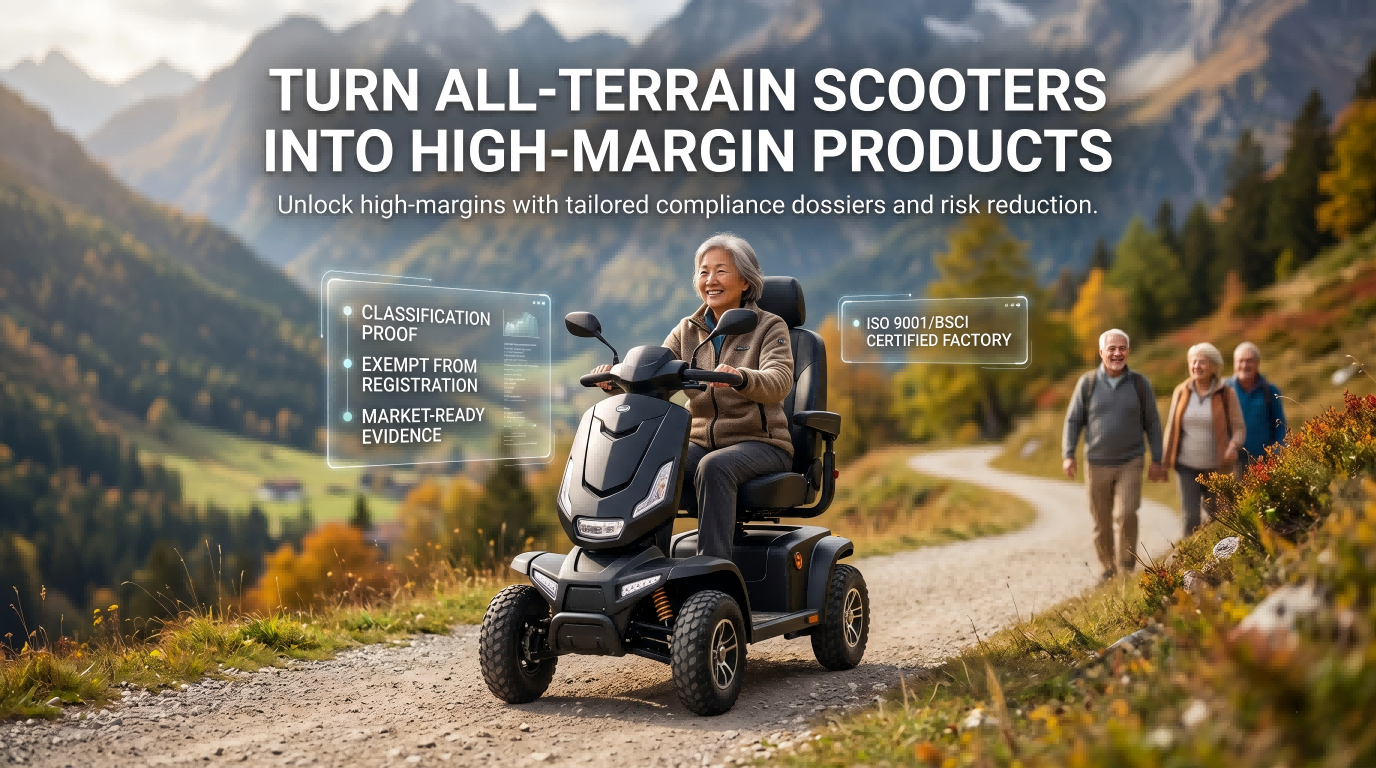
You see all-terrain scooters as a crowded, low-margin market. You are stuck in price wars, and the compliance risks feel overwhelming. But what if the secret isn't price?
The key is shifting from a generic supplier to a high-margin partner. You do this by demanding channel-specific compliance packages. These documents prove the scooter is personal mobility equipment, not a motor vehicle. This reduces your risk and justifies a premium price for the right product.
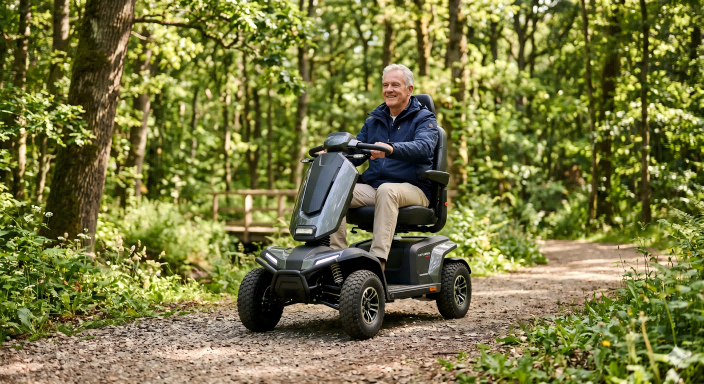
I've been in this industry for over 15 years, and I've sat in countless meetings with distributors just like you. The conversation always starts with price. But it quickly changes to the one thing that really matters: risk. The buyers who succeed are the ones who learn to ask the right questions about compliance. Let me show you what those questions are, and how the answers can completely change your business. It's time to move beyond the price tag and focus on what creates real value and protects your investment.
Are wheelchair certifications enough for your scooter imports?
You have experience with electric wheelchairs. So you assume the same certifications apply to scooters. This assumption can create huge legal and insurance gaps for your business.
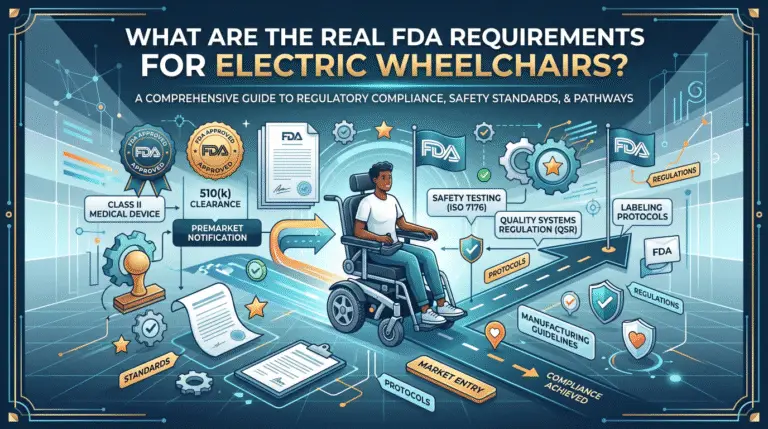
No, wheelchair certifications are not enough. Wheelchairs are usually medical devices, covered by regulations like the MDR in the EU or FDA rules in the US. All-terrain scooters are often classified as personal mobility equipment. They fall under different rules. Relying on medical device certifications creates big liability risks.
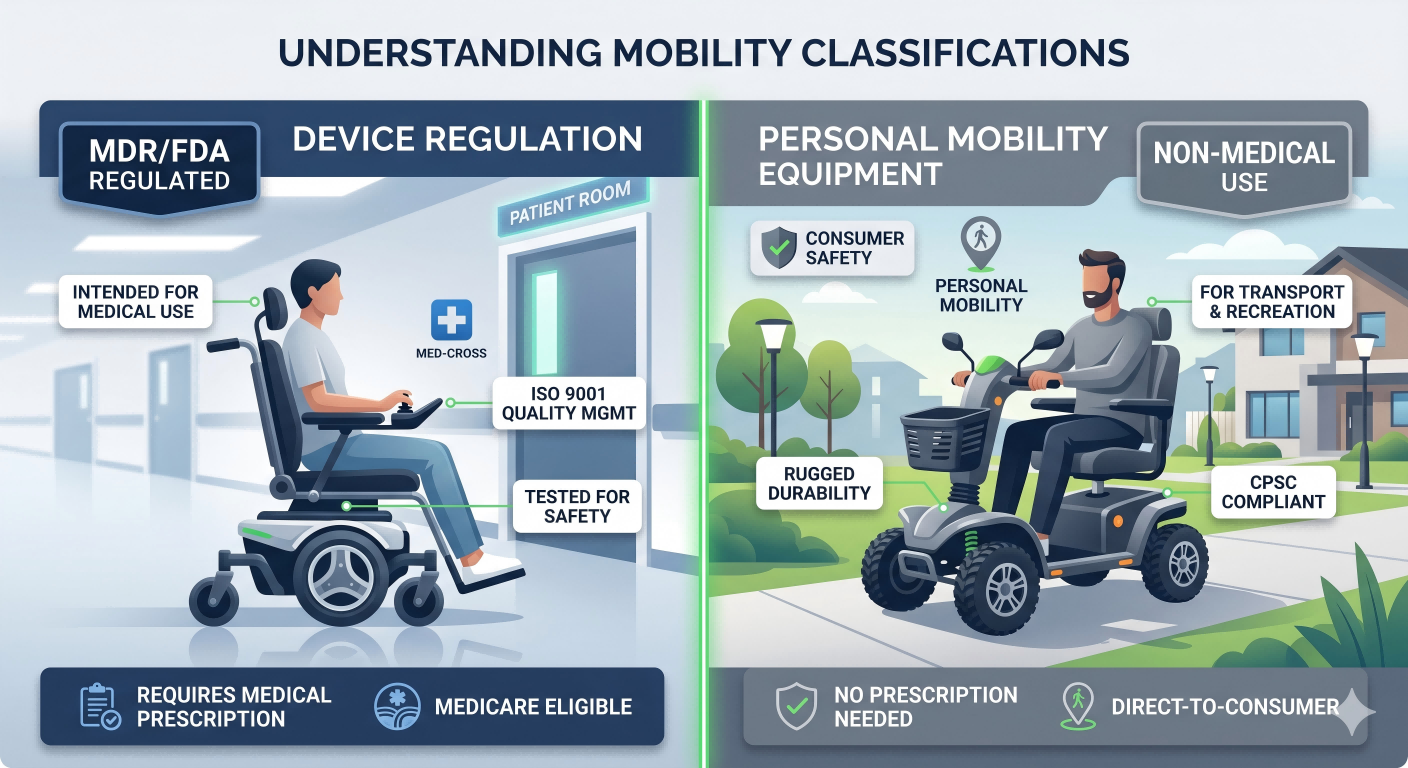
From my experience on the factory floor, this is one of the most common and dangerous mistakes I see. A distributor sees our ISO9001 and BSCI certifications and assumes we can just apply our wheelchair expertise directly to scooters. But the regulatory worlds are completely different.
I remember a conversation with a German distributor. They were excited about a new all-terrain scooter model and ready to place a large order. The deal stopped cold when their insurance broker asked for proof the scooter was not a medical device. All our wheelchair documentation, which mentioned medical device standards, was suddenly a liability, not an asset. It made the product look like it was in a regulatory grey area. That was a big lesson for us. We learned that we needed to prepare a completely separate documentation trail for scooters.
Here’s a simple breakdown of the issue:
Medical Devices vs. Personal Mobility Equipment
| Category | Electric Wheelchairs | All-Terrain Scooters |
|---|---|---|
| Primary Classification | Medical Device | Personal Mobility Equipment / Machinery |
| Key EU Regulation | Medical Device Regulation (MDR) | Machinery Directive, Radio Equipment Directive |
| Key US System | FDA Classification (Class I or II) | Consumer Product Safety Commission (CPSC) |
| Main Purpose | Addresses a medical need or disability. | Transportation, recreation, personal mobility. |
Understanding this difference is the first step. If you import a scooter classified as a medical device, you take on all the responsibilities that come with it. If it’s not intended for medical use, you could be misrepresenting the product, which can lead to major problems with customs and insurers.
Is a CE or UL mark the golden ticket to market access?
You see a CE or UL mark on a scooter. You think that's all you need for compliance. But distributors are rejecting products with these marks every day for being incomplete.
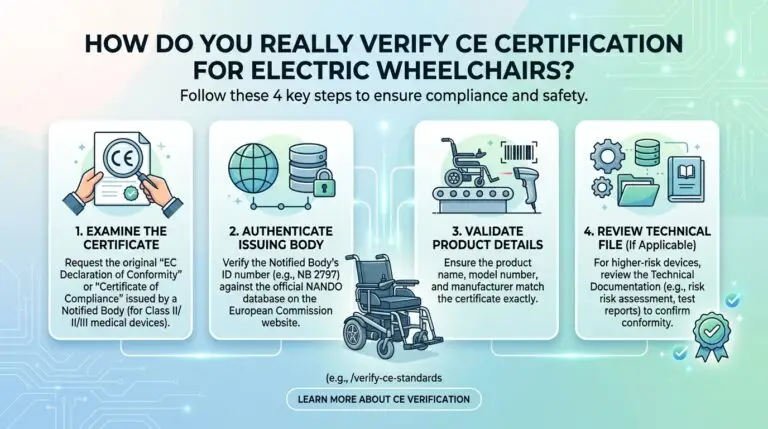
A CE or UL mark is just the beginning. Western distributors need a full compliance package to protect themselves. This includes product liability documents, evidence for its classification, and proof it is exempt from vehicle registration in their specific market. Without this complete package, the mark alone isn't enough.
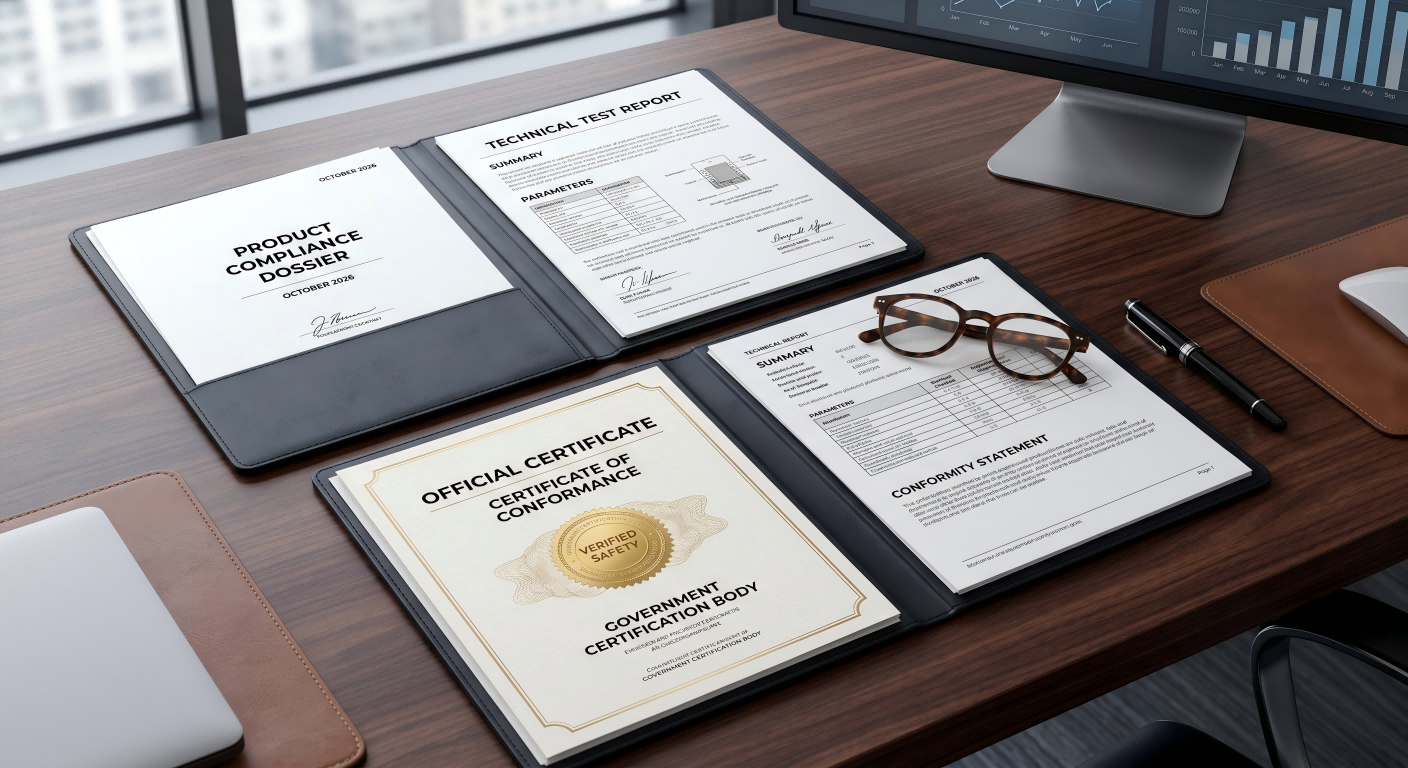
A simple mark on a product is not a shield. It's an indicator that the manufacturer claims to have met certain standards. Serious buyers know this. They dig deeper. As an export manager, my team doesn't just send a certificate; we prepare a full dossier for our partners. This dossier is what gives them the confidence to invest. It's the proof behind the mark. A mark says "we tested it." A full documentation package says "we understand your market and have prepared the evidence your legal and insurance teams need to approve this product." This preparation is what separates a basic supplier from a real partner.
Here’s what should be inside that package:
Product Liability Documentation
This shows that we, the manufacturer, have our own insurance and stand behind the quality and safety of our product. It gives you a clear path for recourse if something goes wrong. For you, the distributor, this is critical. It shows that you are not alone in shouldering the risk.
Classification Evidence
This is a formal document explaining why the scooter is classified as "personal mobility equipment" and not a "motor vehicle" or "medical device." It will reference the product's specifications, like its top speed and motor power, and connect them to the specific laws in your target country.
Vehicle Registration Exemption
This directly addresses the biggest fear of many importers. It provides a clear argument, based on local regulations, for why the scooter does not require a license plate, vehicle registration, or a special driver's license. This document is crucial for your sales channels, as it assures retailers and customers that the product is simple and legal to own and operate.
Will my scooter be classified as a motor vehicle?
You're looking at a new all-terrain scooter. Your biggest fear is that customs will classify it as a motor vehicle. This would create a nightmare of licensing and insurance requirements.
This is the most critical risk you face. Classification depends on factors like top speed, motor power, and specific local laws. A professional supplier must provide a "classification rationale" document. This document clearly explains why the product fits the 'personal mobility' category, not the 'motor vehicle' category, in your market.

This isn't just a theoretical problem. I've heard horror stories from buyers who imported scooters based on a low price, only to have the entire container held at the port. The authorities deemed the scooters to be unregistered motor vehicles because their speed or power was just over the legal limit. The cost of dealing with that situation—storage fees, legal battles, or even having to ship the container back—wiped out any initial savings.
That's why our design process is built around compliance. We don't just build a scooter and see where it fits. We design it to fit within the established personal mobility categories of major markets. More importantly, we document this for our partners. We give them the specific data they need.
Here is a table showing the typical factors that authorities look at:
| Feature | EU (Typical Threshold) | North America (Varies by State) | Why It Matters for Classification |
|---|---|---|---|
| Top Speed | Generally under 25 km/h | Often under 20 mph | Exceeding this is the fastest way to be classified as a moped or motorcycle. |
| Motor Power | Often under 1000W | Can be as low as 750W | High power suggests it's a vehicle built for speed, not mobility assistance. |
| Product Features | Must lack features like license plate mounts | Must not have features required for road vehicles | The presence of automotive features implies an intent for road use. |
We provide a document that says, "Here is the product's top speed, tested according to standard EN 15194. This is below the 25 km/h threshold in Germany's StVZO law." This gives your legal team the exact information they need to defend the product's classification.
How can a manufacturer justify a higher price for their scooters?
You are tired of competing on price alone. Squeezing your margins feels like the only way to win deals in a crowded market. But this is a race to the bottom.
Manufacturers justify a higher price by changing the conversation from product cost to risk reduction. By providing a channel-specific compliance package, they remove the burden and uncertainty from you. This service saves you time, legal fees, and potential fines, making a higher unit price a smart investment.
Think about the two types of suppliers you can work with.
Supplier A is the "Price Warrior." They send you a low price list and a generic CE test report. The rest is your problem. You have to hire consultants to figure out if it's legal in your market. You have to talk to lawyers to understand the liability. You carry all the risk. The cheap price is appealing, but the hidden costs in time and stress are huge.
Supplier B is the "High-Margin Partner." They cost more per unit. But they start by asking about your sales channels and your country's regulations. They provide a full documentation dossier tailored to your needs. They show you exactly how the product was designed to avoid common classification traps. We strive to be Supplier B. Our 15 years of manufacturing expertise and our ISO9001/BSCI certifications are the foundation. But the real value we offer is in the detailed compliance work we do before your container ever leaves our factory. This preparation is what allows you to command a higher margin. You're not just selling a scooter; you're selling a secure, well-vetted product. Your customers feel that confidence, and they are willing to pay for it.
Conclusion
Stop buying scooters based only on price. Partner with a supplier who deeply understands compliance. This reduces your risk, unlocks high margins, and turns a substitute product into a star performer.