
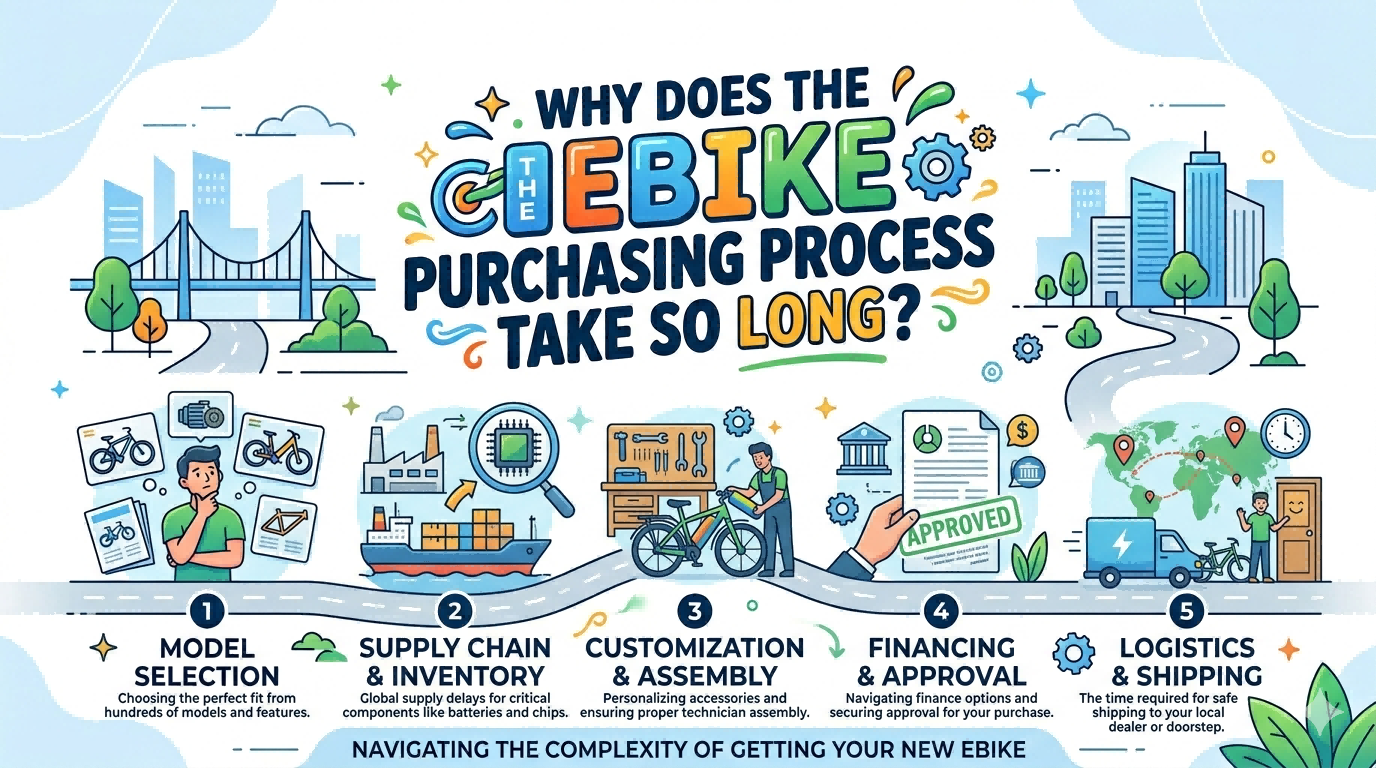
You've placed your first big eBike order. Now, unexpected delays are frustrating you. Let's fix this by understanding the real process from an insider's view.
The eBike purchasing process is lengthy because it's more than just manufacturing.1 It includes crucial, time-consuming stages like market-specific certifications, production validation, and multi-layered approvals. Proper preparation is essential to avoid these common delays and keep your timeline on track.
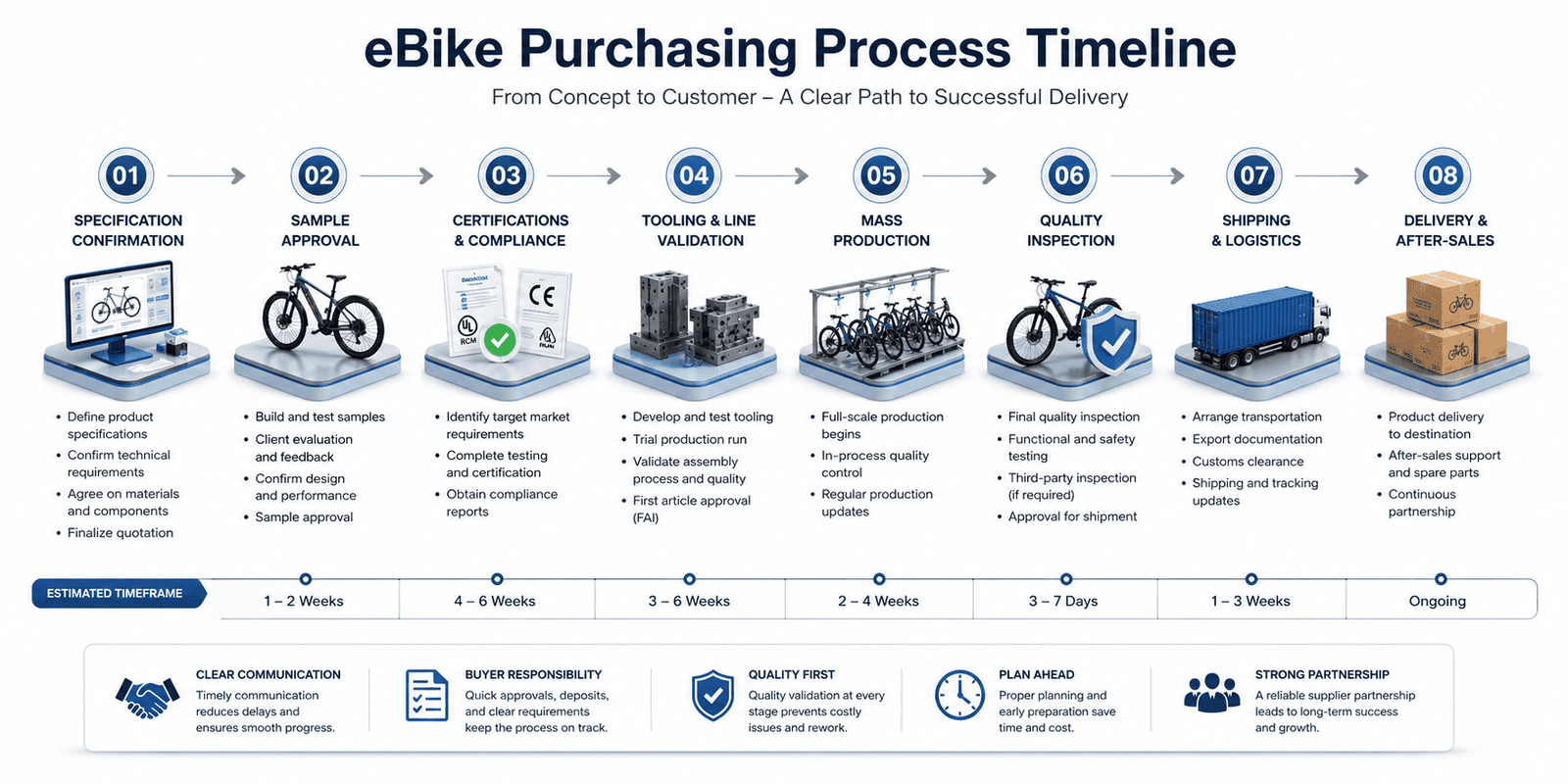
I’ve been in this business for 15 years, and I’ve seen the same story play out time and again. A new brand owner, excited about their product, gets a perfect sample and thinks the hard part is over. They place a bulk order, and then… silence. Delays. Frustration. They call me asking, "What's taking so long?" The truth is, the process is far more complex than most people realize. Let's break down the three biggest hurdles I see trip up first-time buyers, so you can avoid them.
Why Doesn't a Perfect Sample Guarantee a Smooth Production Run?
Your eBike sample was flawless, a work of art. But now your first production batch has issues. What went wrong when everything seemed so right?
A perfect sample doesn't guarantee smooth production because samples are often hand-built under ideal conditions. Mass production introduces variables in materials, tooling, and assembly lines.2 Skipping pre-production validation on the actual line is a common, costly mistake that creates unforeseen delays.
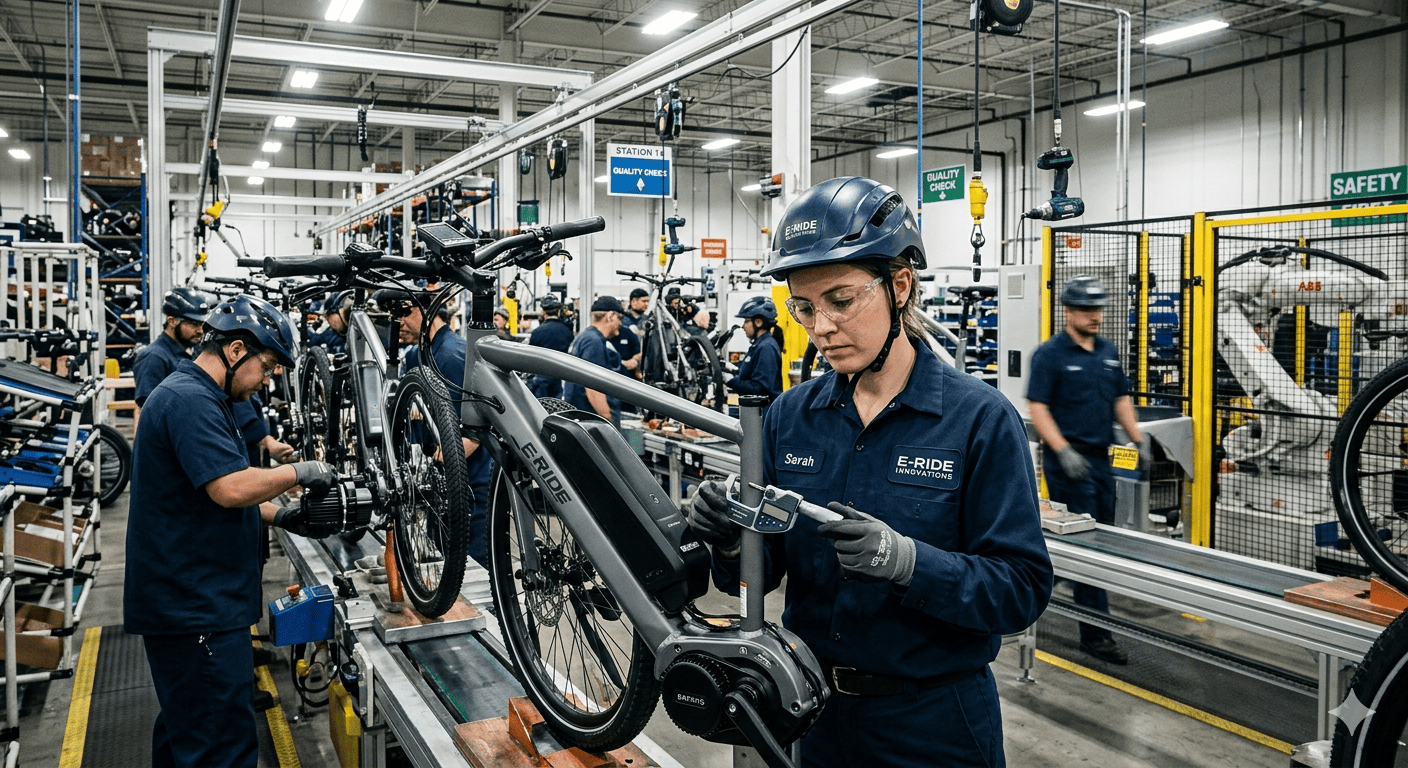
I once worked with a client who was thrilled with their sample. They told me, "This is perfect, let's go straight to a 1,000-unit order!" I advised them to approve a first-article from the actual production line, but they wanted to save time. The result? We found a minor alignment issue with the battery casing on the first 50 units—an issue that didn't exist on the hand-built sample. We caught it early, but it still caused a two-week delay to re-calibrate the tooling. This is why I always tell clients that the sample and the first production unit serve different purposes. They are not the same thing. Understanding this difference is critical to managing your timeline.
The Two Types of Approval
| Item | Hand-Built Sample | Pre-Production First Article |
|---|---|---|
| Purpose | Confirms design, feel, and core function. | Confirms the manufacturing process is repeatable and consistent. |
| Origin | Made by senior technicians in a lab. | Made on the actual assembly line using final tooling. |
| Red Flag | Good for initial sign-off. | This is the critical gate for mass production approval. |
How Do Market-Specific Certifications Derail Your Timeline?
You think your product is ready to ship. Suddenly, your shipment is held up. The reason? You have the wrong certification for your target market.
Certifications derail timelines because each market (EU, US, AU) has unique, mandatory legal standards3. A US brand once assumed their supplier's CE (Europe) certification was globally valid, only to discover they needed UL certification mid-process, halting everything.
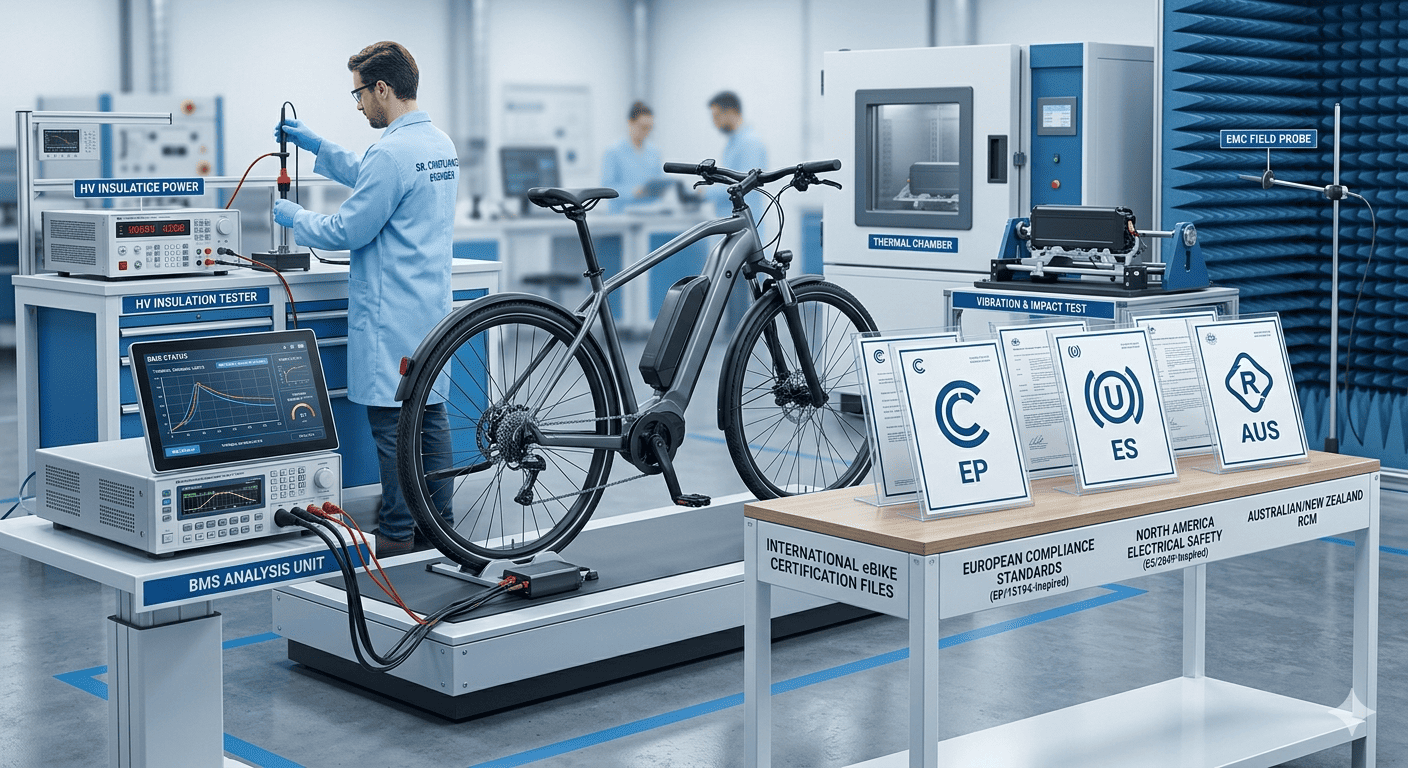
This is one of the most common and expensive mistakes I see. A few years ago, a US-based brand was ready to place a large order. They asked if we were "certified." I said yes, we have CE and ISO90014. They were satisfied. Three months later, with the bikes ready to ship, their logistics partner asked for the UL 2849 report. The client had no idea what that was. They assumed CE was an international standard. We had to pause everything, send components to a US-approved lab, and wait. It added a huge delay and cost they hadn't budgeted for. It's not the manufacturer's job to know where you're selling, it's yours. You must tell us your target market upfront so we can build and test to the correct standard from the very beginning.
Major Market Certification Quick View
| Market | Common Standard | Key Focus | Buyer's Responsibility |
|---|---|---|---|
| EU | CE (EN 15194)5 | General product safety and eBike-specific regulations. | Provide clear intent to sell in the EU. |
| USA | UL (2849/2271)6 | Electrical and fire safety for the battery and drive system.7 | Confirm UL requirement before sample production. |
| Australia | RCM Mark8 | Electrical safety and electromagnetic compatibility. | State your target market is Australia from day one. |
What Are the Hidden Time Costs in Each Procurement Stage?
Your factory gave you a 45-day production time. It's been 90 days and you're still waiting. Where did the extra time come from?
The "production time" is only one part of the journey. Hidden time costs come from your own decision-making, approvals, and logistics. Delays in approving artwork or paying the deposit can push your order back in the production queue, causing a cascade of delays.
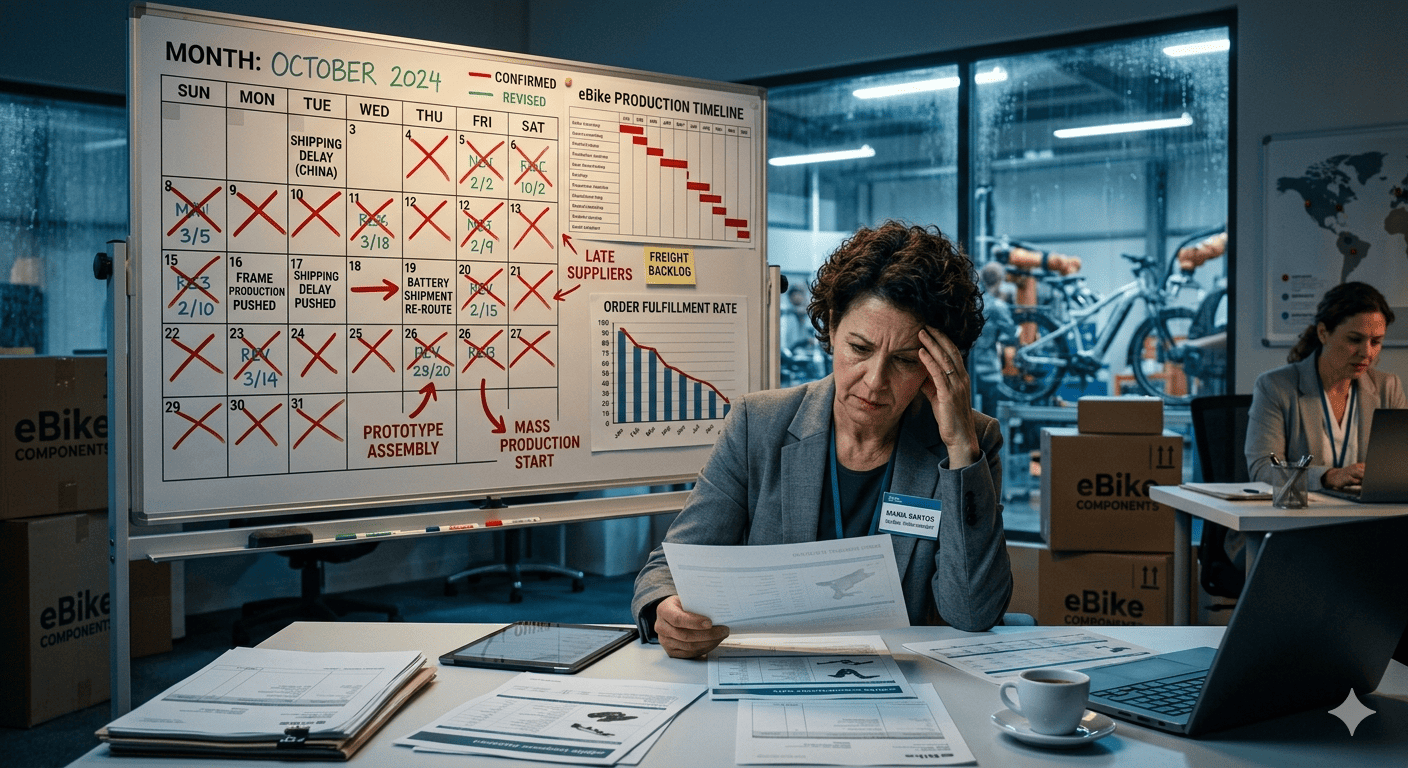
The biggest misconception is that the clock starts when you say "go." The clock only starts when everything is in place. Think of it like a series of gates. You can't pass through the next gate until you've completed specific tasks on your end. If you take a week to approve the final decal design, that's one week your order is not in the production schedule.9 If our production schedule is full, you might not just lose one week; you might lose three as other orders take your spot. It's your responsibility to be prepared. Before we can even quote accurately, we need your detailed specs. Before we make a sample, we need the design confirmed. Before mass production, we need certifications and deposit sorted. Every hesitation on your end has a ripple effect on the timeline.10
Assumed Timeline vs. Realistic Timeline
| Stage | Buyer's Assumed Time | Realistic Time (with delays) | Key Buyer Action to Prevent Delay |
|---|---|---|---|
| Specification | 1 day | 1-2 weeks | Provide a detailed spec sheet upfront. |
| Sample Approval | 2 weeks | 4-6 weeks | Provide quick, decisive feedback. Don't change specs. |
| Deposit & Artwork | 2 days | 1-3 weeks | Have funds and final artwork ready to go. |
| Mass Production | 45 days | 45-60 days | Don't change anything after approval. |
| Final Inspection | 1 day | 3-7 days | Schedule your third-party inspector in advance.11 |
Conclusion
The eBike purchasing process is complex. But by understanding the real stages and preparing for each gate, you can turn a frustrating, unpredictable wait into a smooth and successful launch.
"[PDF] FAA and Industry Guide to Product Certification", https://www.faa.gov/sites/faa.gov/files/aircraft/air_cert/design_approvals/transport/CPI_guide.pdf. Supply chain research documents that complex manufactured goods typically involve certification, validation, and regulatory approval stages that extend beyond core production timelines. Evidence role: general_support; source type: research. Supports: that complex manufactured products involve multiple procurement stages beyond production. Scope note: May reference general manufacturing rather than eBike-specific processes ↩
"Batch Sizes And QC Questions | Test Methods | Wastes - EPA Archive", https://archive.epa.gov/epawaste/hazard/testmethods/web/html/faqs_qc.html. Manufacturing engineering literature establishes that transitioning from prototype to mass production introduces process variation through tooling tolerances, material batch differences, and assembly line conditions. Evidence role: mechanism; source type: education. Supports: that scaled manufacturing introduces process variability not present in prototype production. ↩
"[PDF] The (Limited) Role of Regulatory Harmonization in International ...", https://chicagounbound.uchicago.edu/cgi/viewcontent.cgi?article=13699&context=journal_articles. International trade organizations document that despite harmonization efforts, major markets including the EU, US, and Australia maintain separate mandatory conformity assessment systems for electrical products. Evidence role: expert_consensus; source type: government. Supports: that major markets maintain distinct mandatory product safety certification regimes. ↩
"ISO 9000 family - Wikipedia", https://en.wikipedia.org/wiki/ISO_9000_family. ISO 9001, published by the International Organization for Standardization, specifies requirements for quality management systems and is the most widely adopted management system standard globally. Evidence role: definition; source type: institution. Supports: that ISO 9001 is the international standard for quality management systems. ↩
"Electric bicycle laws - Wikipedia", https://en.wikipedia.org/wiki/Electric_bicycle_laws. EN 15194 is the European harmonized standard specifying safety and performance requirements for electrically power assisted cycles (EPACs) under the CE marking framework. Evidence role: definition; source type: government. Supports: that EN 15194 is the harmonized European standard for electrically power assisted cycles. ↩
"[PDF] Memorandum - Consumer Product Safety Commission", https://www.cpsc.gov/s3fs-public/Package-Corrections-to-Draft-Proposed-Rule-to-Establish-a-Safety-Standard-for-Lithium-Ion-Batteries.pdf?VersionId=fhpnWvJVNIRL1dMRP3ByUYel0xPJf_kH. UL 2849 addresses electrical systems for eBikes while UL 2271 covers lithium-ion battery safety, both developed by Underwriters Laboratories as voluntary consensus standards widely adopted in North American markets. Evidence role: definition; source type: institution. Supports: that UL 2849 and UL 2271 are recognized safety standards for eBike systems and batteries. Scope note: These are voluntary standards, though often required by retailers and insurers ↩
"Lithium-Ion Battery Fire - NASA Lessons Learned database", https://llis.nasa.gov/lesson/3516. UL safety standards for battery systems and electrical assemblies prioritize fire risk mitigation, electrical shock prevention, and thermal management through standardized testing protocols. Evidence role: general_support; source type: institution. Supports: that UL battery and electrical system standards emphasize fire and electrical hazard mitigation. ↩
"Regulatory Compliance Mark - Wikipedia", https://en.wikipedia.org/wiki/Regulatory_Compliance_Mark. The Regulatory Compliance Mark (RCM) is administered by the Australian Communications and Media Authority (ACMA) as the mandatory compliance marking for electrical and electronic equipment sold in Australia. Evidence role: definition; source type: government. Supports: that the RCM is Australia's mandatory compliance mark for electrical equipment. ↩
"Manufacturing Workflow Automation for Production Scheduling Delays", https://sysgenpro.com/automation/manufacturing-workflow-automation-for-resolving-production-scheduling-and-approval-delays. Operations management research identifies customer approval cycles as critical path dependencies in make-to-order manufacturing, where delays in specification finalization directly extend lead times and can cause queue position loss in capacity-constrained facilities. Evidence role: mechanism; source type: education. Supports: that customer approval delays create scheduling bottlenecks in production planning. ↩
"Planner's guide: How Delays Cascade in Industrial Construction ...", https://blog.alicetechnologies.com/planners-guide-delays-industrial-construction-projects. Project management literature documents that in sequential processes with interdependencies, delays at early stages propagate through subsequent phases, often with amplification effects due to resource reallocation and queue repositioning. Evidence role: mechanism; source type: education. Supports: that delays in sequential process stages create cumulative timeline impacts. ↩
"Trade Guide: WTO PSI - International Trade Administration", https://www.trade.gov/trade-guide-wto-psi. Third-party inspection services are widely utilized in international manufacturing procurement to provide independent verification of product quality and specifications prior to shipment, particularly in cross-border transactions. Evidence role: general_support; source type: institution. Supports: that third-party inspection is an established quality assurance practice in international manufacturing. ↩