
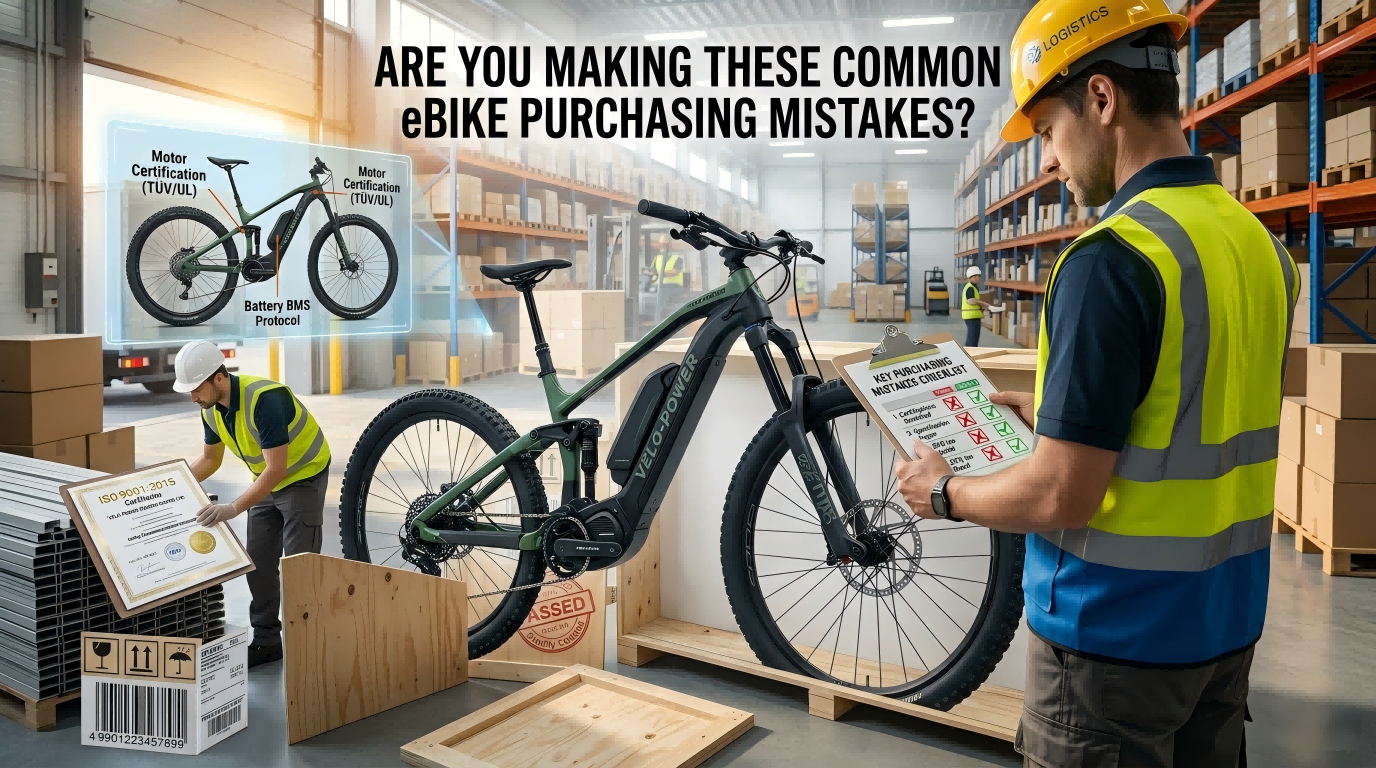
Sourcing your first eBike line is exciting but filled with hidden risks. A small oversight can lead to huge delays and unexpected costs, threatening your launch before it even starts.
Yes, many new buyers make critical mistakes by treating compliance, supplier stability, and specification clarity as minor details. The biggest errors come from misjudging these risks, leading to certification failures, supply chain disruptions, and costly production delays that a detailed process can prevent.
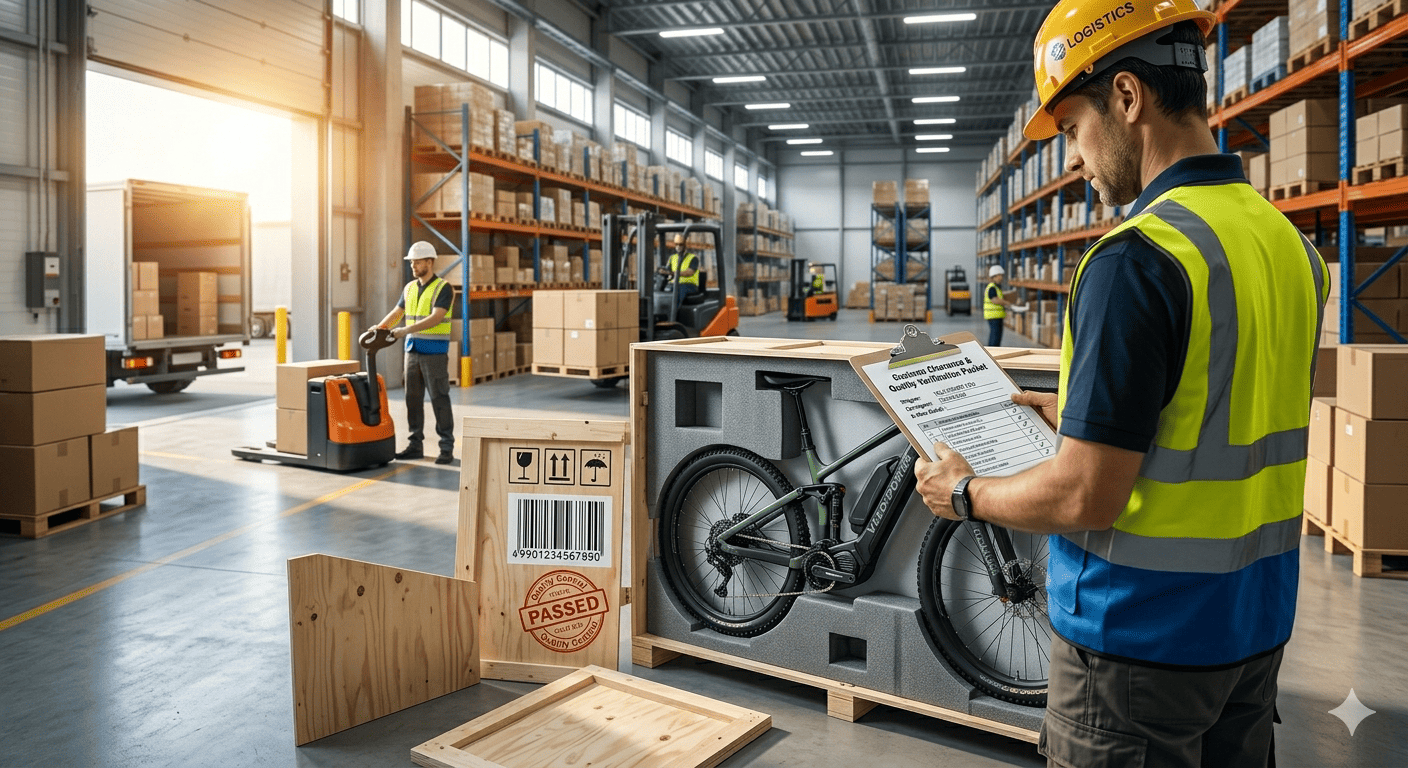
I've been on the manufacturing side for over 15 years, and I've seen the same patterns trip up new eBike brands and traditional dealers time and time again. It’s not about a lack of passion; it's about underestimating a few key areas that are very different from traditional bicycle sourcing. The good news is that these mistakes are entirely avoidable. Let me walk you through the most common ones we see in our inquiries every day, so you can build a smoother, more predictable path to market.
Are You Assuming Any Motor and Battery Will Pass Certification?
You've picked a powerful motor and a long-range battery, a perfect match for your customers. But what if they can't be legally sold together, wasting your entire sample investment?
You must confirm that your chosen motor and battery combination meets the specific regulatory standards for your target market before you order samples. This isn't a final detail; it's a foundational requirement. Failing to do this is a primary cause of failed certifications and wasted development cycles.
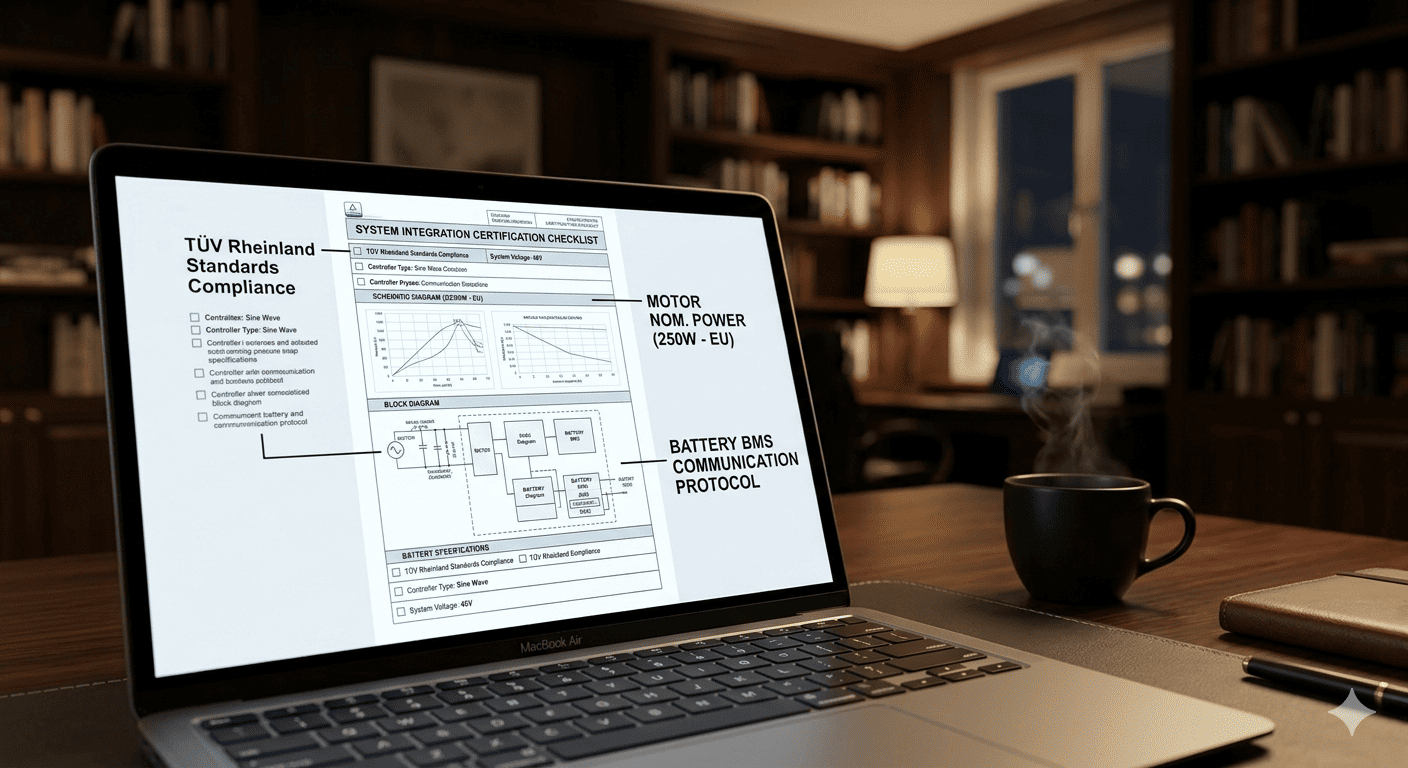
Over the years, I've had many conversations that start with a client's dream spec sheet. They have a vision for their bike, and that's fantastic. The problem arises when that vision isn't grounded in the reality of regional regulations. For example, a client recently came to us wanting to build a lightweight city commuter for the German market. They were set on a specific 500W motor they had seen online. While we could technically build that bike, it would be illegal to sell in the EU for road use, where the limit is 250W for a standard eBike (EPAC). They were thinking about the parts individually, not the final, certified system. This is a critical distinction that many first-time buyers miss.
Understanding the System, Not Just the Parts
The core issue is that certification bodies like a UL or TÜV testing lab1 don't just check if the battery is safe and the motor works. They test the entire electrical system as a single unit. They want to know how the components interact under stress. A powerful motor paired with a battery that isn't designed for high current draws can create a fire hazard. The controller, display, and wiring all play a part in this delicate balance.
| Factor | Common Mistake | The Correct Approach |
|---|---|---|
| Motor Power | Choosing based on "more is better" or what's popular. | Matching the motor's nominal power to local laws (e.g., 250W in EU, 750W in US2). |
| Battery & Controller | Focusing only on range (Ah) and features. | Ensuring the battery's discharge rate and Battery Management System (BMS)3 are a safe match for the motor's peak draw. |
| System Integration | Believing that individually certified parts create a certified bike. | Demanding that the supplier provides proof that the entire electrical system can be certified together for your target market. |
Getting this wrong means you'll pay for samples that are useless. Worse, you'll lose months of time redesigning your product and starting the sampling process all over again.
Is a Lower Price Worth an Unstable Supply Chain?
You've found a supplier whose unit price is 10% lower than everyone else. But what if that low price means inconsistent quality, late deliveries, and a damaged brand reputation?
Focusing only on the unit price is a dangerous gamble. A supplier without key certifications like ISO9001 (quality management)4 and BSCI (social compliance)5 exposes your brand to massive risks, including product recalls, delivery failures, and legal liability that far outweigh the initial savings.
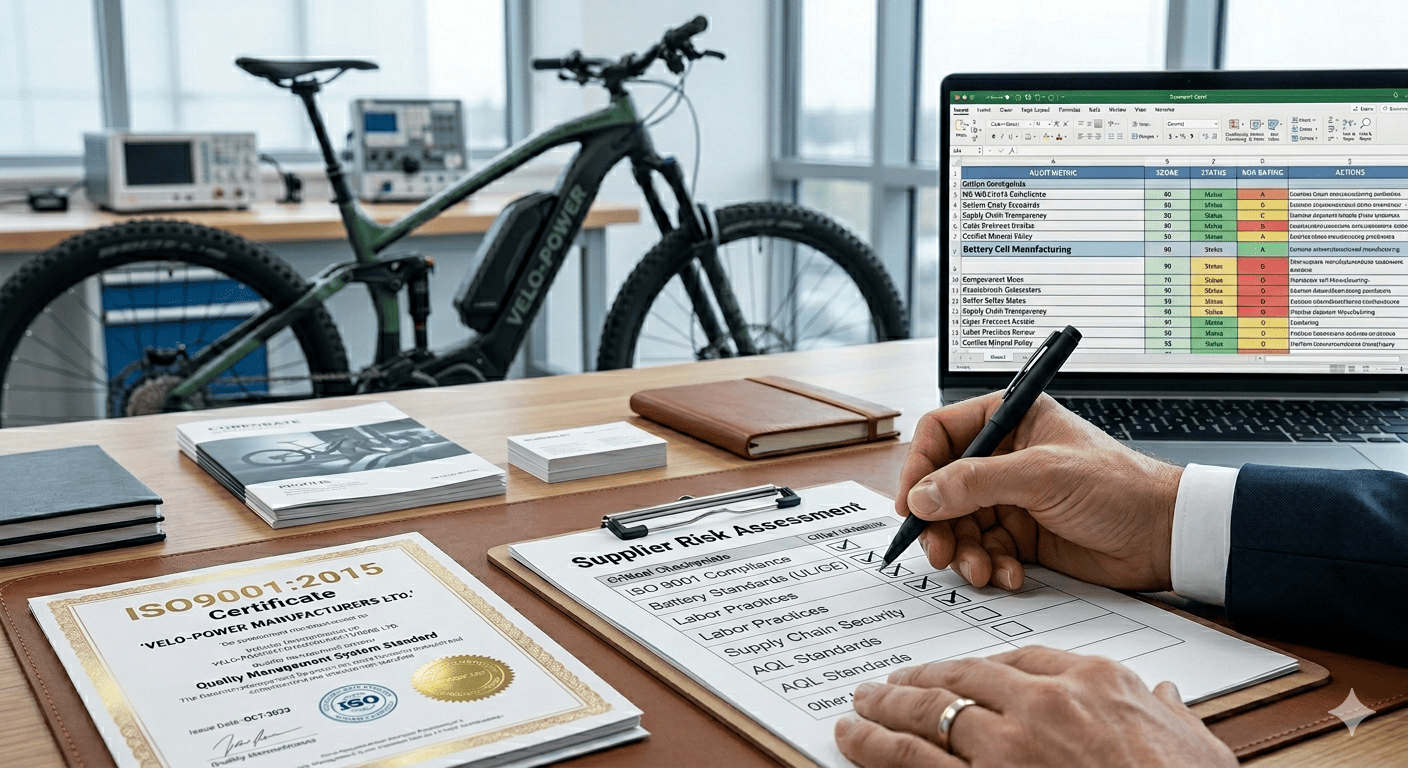
We often get inquiries where the buyer's main question is "what is your best price for 500 units?" This tells me they are comparing quotes on a single metric. I understand the pressure to manage costs, but in eBike manufacturing, the sticker price is only a small part of the total cost of ownership. A few years ago, we began working with a brand that was on the verge of collapse. Their previous supplier, who was not ISO9001 certified, offered them an unbeatable price. But their first production run had a 20% defect rate6. The cost of shipping returns, managing angry customers, and replacing faulty units completely erased their profit margins and nearly destroyed their brand's credibility.
What Do ISO9001 and BSCI Really Mean for Your Business?
These certifications aren't just logos for a website; they are proof of a manufacturer's operational maturity. They are a form of insurance for your business.
-
ISO9001 (Quality Management System): This certification proves that a factory has reliable, repeatable processes for everything. It means there's a documented procedure for inspecting incoming raw materials, for checking weld quality, for testing every single battery before it's installed, and for a final quality check before boxing. Without this system, quality becomes dependent on which workers are on shift that day. ISO9001 ensures consistency and dramatically reduces the risk of you receiving a container full of defective products.
-
BSCI (Business Social Compliance Initiative): This is about ensuring the people building your bikes are treated fairly and work in safe conditions. From a purely business perspective, this is crucial. Factories with poor labor practices have high employee turnover, which leads to inconsistent assembly quality7. More critically, they risk being shut down by regulators or facing strikes, which would halt your production indefinitely. This certification protects your supply chain from sudden disruptions and shields your brand from being associated with unethical manufacturing.
That "cheaper" quote from an uncertified factory is a mirage. It doesn't include the future costs of warranty claims, production halts, or the priceless damage to your customers' trust.
Is Your RFQ Too Vague to Get an Accurate Quote?
You sent out a request for a "mountain eBike with good range" to five suppliers. Now you have five completely different quotes and no clear way to compare them.
Vague Requests for Quotation (RFQs) are the single biggest cause of project delays. Without clear performance targets, intended use cases, and target market compliance, suppliers are forced to guess. This guessing game leads to inaccurate pricing, endless revisions, and a longer time-to-market.
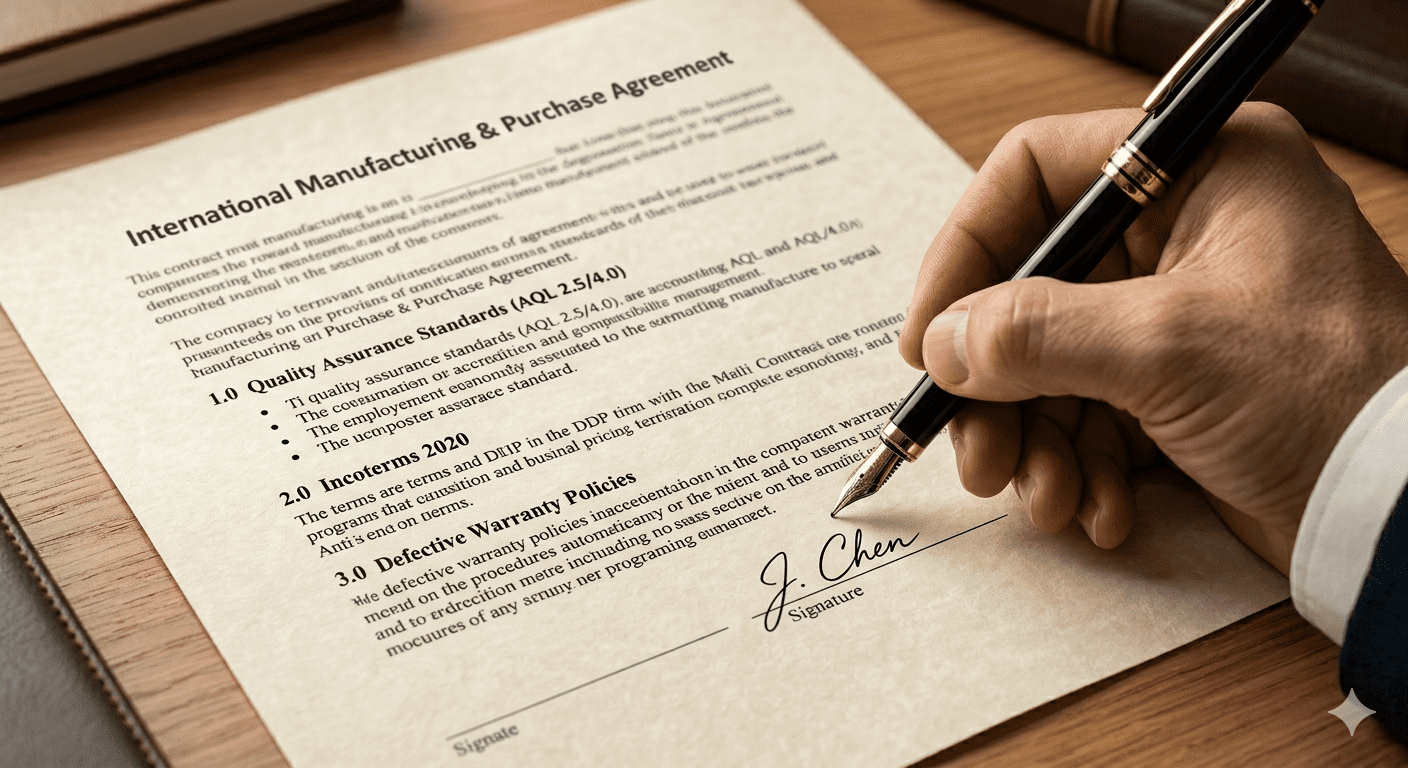
Almost every day, my team receives inquiries that are impossible to quote accurately. A message might say, "Please quote a 27.5-inch city eBike with Shimano parts and a big battery." This seems straightforward, but it leaves a hundred questions unanswered. What kind of "city"? Flat Amsterdam or hilly San Francisco? This determines the motor torque needed. What does "big battery" mean? 50km of range or 120km? This dramatically affects the cost. Which "Shimano parts"? The Altus groupset or the Deore XT? There's a huge price difference. When we get a request like this, we have two choices: either quote a very expensive, over-specced bike to cover all possibilities, or quote a low-spec base model that probably won't meet the client's real needs. Both paths lead to frustration and wasted time.
From Vague Request to Actionable RFQ
The goal of your RFQ is to eliminate guesswork for the supplier. The more details you provide upfront, the faster you will get an accurate, comparable quote that truly reflects your vision. A strong RFQ moves the conversation from "what do you want?" to "here is how we can build what you need."
Here’s a simple table showing how to add the necessary detail:
| Category | Vague Request | Specific RFQ Detail | Why It Matters for an Accurate Quote |
|---|---|---|---|
| Use Case | "An e-MTB" | "Trail e-MTB for moderate single-track, rider weight up to 110kg." | Defines frame geometry, suspension travel, and required structural strength. |
| Performance | "Good range and powerful motor." | "Minimum 70km range in eco-mode; motor must provide 80Nm of torque8." | Determines the required battery capacity (in Watt-hours) and the motor class. |
| Compliance | "For sale in the USA." | "Must be Class 2 compliant (throttle-assisted to 20 mph)9 and ready for UL 2849 certification10." | Specifies the motor controller settings, speed limits, and critical safety testing standards. |
| Components | "Good quality brakes." | "Tektro hydraulic disc brakes with 180mm rotors." | Allows for precise component costing instead of using a generic placeholder price. |
By investing time in a detailed RFQ, you are not doing our job for us. You are taking control of your project, reducing revision rounds from ten to two, and ensuring the quotes you receive are for the actual bike you want to sell.
Conclusion
Avoiding these purchasing mistakes isn't about becoming an engineer overnight. It's about shifting your focus to treat compliance, supplier stability, and specification clarity as your highest priorities from day one.
"TUV Rheinland of North America, Inc. - OSHA", http://www.osha.gov/nationally-recognized-testing-laboratory-program/tuv. Organizations such as UL (Underwriters Laboratories) and TÜV (Technischer Überwachungsverein) are globally recognized third-party testing and certification bodies that evaluate electrical products, including eBikes, against safety standards to verify compliance with regulatory requirements. Evidence role: definition; source type: institution. Supports: the role of UL and TÜV as independent testing and certification organizations for electrical safety. ↩
"[PDF] Summary of Electric and Non- Powered Bicycle Standards", https://www.cpsc.gov/s3fs-public/Electric-and-Non-Powered-Bicycle-Standards-Summary-Report.pdf?VersionId=rZGs9tSONCKqT8AEaJJMZd_S1nDJpKEW. Under 15 U.S.C. § 2085, the Consumer Product Safety Commission defines a low-speed electric bicycle as having fully operable pedals and an electric motor of less than 750 watts (1 h.p.), distinguishing it from motor vehicles subject to different regulations. Evidence role: statistic; source type: government. Supports: the 750W motor power threshold for low-speed electric bicycles under US federal law. Scope note: Individual states may impose additional restrictions on motor power, speed, or where eBikes can be operated. ↩
"Battery management system - Wikipedia", https://en.wikipedia.org/wiki/Battery_management_system. A Battery Management System (BMS) is an electronic system that monitors and manages rechargeable battery packs, protecting cells from operating outside safe parameters by controlling charge/discharge rates, balancing cell voltages, and preventing conditions that could lead to thermal runaway or fire. Evidence role: mechanism; source type: education. Supports: the role of battery management systems in monitoring and protecting lithium-ion batteries. ↩
"ISO 9000 family - Wikipedia", https://en.wikipedia.org/wiki/ISO_9000_family. ISO 9001, published by the International Organization for Standardization, specifies requirements for a quality management system that organizations use to demonstrate their ability to consistently provide products and services that meet customer and regulatory requirements. Evidence role: definition; source type: institution. Supports: the nature of ISO 9001 as an international quality management system standard. ↩
"amfori BSCI - Business Social Compliance Initiative", https://www.amfori.org/amfori-bsci/. The Business Social Compliance Initiative (BSCI), managed by amfori, is a supply chain management system that supports companies in monitoring and improving working conditions in their global supply chains through a code of conduct based on international labor standards. Evidence role: definition; source type: institution. Supports: the nature of BSCI as a business-driven initiative for social compliance in supply chains. ↩
"Relationship between ISO 9001:2015 and operational and business ...", https://pmc.ncbi.nlm.nih.gov/articles/PMC7814109/. Research on quality management systems indicates that ISO 9001 certification is associated with improved process control and reduced defect rates in manufacturing operations, though specific defect rates vary widely by industry, product complexity, and implementation rigor. Evidence role: general_support; source type: research. Supports: the relationship between quality management system certification and reduced defect rates in manufacturing. Scope note: The cited 20% defect rate is presented as a specific case example rather than a general expectation for all uncertified suppliers. ↩
"[PDF] Exploring Strategies in Manufacturing to Reduce Loss of Workers ...", https://scholarworks.waldenu.edu/cgi/viewcontent.cgi?article=19680&context=dissertations. Manufacturing research consistently demonstrates that high employee turnover negatively impacts product quality through loss of accumulated skills, disruption of team coordination, and increased training burden, with studies showing correlations between turnover rates and defect rates in assembly operations. Evidence role: expert_consensus; source type: research. Supports: the relationship between employee turnover and manufacturing quality outcomes. ↩
"What torque do I need ? | Electric Bike Forums", https://forums.electricbikereview.com/threads/what-torque-do-i-need.56220/. Motor torque, measured in Newton-meters (Nm), is a key performance specification for eBikes that determines acceleration capability and climbing power, with values typically ranging from 40Nm for basic city bikes to 80-90Nm or higher for performance-oriented mountain and cargo eBikes. Evidence role: general_support; source type: education. Supports: the role of motor torque in eBike performance, particularly for climbing and acceleration. Scope note: Actual performance depends on multiple factors including gearing, rider weight, and terrain; torque specifications alone do not fully predict real-world capability. ↩
"Electric Bicycles (E-Bikes) on Federal Lands - Congress.gov", https://www.congress.gov/crs-product/IF12459. Many US states have adopted a three-class eBike system where Class 2 electric bicycles are defined as equipped with a motor that can propel the bicycle exclusively by throttle and ceases to provide assistance when the bicycle reaches 20 mph. Evidence role: definition; source type: government. Supports: the definition of Class 2 electric bicycles in the three-class system adopted by many US states. Scope note: This classification is not federally mandated; adoption and specific definitions vary by state jurisdiction. ↩
"E-Bikes Certification: Evaluating and Testing to UL 2849 | UL Solutions", https://www.ul.com/services/e-bikes-certificationevaluating-and-testing-ul-2849. UL 2849 is a safety standard published by UL that outlines requirements for electrical systems of electric bicycles, covering battery systems, chargers, motors, and controllers to reduce risks of fire, electric shock, and other hazards. Evidence role: definition; source type: institution. Supports: the nature of UL 2849 as a safety standard for eBike electrical systems. ↩