
Buying eBikes seems straightforward, but a wrong step can lead to compliance failures or a collapsed supply chain. Understanding the real process is key to avoiding these costly mistakes.
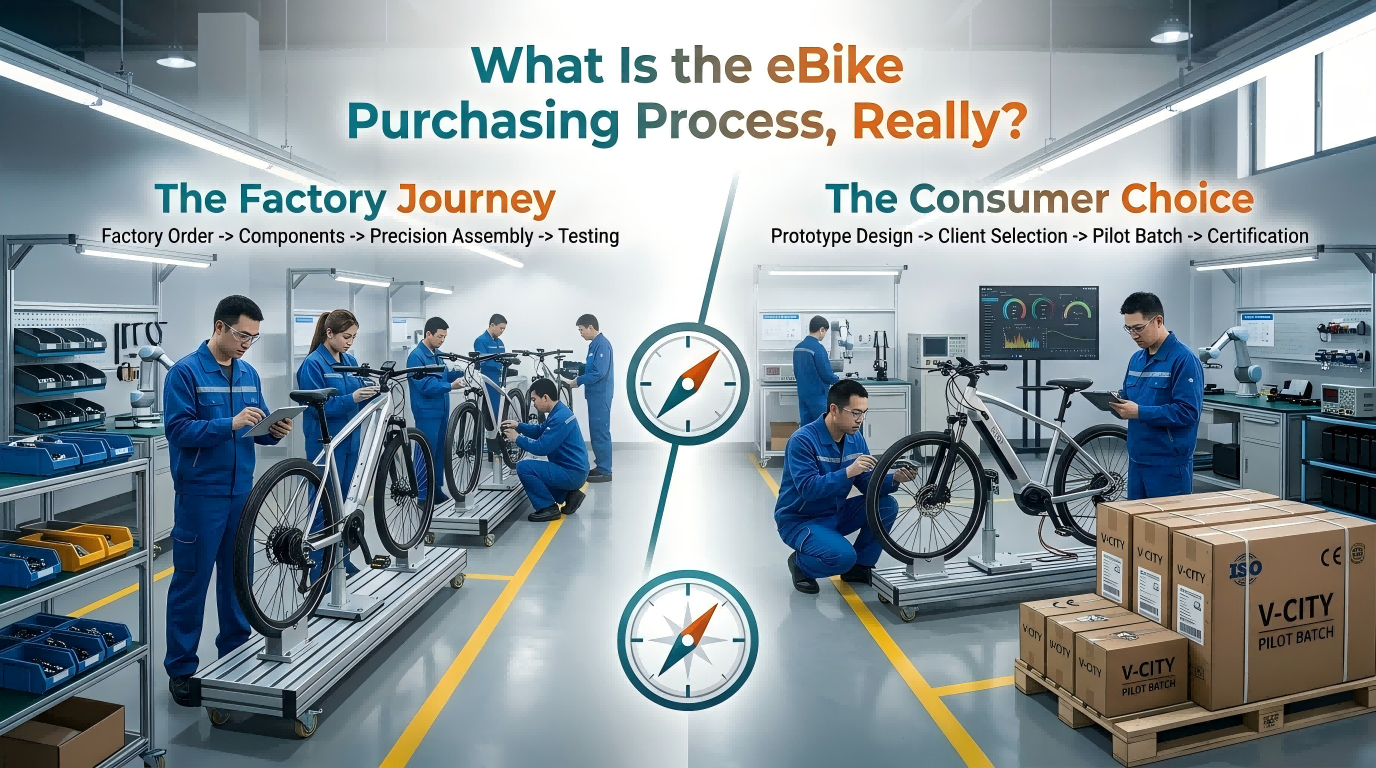
The eBike purchasing process is a staged verification journey.1 It moves from a sample that tests technical fit, to a pilot batch for manufacturing consistency, and finally to mass production. This approach prevents critical failures and ensures a successful product launch.
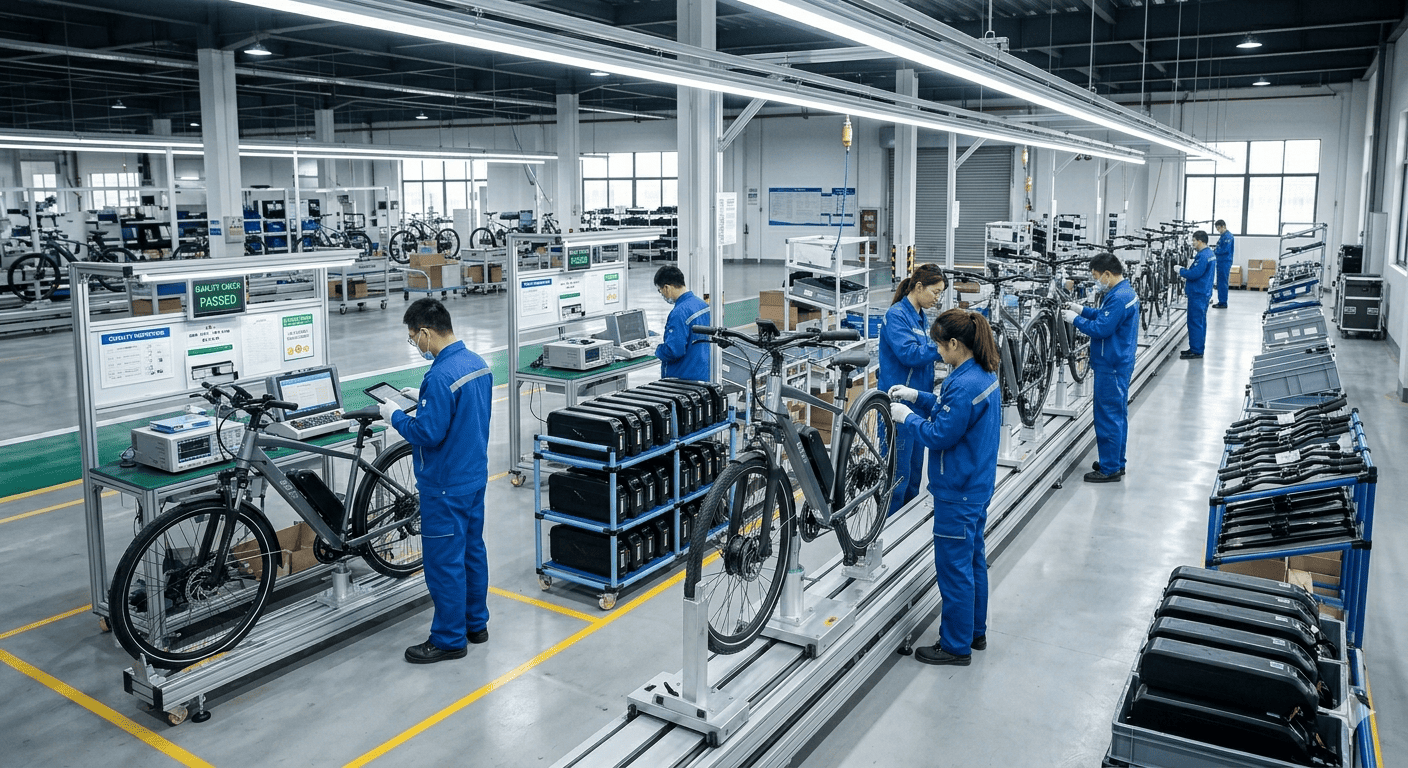
After 15 years of manufacturing eBikes, I have seen many buyers arrive with a standard procurement checklist. They are often surprised when I tell them that for eBikes, that list is just the start. The real work is in understanding what to verify and when to do it. The path from a great idea to a container of market-ready eBikes is full of risks that a simple checklist can't see. Let's break down what I have seen go wrong and how you can get it right.
Why Does Sample Approval Not Mean You're Ready for Mass Production?
You just approved a perfect sample and want to rush into a large order. But this common impulse hides massive risks that can derail your entire project before it even starts.
A sample only proves a supplier can create one perfect unit.2 It validates the technical design, component fit, and basic performance. It does not prove they can manufacture 1,000 units with the same consistency, quality, or schedule. A sample tests the product; mass production tests the system.
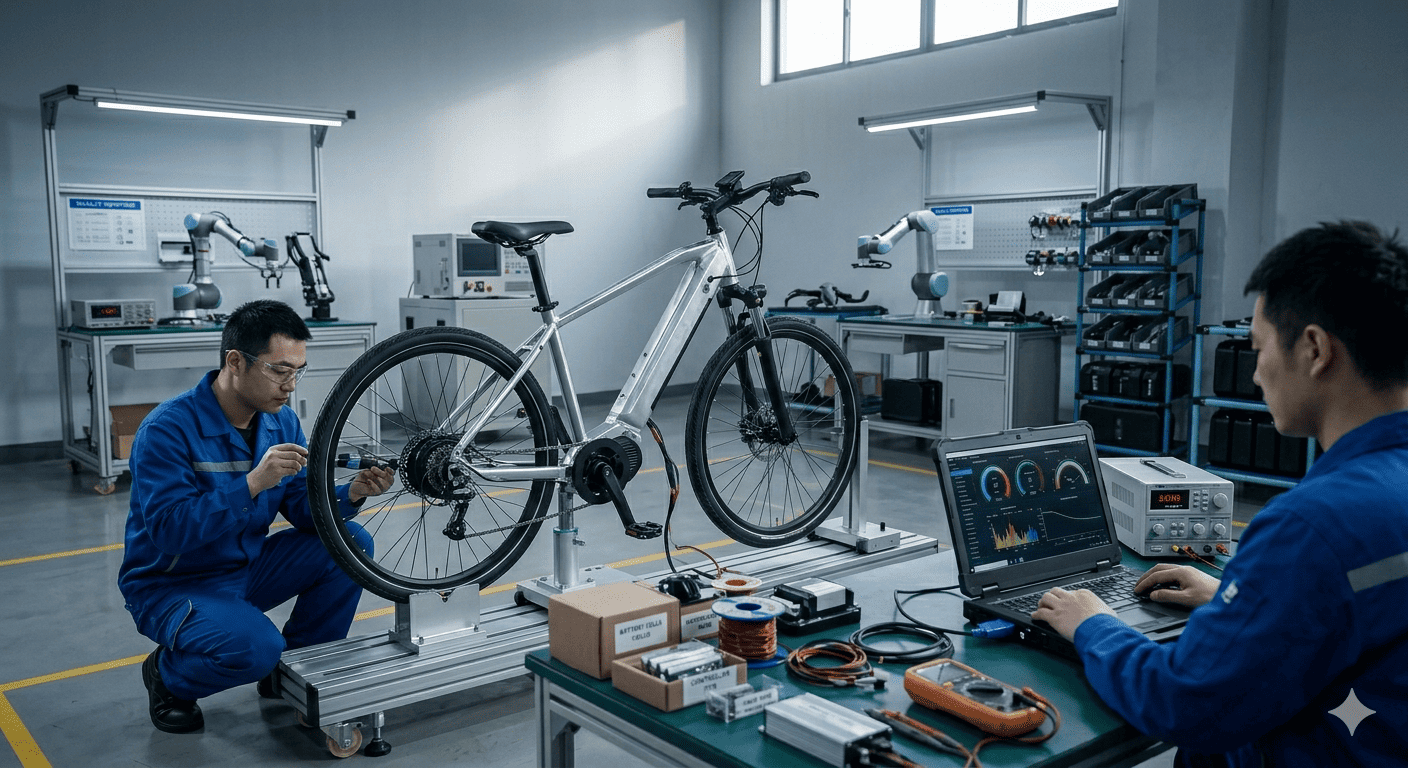
Many buyers I work with breathe a huge sigh of relief when the sample arrives and it's perfect. They immediately want to talk about placing a 5,000-unit order. I always have to gently slow them down. The sample's job is very specific. It’s there to answer critical technical questions. For example, does the chosen motor integrate smoothly with your custom frame3? The sample is your first real-world test of the entire electronic ecosystem. This is where you test things like:
- Ride Feel & Performance: The sample is where we calibrate the bike's "feel." You might test it and report back, "The torque sensor feels sluggish4." Our engineers can then adjust the controller firmware and send you a new software file to update the bike. This back-and-forth is crucial and only practical at the sample stage.
- Technical Integration: We once had a client who loved a sample's look but found in testing that the motor housing was a fraction too large, creating vibration at high speeds. The sample caught this design flaw before it was built into thousands of frames.
- Component Communication: Do all the third-party components—brakes, display, battery—communicate correctly? A sample is your first chance to see if the chosen parts work together as a system.
The sample is a prototype, often built by our top engineers, not the assembly line. Rushing from sample to mass production is the single biggest risk in eBike procurement.
Are All Certifications Created Equal for Your eBike Market?
A supplier tells you they are "fully certified." This sounds great, but these certifications might not cover your specific market or the whole bike, leading to seized shipments or legal trouble.
No. A supplier might have CE for a charger, but you need UL for the entire battery system for the US market5. Certifications are not interchangeable. You must verify that the specific components and the complete vehicle meet your target market's legal requirements.
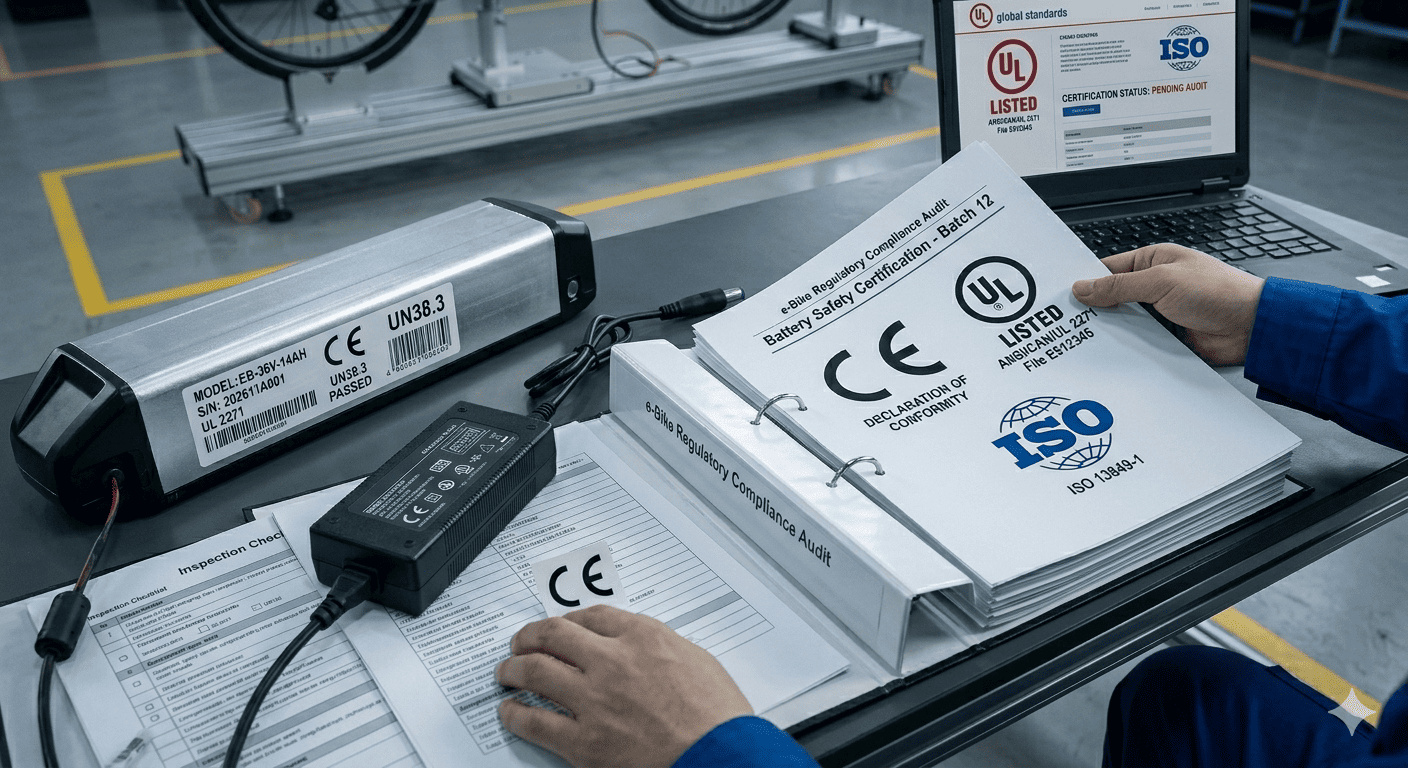
This is the most common and dangerous misunderstanding I see. A buyer will ask, "Are you certified?" I can say, "Yes, our factory has ISO9001 and BSCI6." But that is not the right question. Those are factory-level certifications that show we have good processes. They do not guarantee the product itself is legal for sale in Germany or California. The real questions are much more specific. For instance, a client shipping to the EU needs EN15194 compliance for the whole bike7. But if they also ship to the US, they face a patchwork of state laws and the need for UL 2849 certification. These are completely different testing protocols. You need to understand the different layers of certification.
Here is a simple breakdown of what you must check:
| Certification Layer | What It Covers | Common Mistake |
|---|---|---|
| Component Level | Individual parts like the battery (UN38.3), charger (CE/UL), or motor. | Assuming a certified battery means the whole bike is certified. |
| System Level | How components interact, especially the battery and controller system. | Ignoring this layer. A safe battery and safe motor can be unsafe together. |
| Full Vehicle Level | The complete eBike as a single product (e.g., EN15194 in Europe, UL 2849 in the US). | Thinking component certs add up to full-vehicle compliance. They do not. |
A classic "gotcha" is the battery. A UN38.3 certificate is required for shipping the battery safely8. It has nothing to do with whether the battery is safe to use in an eBike. You must always ask, "Certified for what purpose and for which market?" Never take "we're certified" as a final answer.
What Is the Real Purpose of a Pilot Production Batch?
You want to save time and money by skipping a small pilot run. But this could mean discovering fatal flaws only after thousands of units are already made and paid for.
A pilot batch of 50-100 units9 is not for selling. It is your only chance to test the supplier's manufacturing consistency and quality control at a small scale. It shows how the product holds up when it moves from engineers' hands to the real assembly line.10
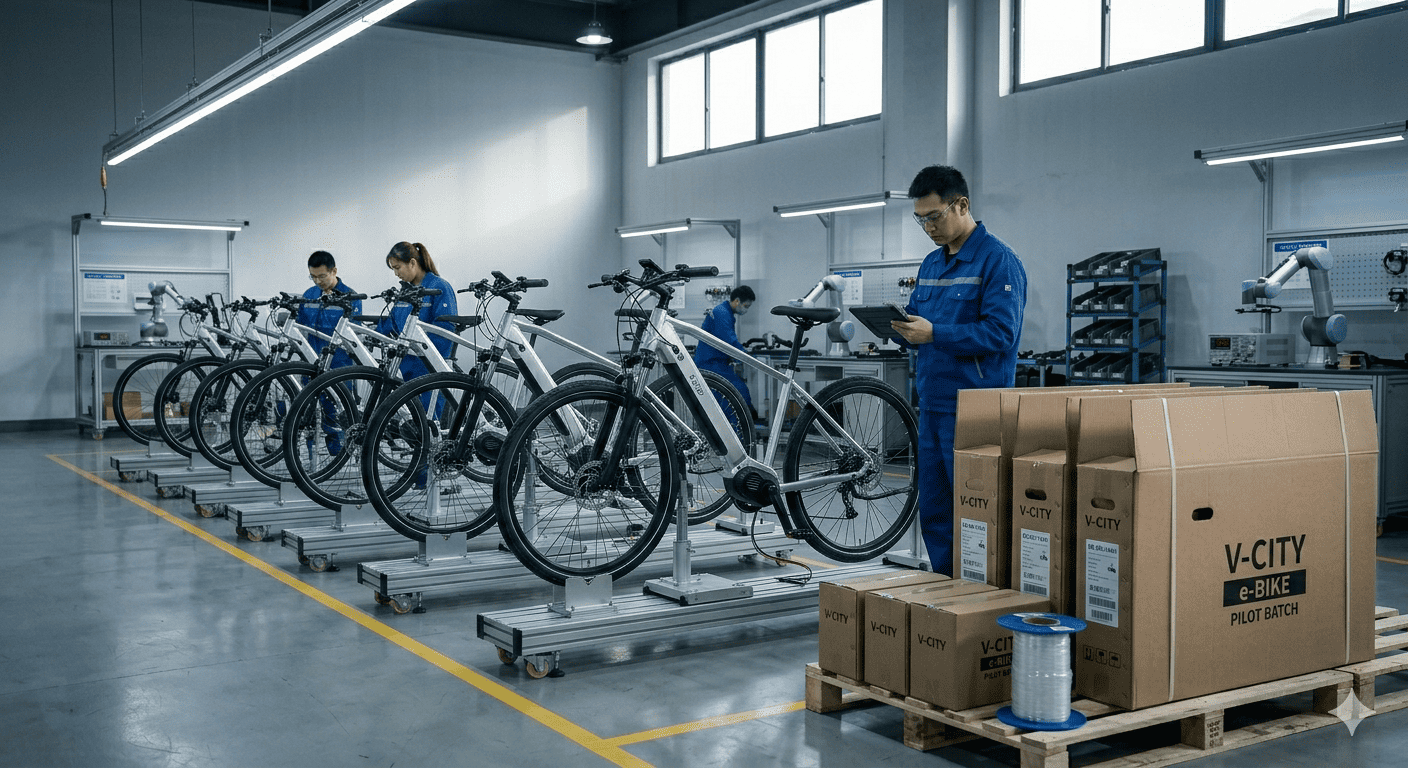
If the sample tests the design, the pilot batch tests the factory. After 15 years in this business, I can tell you that any factory can make one great bike. But can they make 500 great bikes that are all the same? The pilot run answers this question. This is the first time the product is run on the actual assembly line by the line workers, not our senior R&D team. We are looking for specific things:
- Consistency: Are all frames welded identically? Is the paint finish uniform across all 50 units?11 Small deviations here can point to big process problems.
- Process Stability: We often discover bottlenecks during a pilot run. Maybe a specific screw is hard to reach, slowing down the entire line. This is where we create new tools or adjust the assembly steps.
- Early Failure Detection: A pilot batch is your best chance to catch issues that only appear at scale. We once had a pilot batch reveal that a wire harness was being pinched during assembly on about 5% of the bikes12. This problem never happened with the single hand-built sample. We fixed the assembly procedure before it became a 500-unit recall.
The pilot batch also tests things everyone forgets, like packaging and shipping. It is the first time we will ship a pallet of bikes. Do they arrive undamaged? We ask our clients to assemble a few bikes from the pilot batch themselves, following the included manual. This "out-of-box experience" test often reveals small but crucial issues that can be fixed before mass production.
Conclusion
The eBike purchasing process is about managing risk through stages. By verifying the design with a sample, the process with a pilot batch, and compliance at every step, you build a reliable supply chain.
"[PDF] Best Practices Procurement & Lessons Learned Manual", https://www.transit.dot.gov/sites/fta.dot.gov/files/docs/funding/procurement/8286/fta-best-practices-procurement-and-lessons-learned-manual-2016.pdf. Stage-gate processes in product development and manufacturing procurement are documented in supply chain management literature as risk mitigation strategies, though specific application to eBike purchasing may vary by industry context. Evidence role: general_support; source type: education. Supports: staged verification approaches in manufacturing procurement. Scope note: supports general staged procurement methodology rather than eBike-specific processes ↩
"[PDF] Process Validation: General Principles and Practices | FDA", https://www.fda.gov/files/drugs/published/Process-Validation--General-Principles-and-Practices.pdf. Manufacturing quality literature distinguishes between first-article capability and process capability, noting that prototype success does not guarantee consistent mass production outcomes without process validation. Evidence role: expert_consensus; source type: education. Supports: the distinction between prototype capability and production consistency. ↩
"How I built an electric bicycle | Paul M. Rady Mechanical Engineering", https://www.colorado.edu/mechanical/2021/06/01/how-i-built-electric-bicycle. eBike engineering research addresses motor-frame integration as a critical design consideration affecting performance, vibration, and structural integrity, though specific integration protocols vary by motor type and frame geometry. Evidence role: mechanism; source type: research. Supports: the importance of motor-frame integration in eBike design. Scope note: supports general integration importance rather than specific testing protocols ↩
"I need help to fix my torque sensor. With stock firmware a small ...", https://www.facebook.com/groups/734929600180813/posts/1733651330308630/. Electric bicycle control systems literature documents that torque sensor responsiveness is governed by controller firmware parameters, allowing calibration of pedal assist characteristics through software adjustments. Evidence role: mechanism; source type: research. Supports: the relationship between torque sensor performance and controller firmware settings. ↩
"E-Bikes Certification: Evaluating and Testing to UL 2849 | UL Solutions", https://www.ul.com/services/e-bikes-certificationevaluating-and-testing-ul-2849. UL 2849 provides safety standards for electrical systems in eBikes, though specific legal requirements vary by state and jurisdiction, with some markets requiring UL certification while others accept alternative compliance paths. Evidence role: general_support; source type: institution. Supports: UL certification standards for eBike electrical systems in the US. Scope note: UL certification may be market-preferred rather than universally legally mandated across all US jurisdictions ↩
"ISO 9001:2015 - Quality management systems — Requirements", https://www.iso.org/standard/62085.html. ISO9001 is an international quality management system standard, while BSCI (Business Social Compliance Initiative) addresses social compliance in supply chains; both certify organizational processes rather than specific product safety or market compliance. Evidence role: definition; source type: institution. Supports: ISO9001 and BSCI as process and social compliance certifications. ↩
"E-Bike Rules and Regulations – EU - Sensitivus", https://sensitivus.com/insights/eu-rules-and-regulations-e-bikes/. EN15194 is the European standard specifying safety and performance requirements for electrically power assisted cycles (EPACs), covering the complete vehicle including electrical and mechanical systems. Evidence role: definition; source type: institution. Supports: EN15194 as the European standard for electrically power assisted cycles. ↩
"Transporting Lithium Batteries - PHMSA", https://www.phmsa.dot.gov/lithiumbatteries. UN38.3 refers to Section 38.3 of the UN Manual of Tests and Criteria, which establishes testing requirements for lithium batteries to ensure safe transport by air, sea, rail, and road under international dangerous goods regulations. Evidence role: definition; source type: institution. Supports: UN38.3 as the international standard for lithium battery transport safety. ↩
"Questions and Answers on Current Good Manufacturing Practice", https://www.fda.gov/drugs/guidances-drugs/questions-and-answers-current-good-manufacturing-practice-regulations-production-and-process. Manufacturing literature discusses pilot production runs as process validation tools, with batch sizes typically determined by statistical sampling requirements and production complexity, though specific size recommendations vary by product type and risk assessment. Evidence role: general_support; source type: education. Supports: pilot production batch sizing in manufacturing. Scope note: supports general pilot batch concept rather than the specific 50-100 unit recommendation ↩
"[PDF] Process Validation: General Principles and Practices | FDA", https://www.fda.gov/files/drugs/published/Process-Validation--General-Principles-and-Practices.pdf. Manufacturing and design-for-manufacturing literature documents that pilot production serves to identify discrepancies between engineering prototypes and assembly line conditions, revealing process capability issues not apparent in hand-built samples. Evidence role: expert_consensus; source type: education. Supports: the transition from prototype to production line manufacturing. ↩
"A Strategy to Assess Quality Consistency of Drug Products - PMC", https://pmc.ncbi.nlm.nih.gov/articles/PMC6448014/. Manufacturing quality control literature identifies process consistency metrics such as weld uniformity and surface finish variation as indicators of production capability, though specific acceptance criteria vary by industry standards and product requirements. Evidence role: general_support; source type: education. Supports: welding consistency and finish uniformity as manufacturing quality indicators. Scope note: supports general quality control principles rather than eBike-specific standards ↩
"Questions and Answers on Current Good Manufacturing Practice", https://www.fda.gov/drugs/guidances-drugs/questions-and-answers-current-good-manufacturing-practice-regulations-production-and-process. Quality control literature documents that pilot production runs reveal assembly process defects and failure modes not apparent in prototype builds, as statistical variation and operator differences emerge at production scale. Evidence role: expert_consensus; source type: education. Supports: pilot production as a tool for detecting assembly process defects. ↩