
Master global sourcing in 2026 with our proven 5-step guide. Learn supplier vetting, quality control, compliance, and risk management strategies for importers and wholesalers.
Introduction
Global sourcing has evolved dramatically in recent years, transforming from a simple cost-cutting exercise into a strategic business function that directly impacts profitability, competitiveness, and long-term success. In 2026, importers face a more complex landscape than ever before, with challenges ranging from geopolitical tensions and shifting trade policies to stricter ESG regulations and supply chain disruptions.
For businesses importing products from China, Vietnam, India, or other manufacturing hubs, a systematic approach to global sourcing is no longer optional—it’s essential. Companies that fail to implement structured sourcing processes risk costly mistakes, including product defects, shipping delays, compliance issues, and damaged supplier relationships.
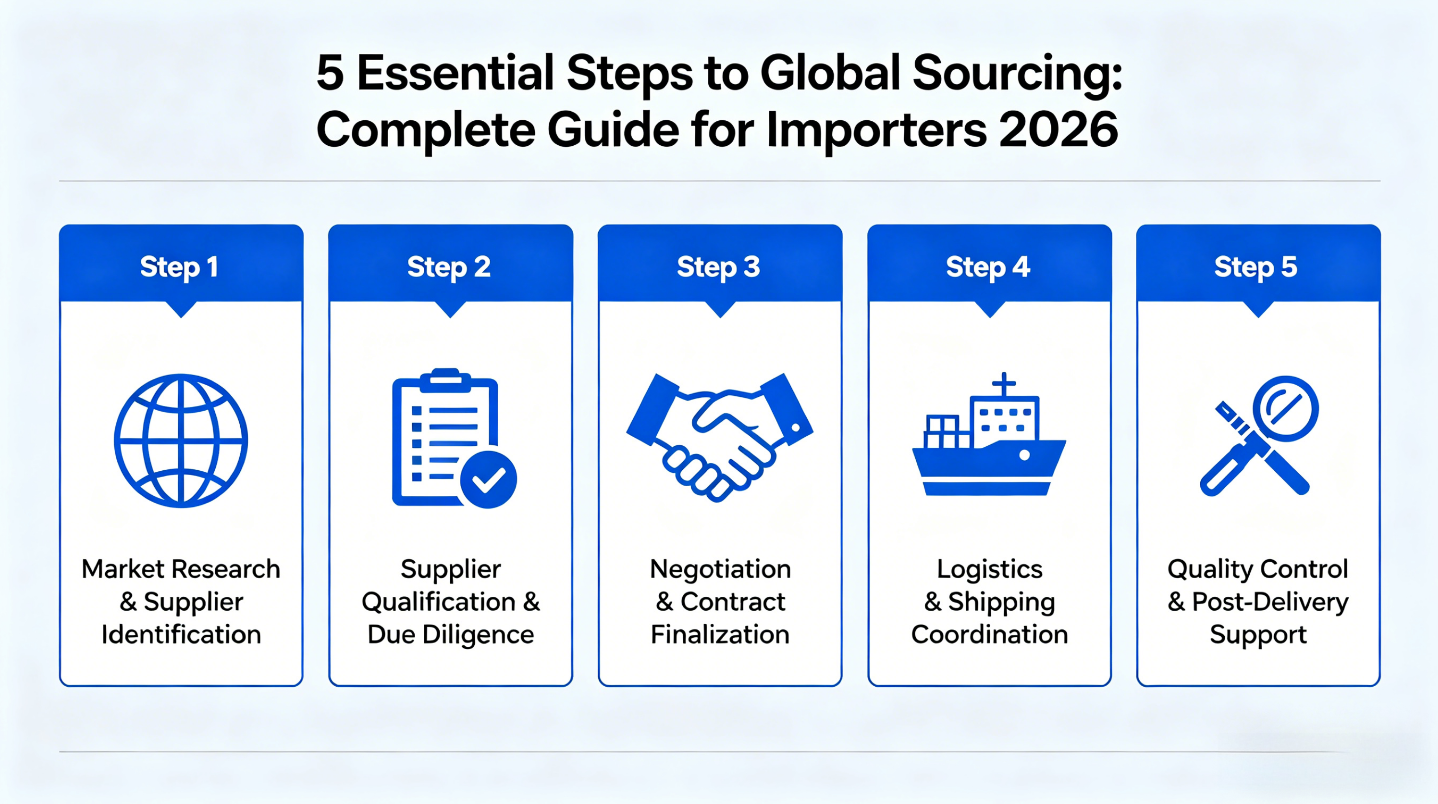
This comprehensive guide outlines 5 essential steps to successful global sourcing in 2026, providing actionable insights and best practices for importers, wholesalers, and OEM/ODM buyers. Whether you’re new to international procurement or looking to optimize your existing processes, this guide will help you build a resilient, efficient, and profitable global supply chain.
Step 1: Strategic Planning & Market Research
The foundation of successful global sourcing is thorough strategic planning and market research. Before contacting any suppliers, you need to clearly define your requirements, understand market dynamics, and identify the best sourcing regions for your products.
1.1 Define Your Product Requirements
Start by creating a detailed product specification document that includes:
- Exact product dimensions, materials, and components
- Quality standards and acceptable tolerances
- Required certifications and compliance standards
- Packaging and labeling requirements
- Minimum order quantities (MOQs)
- Target price points and profit margins
- Delivery timelines and shipping requirements
2026 Update: With ESG becoming a mandatory requirement in most markets, include sustainability specifications in your product requirements, such as recycled materials, carbon footprint targets, and ethical labor practices. Many European and North American retailers now require ESG documentation before accepting new products.
1.2 Analyze Sourcing Regions
Different regions offer distinct advantages and disadvantages depending on your product type, volume, and target market:
| Region | Key Advantages | Best For |
|---|---|---|
| China | Complete supply chain ecosystem, wide product range, strong OEM/ODM capabilities, fast production | All product categories, from entry-level to premium, complex products |
| Vietnam & Thailand | Tariff advantages, lower labor costs, stable political environment | Mid-range products, labor-intensive goods, electronics assembly |
| India | Large labor force, growing manufacturing capacity, favorable trade agreements | Textiles, furniture, consumer goods |
| Mexico | Proximity to North America, fast shipping, USMCA tariff benefits | Automotive parts, industrial products, fast-moving consumer goods |
Pro Tip: For 2026, we recommend a “China + 1” sourcing strategy for most importers. Keep your core production in China while developing secondary suppliers in Southeast Asia to mitigate risk.
Step 2: Supplier Identification & Initial Screening
Once you have clear requirements and have identified your target sourcing regions, the next step is to find and screen potential suppliers.
2.1 Where to Find Reliable Suppliers
- B2B Platforms: Alibaba, Global Sources, Made-in-China (filter for verified suppliers)
- Trade Shows: Canton Fair (Guangzhou), Hannover Messe, CES, and industry-specific exhibitions
- Industry Associations: Local manufacturing associations and trade organizations
- Referrals: Recommendations from other importers and industry contacts
- Google Search: Use specific keywords like “custom [product] manufacturer China” to find suppliers with strong online presence
2.2 Initial Supplier Screening Criteria
Before requesting quotes, screen suppliers based on these critical factors:
- Business License & Registration: Verify they are a legitimate manufacturing company, not a trading company
- Production Capacity: Ensure they can handle your order volume and meet delivery deadlines
- Experience: Look for suppliers with 5+ years of experience manufacturing your specific product type
- Export Experience: Prefer suppliers who regularly export to your target market (EU, US, etc.)
- Certifications: Confirm they have the necessary certifications for your industry
- Factory Location: Consider proximity to ports for faster shipping
2026 Update: Many suppliers now offer virtual factory tours via video call. Request a live tour to see their production facilities and quality control processes in real time.
Step 3: Supplier Vetting & Sample Evaluation
This is the most critical step in the sourcing process. Never place a large order without thoroughly vetting the supplier and evaluating product samples.
3.1 Requesting & Evaluating Quotes
When requesting quotes, provide your complete product specification document to ensure accurate pricing. Compare quotes based on:
- Unit price
- MOQ requirements
- Production lead time
- Payment terms
- Packaging costs
- Shipping options
Warning: Be wary of quotes that are significantly lower than the market average. This often indicates poor quality, hidden costs, or potential scams.
3.2 Sample Evaluation
Always order multiple samples from different suppliers for side-by-side comparison. Evaluate samples based on:
- Material quality and durability
- Workmanship and finishing
- Functionality and performance
- Compliance with your specifications
- Packaging quality
Pro Tip: Label each sample with the supplier name and date received. Take detailed photos and notes for future reference.
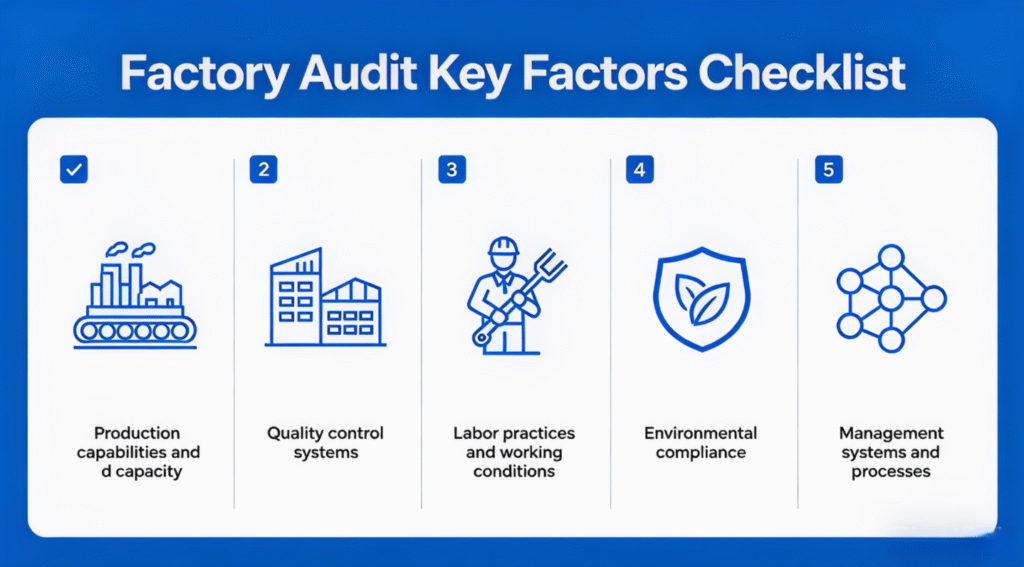
3.3 Factory Audit (Recommended)
For large orders or long-term partnerships, conduct a professional factory audit. A third-party audit will verify:
- Production capabilities and capacity
- Quality control systems
- Labor practices and working conditions
- Environmental compliance
- Management systems and processes
Step 4: Contract Negotiation & Production Management
Once you have selected your supplier, it’s time to negotiate the contract and manage the production process.
4.1 Key Contract Terms to Negotiate
- Payment Terms: Standard terms are 30% deposit, 70% balance before shipment. Avoid 100% upfront payment.
- Production Lead Time: Clearly define the production schedule and delivery deadlines
- Quality Standards: Include your product specifications and acceptable defect rates
- Warranty Terms: Specify warranty coverage and replacement policies
- Intellectual Property Protection: Include clauses to protect your designs and trademarks
- Dispute Resolution: Define how disputes will be resolved (arbitration, mediation, etc.)
4.2 Production Management
Stay actively involved in the production process to avoid delays and quality issues:
- Request regular production updates and photos
- Conduct mid-production inspections to catch problems early
- Verify that all materials and components meet your specifications
- Confirm packaging and labeling requirements are being followed
2026 Update: With ongoing supply chain uncertainties, build a 2-4 week buffer into your production timeline to account for potential delays.
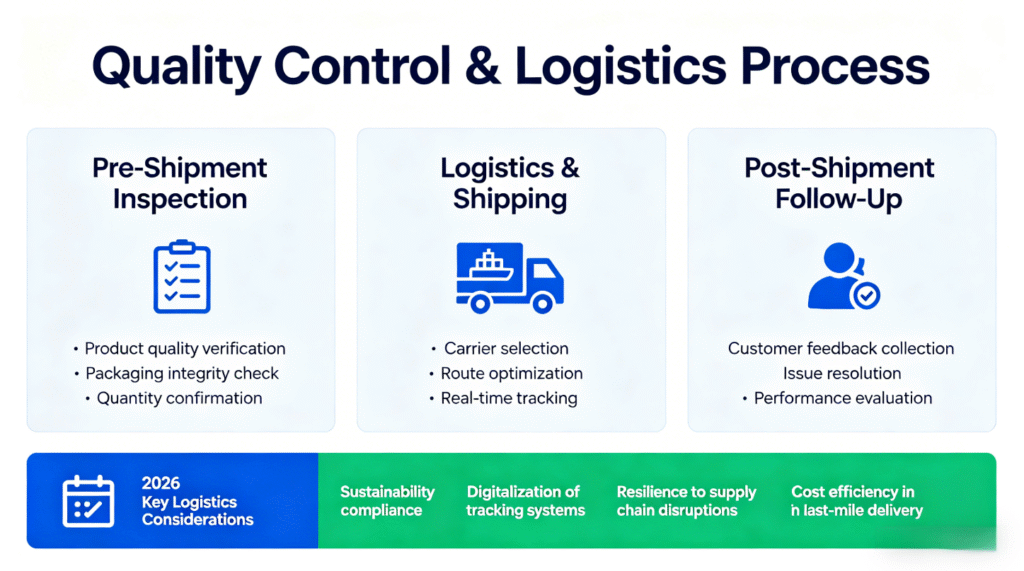
Step 5: Quality Control & Logistics
The final step in the sourcing process is ensuring product quality and managing the logistics of shipping your goods to their destination.
5.1 Pre-Shipment Inspection
Never pay the final balance or allow shipment without a pre-shipment inspection. A third-party inspection company will:
- Check product quality and workmanship
- Verify quantity and packaging
- Test product functionality
- Ensure compliance with safety standards
- Identify any defects or issues that need to be addressed
5.2 Logistics & Shipping
Choose the right shipping method based on your timeline and budget:
- Ocean Freight: Most cost-effective for large shipments (4-6 weeks)
- Air Freight: Faster but more expensive (3-7 days)
- Express Shipping: Fastest for small shipments (1-3 days)
Key Logistics Considerations for 2026:
- Book shipping space 4-6 weeks in advance during peak seasons
- Consider using a freight forwarder to handle customs clearance and documentation
- Purchase cargo insurance to protect against loss or damage during transit
- Stay updated on changing customs regulations and tariff rates
5.3 Post-Shipment Follow-Up
After your goods arrive:
- Inspect the shipment immediately for any damage or defects
- Provide feedback to your supplier on product quality and performance
- Build a long-term relationship with reliable suppliers
- Continuously evaluate and optimize your sourcing process
Common Sourcing Mistakes to Avoid in 2026
- Choosing the cheapest supplier: This almost always leads to quality issues and higher costs in the long run
- Skipping sample evaluation: Never place an order without seeing and testing a physical sample
- Not verifying certifications: Non-compliant products can be seized at customs or result in costly recalls
- Poor communication: Clear and regular communication with your supplier is essential for success
- Putting all eggs in one basket: Diversify your supplier base to mitigate risk
Conclusion
Global sourcing in 2026 requires a strategic, systematic approach that goes beyond just finding the lowest price. By following these 5 essential steps—strategic planning, supplier identification, vetting and evaluation, contract negotiation, and quality control—you can build a resilient, efficient, and profitable global supply chain.
Remember that successful sourcing is a continuous process. Stay updated on market trends, regulatory changes, and new technologies to keep your supply chain competitive. By building strong relationships with reliable suppliers and prioritizing quality and compliance, you can position your business for long-term success in the global marketpla