
Choosing the wrong eBike sensor leads to unhappy customers and costly returns. You need to understand which sensor truly fits your target market, not just what technology sounds better.
The best sensor choice depends entirely on your target market1, not just the technology itself. A torque sensor provides a natural, intuitive ride for commuters2, while a cadence sensor offers predictable, simple power for utility riders. Matching the sensor to the rider minimizes costly warranty claims3.
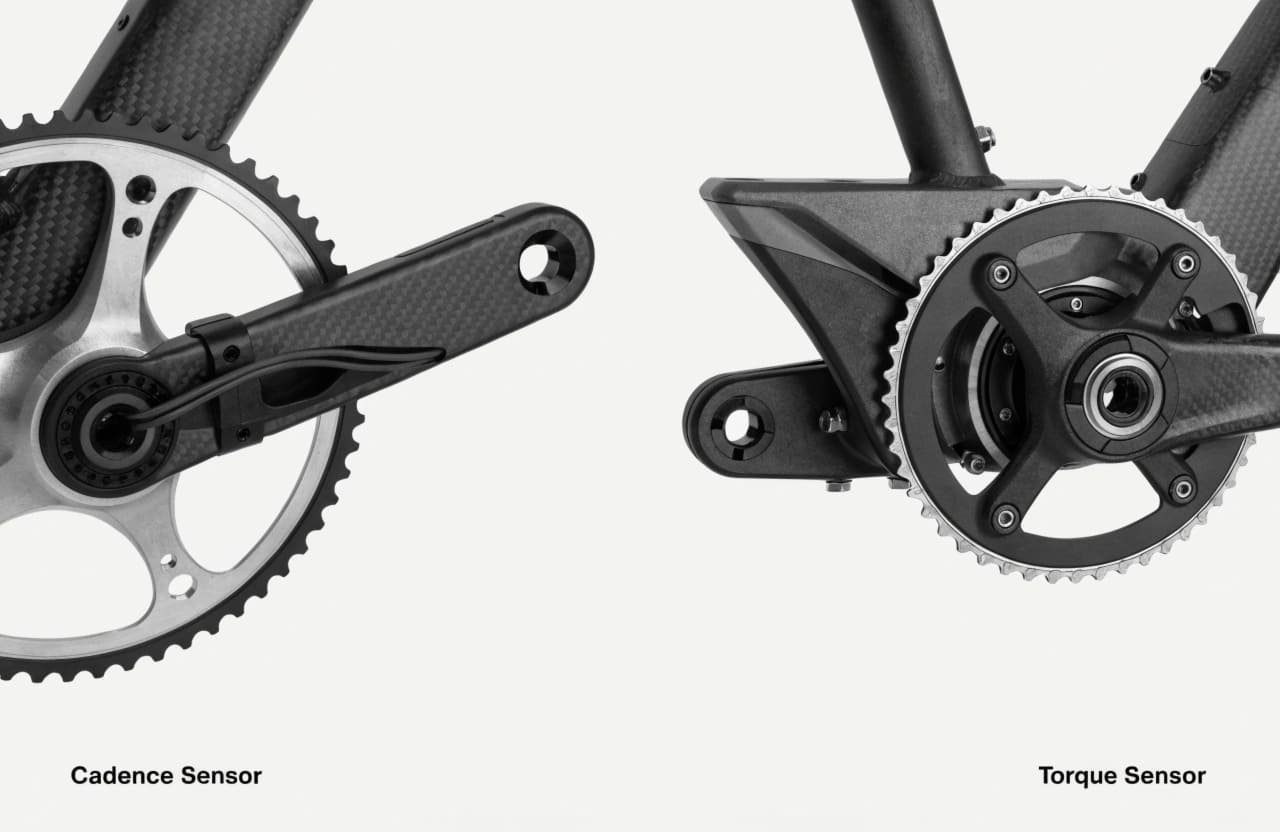
For 15 years, I've manufactured eBikes. I've seen firsthand how the sensor decision, often seen as a small detail, can make or break a product line. It’s not a simple debate about which one is "better." It's a critical business decision that directly impacts your return rates and brand reputation. Let's move past the online forum debates and look at this from a manufacturer's perspective, focusing on what keeps customers happy and products out of the warranty department.
Is a 'Premium' Torque Sensor Always Worth the Extra Cost?
You specified a torque sensor to give your eBike a premium feel. But now you're getting complaints that the bike feels weak or unresponsive. You need to understand the expectation gap.
A torque sensor's cost isn't just the higher price per unit4. The real cost can be in warranty claims from users who expect instant, full power but instead get a subtle, effort-based assist. This mismatch creates support tickets and returns.
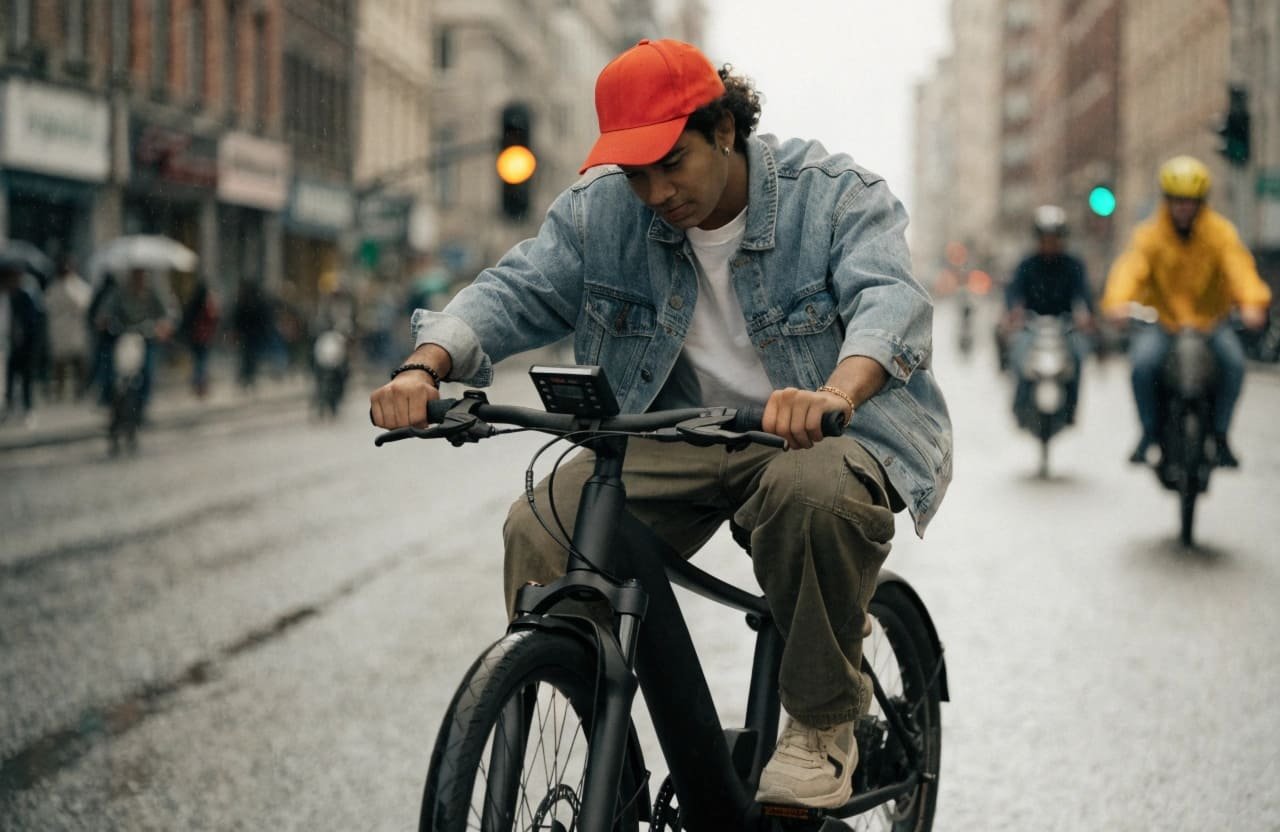
Over the years, I've watched many clients fall into this trap. They read that torque sensors are superior, so they spec them across their entire range. But the real cost isn't just on the bill of materials; it's in the post-sale support. A torque sensor measures how hard you are pedaling and adds assistance proportionally5. This creates a ride that feels like a super-powered version of a regular bicycle6. For an experienced cyclist or a commuter who wants a workout, this is perfect. But for someone else, it can be confusing. We've had clients in the leisure and utility markets report customer complaints like "the motor isn't working" simply because the rider was pedaling lightly and expecting a big push. This is the expectation gap.
The User Expectation Gap: 'Premium' vs. 'Powerful'
The problem arises when the rider's definition of a good eBike experience doesn't align with what the sensor delivers.
| Market Segment | Common User Expectation | Torque Sensor Reality | Potential Complaint |
|---|---|---|---|
| Leisure / Cruiser | "I want an easy ride, like a scooter." | Requires rider effort to get assist. | "I still have to work too hard." |
| Utility / Cargo | "I need full power now to get moving." | Power ramps up with pedal pressure. | "The bike feels weak from a stop." |
| Commuter / Fitness | "I want a natural feel that rewards my effort." | Matches assist to rider input. | (Generally a good fit) |
This isn't a technical failure. The sensor is doing its job perfectly. The failure is in matching the product to the market.
Could a 'Basic' Cadence Sensor Actually Be Better for Your Brand?
You might worry that using a cadence sensor makes your eBikes seem cheap. But this perception could be costing you access to a very stable and profitable market segment.
A cadence sensor isn't "worse," it's just more predictable. For markets like food delivery or rentals, its simple on/off power delivery is intuitive and reliable. This leads to fewer user-error complaints and easier, cheaper field repairs, protecting your brand's reputation for uptime.
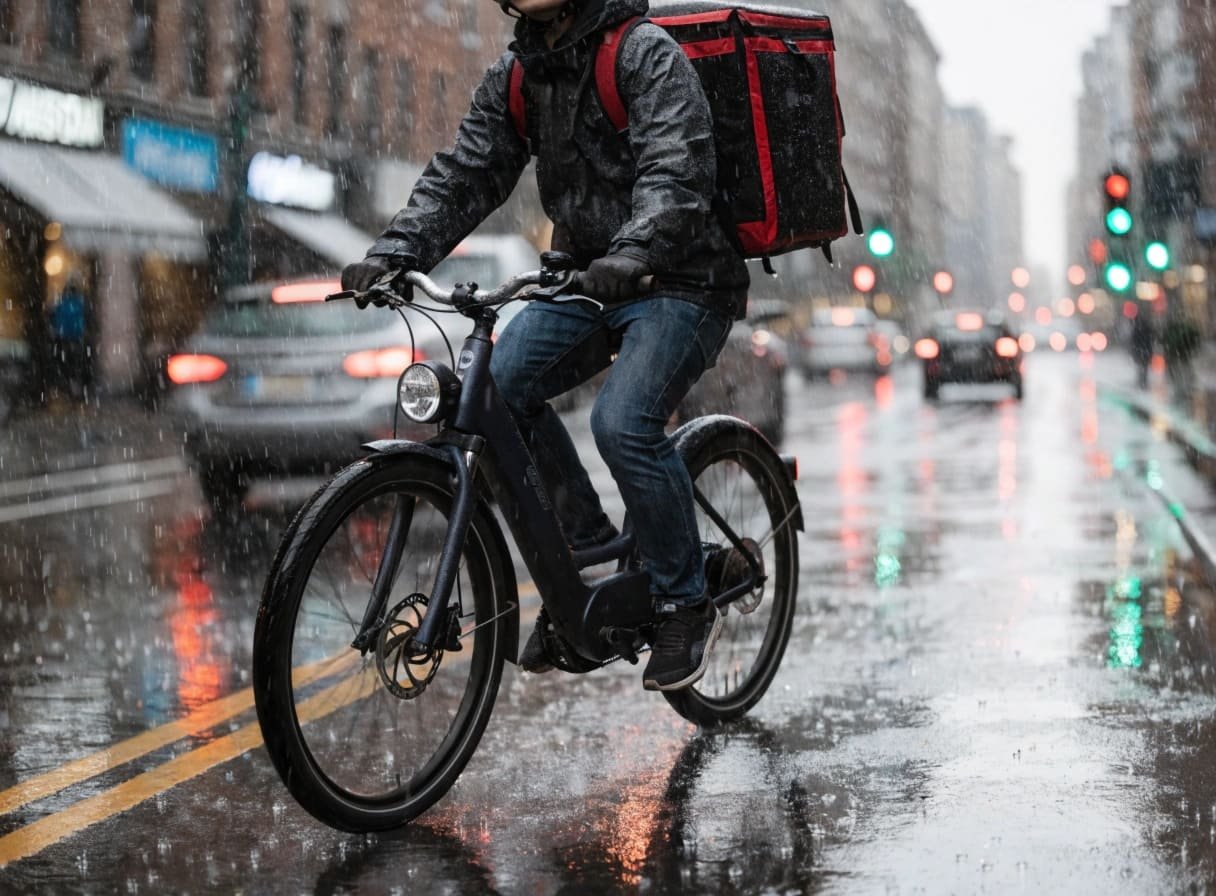
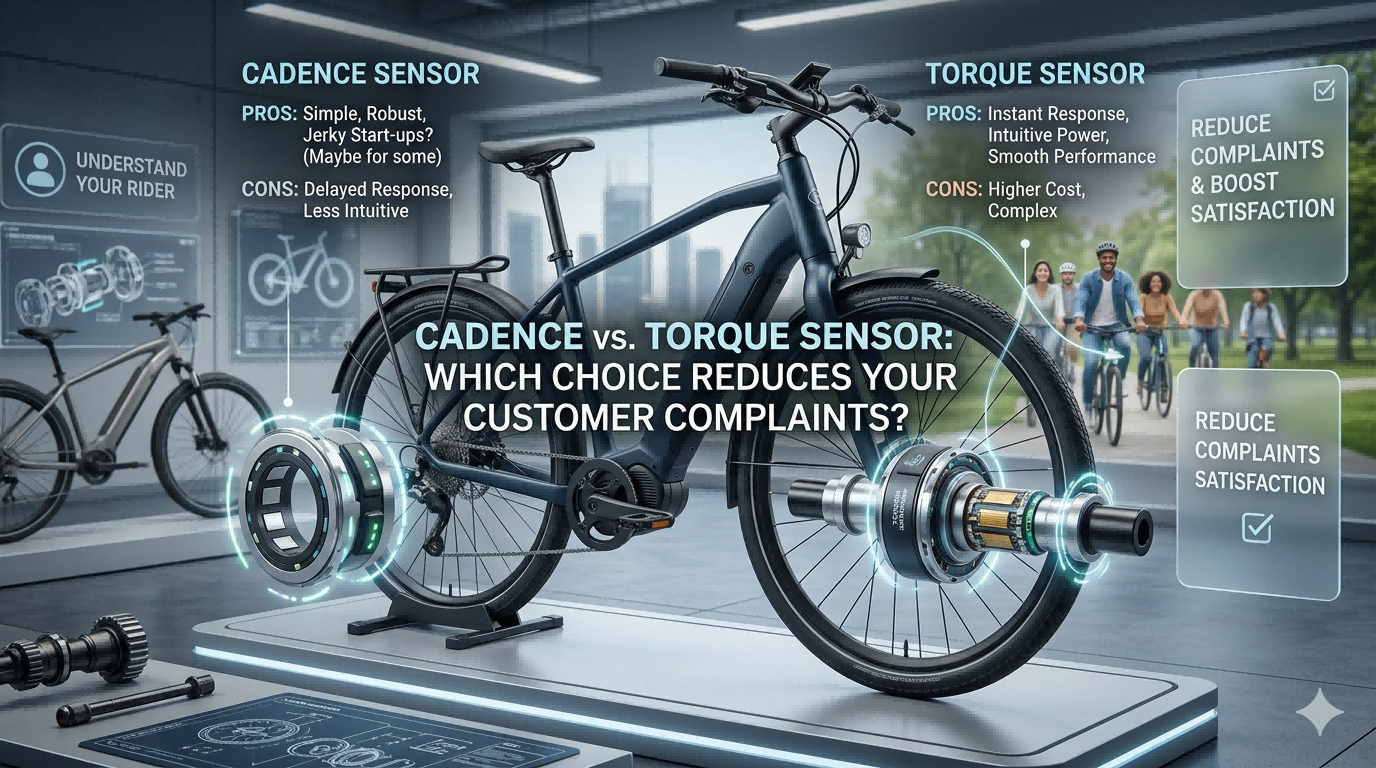
Let's be direct. For certain applications, a cadence sensor is the superior business choice. A cadence sensor works like a simple switch: if you are pedaling, the motor is on7. The level of assist is selected with the controller, not by how hard you pedal. This is incredibly intuitive. There's no learning curve. For a business running a rental fleet or a food delivery service, this predictability is gold8. Their riders just want the bike to go. They don't want to think about their pedaling technique. I've observed in our own production that bikes built for these commercial clients almost exclusively use cadence sensors. Why? Because downtime is their biggest cost9.
Uptime Over Refinement: The Business Case for Cadence
When your customer's business depends on your eBikes working, reliability trumps a "premium" feel every time. A cadence sensor is a known quantity. It’s simple, robust, and if it fails, it’s cheap and fast to replace.10 A mechanic in the field can swap one out in minutes. A torque sensor, often integrated into the bottom bracket, can be a much more complex and expensive repair.11
| Attribute | Cadence Sensor | Torque Sensor |
|---|---|---|
| Initial Cost | Low | High |
| User Learning Curve | None (It's on or off) | Moderate (Requires understanding effort) |
| Field Serviceability | High (Simple, external parts) | Low (Often internal, complex) |
| Common Complaint | "Jerky" power delivery | "Not powerful enough" / "unresponsive" |
For our clients who serve commercial fleets, the choice is easy. They choose the option that leads to the fewest support calls and the quickest repairs. They choose cadence.
How Does Sensor Mismatch Create Hidden Costs You're Not Seeing?
Your return rate is high, but your quality control team says the bikes are perfectly fine. You're losing money on shipping and restocking, and you can't find a technical fault.
The biggest hidden cost is a market-sensor mismatch. When the ride feel doesn't match the rider's expectation, it creates returns. A leisure rider might find a cadence sensor jerky, while a delivery rider might find a torque sensor unresponsive. These aren't defects, they're mismatches.

Every returned bike that isn't actually broken costs you money. You lose the original shipping cost, you pay for the return shipping, and you pay your staff to inspect, repackage, and restock the product. These costs add up quickly and destroy your profit margins. After 15 years of manufacturing, I can tell you that a significant percentage of "defective" returns are actually perfectly functional products that simply didn't meet the customer's expectations. The most common source of this mismatch in eBikes is the sensor choice. It dictates the entire feel of the bike. Getting it wrong is like putting the wrong engine in a car. It might run perfectly, but it won’t feel right to the driver.
Matching the Sensor to the Use Case
The key is to stop thinking about which sensor is better and start thinking about who the rider is. Before we start any production run, we ask our clients to define their end-user. This is the most important step. From there, the sensor choice becomes logical, not emotional.
| Rider Profile | Primary Need | Recommended Sensor | Rationale |
|---|---|---|---|
| Urban Commuter | A natural ride feel, exercise | Torque | Rewards pedaling effort and feels like a traditional bicycle, which is often the desired experience. |
| Leisure Cruiser | Simplicity, effortless power | Cadence | Provides an easy, predictable boost without requiring hard pedaling. Just turn the pedals and go. |
| Delivery / Commercial | Reliability, uptime, low learning curve | Cadence | The on/off nature is intuitive for all skill levels, and it's robust and easy to service in the field. |
| Performance / MTB | Control, responsive power | Torque | Gives the rider precise control over motor output for navigating technical terrain. |
Making the right choice from the start eliminates a whole category of complaints and returns, protecting your brand and your bottom line.
Conclusion
The right sensor isn't about the tech. It’s about aligning the ride feel with your customer's expectations to reduce complaints, minimize returns, and build a stronger business.
"ISO 25065:2019(en), Systems and software engineering", https://www.iso.org/obp/ui/en/#!iso:std:72189:en. User-centered product design literature supports the general principle that product features should be selected according to the needs, context, and capabilities of intended users, rather than by technical superiority alone. Evidence role: expert_consensus; source type: institution. Supports: The best eBike sensor choice depends on the intended rider segment and use case, not only on the technology itself.. Scope note: This supports the market-fit principle contextually; it does not provide eBike-sensor-specific return-rate data. ↩
"How is a Torque Sensor Ebike as Natural Feeling as a Traditional ...", https://www.heybike.com/blogs/heybike-blog/torque-sensor-ebike-as-natural-feeling-as-a-traditional-bike?srsltid=AfmBOopvuWhGze1DjTwcq_9B2qQJjZZwFjEmyRIHXfOLU91PcKUdjv-2. Technical descriptions of pedelec control systems explain that torque-based assistance scales motor output with rider pedal force, a mechanism associated with bicycle-like or proportional assistance. Evidence role: mechanism; source type: paper. Supports: Torque sensors can provide a natural-feeling assist because motor output is proportional to rider effort.. Scope note: The source can support why torque sensing may feel natural; it may not directly prove that all commuters prefer it. ↩
"[PDF] Cole et al. Satisfying Warranty Claims on an Obsolete Product", https://bkazaz.expressions.syr.edu/wp-content/uploads/2015/02/CKW-Pearson-final.pdf. Research on product returns and customer satisfaction indicates that mismatches between product performance and customer expectations can increase dissatisfaction and returns, providing contextual support for aligning ride-control features with user needs. Evidence role: general_support; source type: paper. Supports: Aligning eBike sensor behavior with rider expectations can reduce complaint and return risk.. Scope note: This is contextual support from returns and satisfaction research, not direct evidence that sensor matching alone reduces eBike warranty claims. ↩
"[PDF] Reliability-Informed Life-Cycle Warranty Cost Analysis - OSTI", https://www.osti.gov/servlets/purl/1847921. Life-cycle costing and warranty-cost literature treats product cost as including after-sales service, warranty, and support expenses in addition to initial component cost. Evidence role: expert_consensus; source type: paper. Supports: The business cost of a component can include downstream warranty and support costs, not only its purchase price.. Scope note: This supports the cost-accounting logic generally; it does not quantify torque-sensor-specific warranty costs. ↩
"Torque Sensor Ebike Explained - Velotric", https://www.velotricbike.com/blogs/story-landing/torque-sensor-ebike?srsltid=AfmBOoqgOUk1nSwHOz7ZUqubO993LKcSYRWUl3hmmrJnNvrBW6FnGLNi. Technical sources on pedal-assist e-bikes describe torque sensors as measuring rider-applied pedal or crank torque and using that signal to regulate motor assistance proportionally. Evidence role: mechanism; source type: education. Supports: A torque sensor measures rider pedaling force or torque and modulates motor assist in proportion to that input.. ↩
"Systematic review and meta‐analysis evaluating the effects electric ...", https://pmc.ncbi.nlm.nih.gov/articles/PMC9546252/. Studies and technical discussions of pedelec assistance note that pedal-assist systems augment rider power while retaining pedaling as the primary control input, supporting the comparison to an assisted conventional bicycle. Evidence role: general_support; source type: paper. Supports: Torque-based pedal assistance can feel like amplified bicycle pedaling because assistance is linked to rider input.. Scope note: This supports the analogy at a general level; perceived ride feel varies by motor tuning, assist level, and rider expectations. ↩
"Pedal Assist 101: Everything You Need to Know About Torque and ...", https://www.velotricbike.com/blogs/story-landing/how-pedal-assist-works-on-ebike?srsltid=AfmBOorOT6HSjuHtFMEjTiqI_Skq79ox12Z5pgn0a8N7NfrcMEPXF1qT. Pedal-assist system descriptions explain that cadence sensors detect crank rotation and can activate motor assistance when pedaling is detected, distinguishing them from force-measuring torque sensors. Evidence role: mechanism; source type: education. Supports: Cadence sensors activate assistance based primarily on whether the rider is turning the pedals.. Scope note: Actual controller behavior may include delays, speed limits, assist levels, and safety cutoffs, so 'simple switch' is a simplified description. ↩
"[PDF] Shared and Ownership Mobility Technologies in the US", https://publications.anl.gov/anlpubs/2025/01/193683.pdf. Fleet-management and shared-mobility literature emphasizes operational reliability, ease of use, and predictable vehicle availability as important factors in micromobility service performance. Evidence role: general_support; source type: research. Supports: Predictable and easy-to-use eBike operation is valuable in commercial fleet contexts such as rentals and delivery.. Scope note: This supports the value of predictable operation for fleets generally; it does not directly compare cadence and torque sensors in delivery or rental fleets. ↩
"The Hidden Costs of Vehicle Downtime And How to Avoid Them", https://www.platformscience.com/blog/the-hidden-costs-of-vehicle-downtime-and-how-to-avoid-them. Fleet operations research commonly identifies vehicle downtime as a major contributor to operational cost because unavailable vehicles reduce service capacity while maintenance and labor expenses continue. Evidence role: expert_consensus; source type: paper. Supports: Downtime is a major cost driver for commercial eBike or vehicle fleets.. Scope note: This supports downtime as a major fleet cost in general; it may not establish that downtime is the single largest cost for every eBike fleet. ↩
"HOW TO REPLACE E-BIKE PEDAL ASSIST / CADENCE SENSOR",
. Maintenance documentation and technical descriptions indicate that cadence sensors are relatively simple external crank-rotation sensors compared with integrated torque-sensing bottom brackets, supporting the claim of easier serviceability. Evidence role: mechanism; source type: education. Supports: Cadence sensors are generally simpler and easier to service than more integrated torque-sensing systems.. Scope note: Repair time and cost vary by eBike design, parts availability, and mechanic skill; the source may support relative simplicity rather than universal replacement cost. ↩"Life of torque-sensing bottom bracket? - Electric Bike Forums", https://forums.electricbikereview.com/threads/life-of-torque-sensing-bottom-bracket.27641/. Technical descriptions of eBike torque-sensing systems show that torque sensors are frequently built into or associated with the bottom-bracket or crank assembly, which can make diagnosis and replacement more involved than external cadence sensors. Evidence role: mechanism; source type: education. Supports: Torque sensors are often integrated into bottom-bracket or drivetrain assemblies, increasing repair complexity relative to simpler external sensors.. Scope note: Not all torque sensors are bottom-bracket integrated, and repair complexity depends on the specific motor and frame architecture. ↩