
Tired of messy chains and customer complaints? A belt drive seems like the perfect, modern upgrade. But choosing the wrong system can lock you into costly design mistakes.
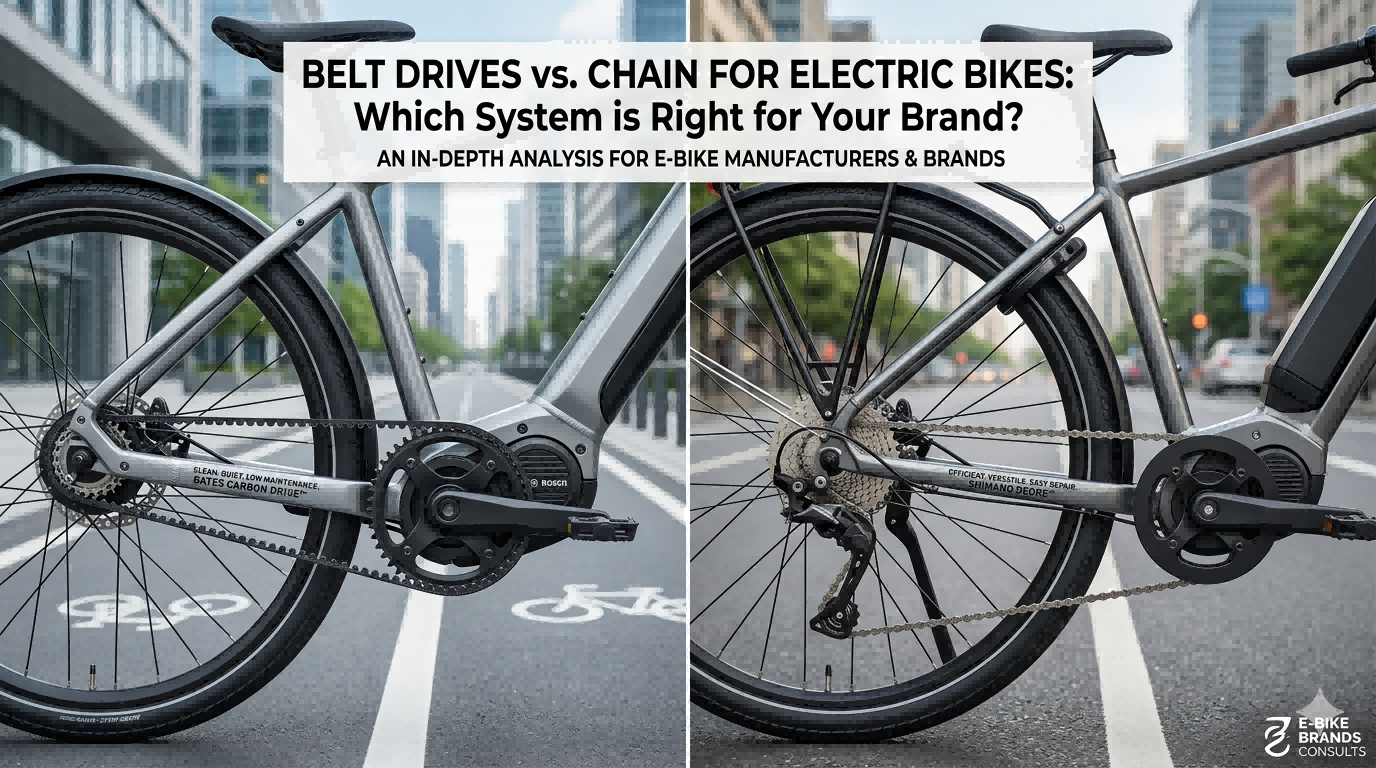
Choosing between a belt or chain isn't about which is "better." It's a strategic decision. A belt drive offers a clean, low-maintenance ride1 but requires a specific frame and gearbox2. A chain is cheaper upfront and more versatile but demands more end-user care.
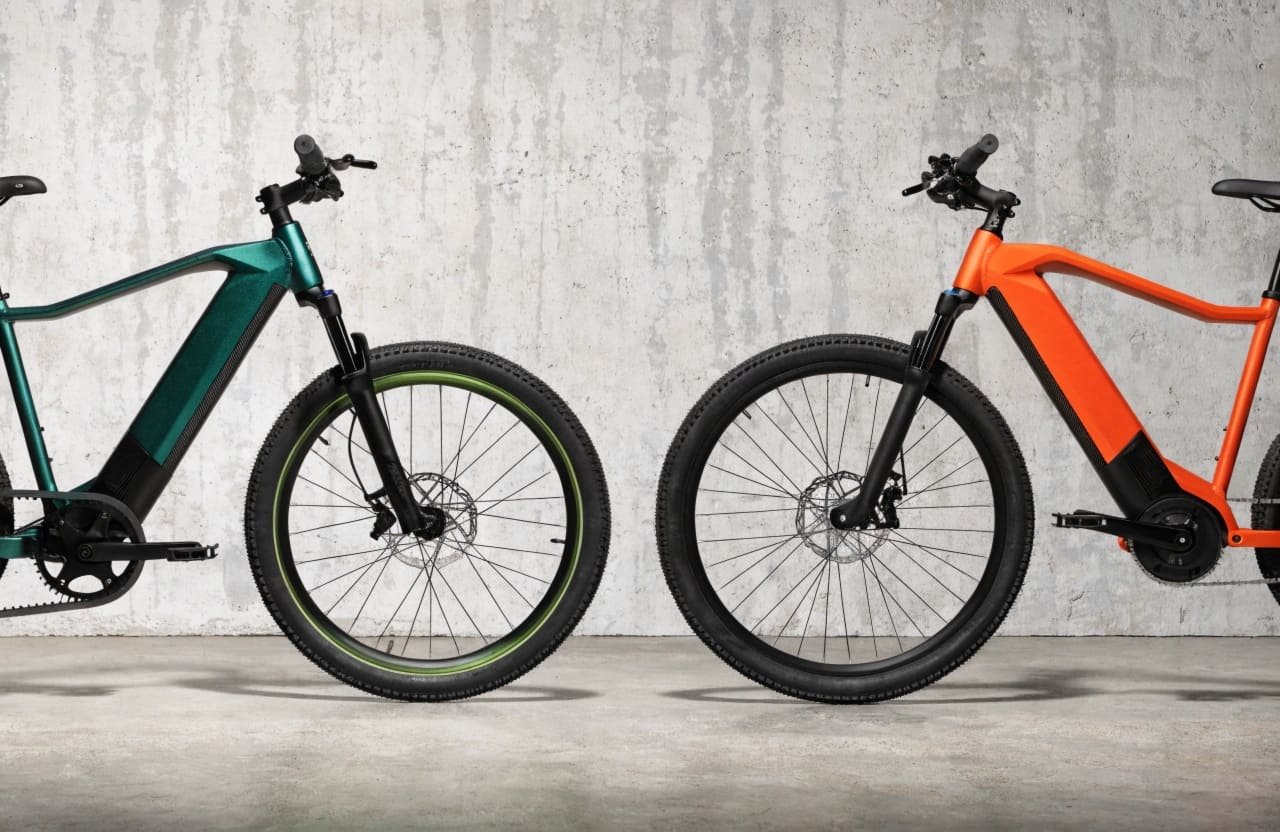
In my 15 years of helping e-bike brands bring products to market, the "belt vs. chain" debate comes up constantly. It's often framed as a simple feature choice, but that's a dangerous oversimplification. The right answer depends entirely on your product strategy, target market, and manufacturing realities. Let's break down the real decision framework I use with my clients, starting with the most common myth.
Isn't a Belt Drive Always Cleaner and Better?
You want to offer a premium, maintenance-free e-bike. A belt drive seems like the obvious choice for a clean, quiet ride. But it introduces non-negotiable design constraints.
A belt drive is cleaner and quieter, which is great for premium commuter bikes. However, it locks you into specific hardware. You need a frame that can split to install the belt and an internally geared hub (IGH) or single-speed setup. This isn't a simple swap.
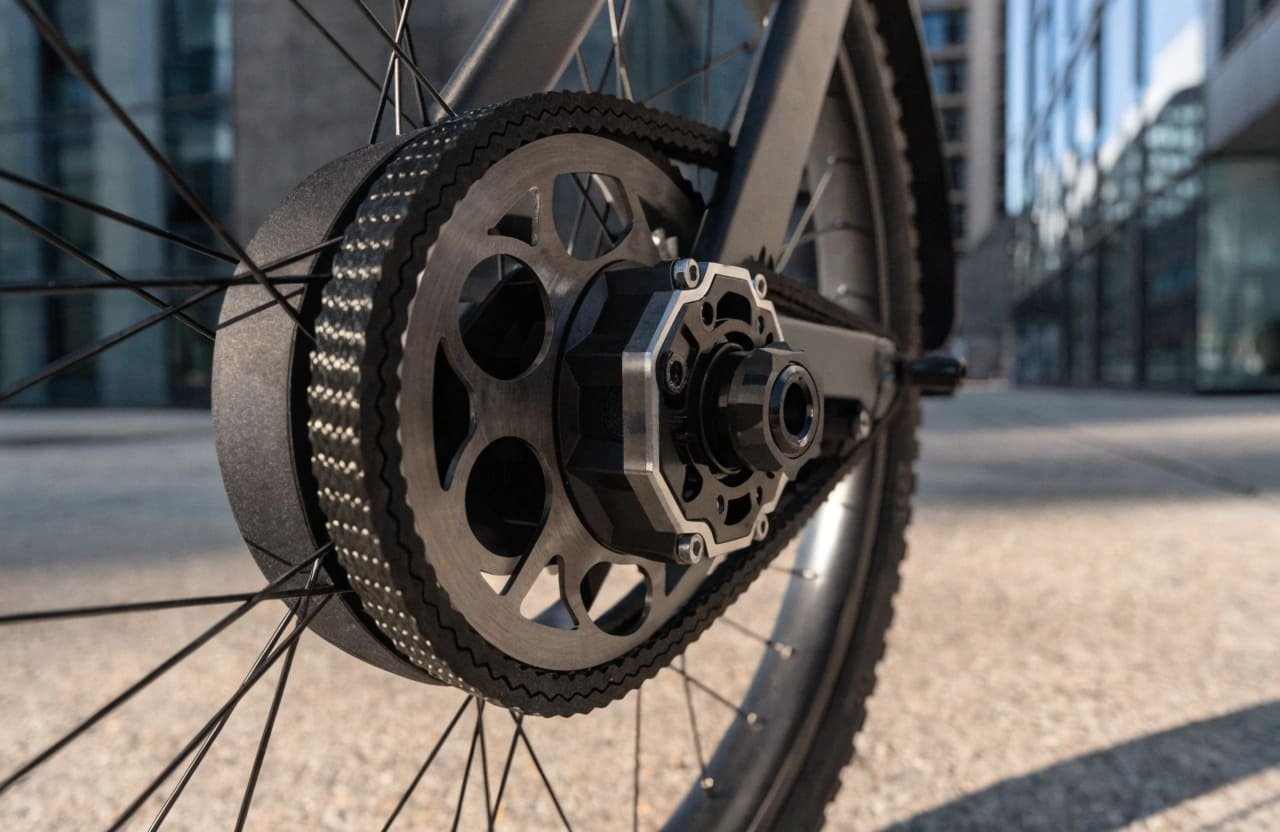
In our experience helping brands spec drivetrains, the idea that a belt is a simple "upgrade" is the biggest misconception. It's really a commitment to a completely different type of vehicle architecture. When we prototype belt-drive builds for clients, we have to address three hard constraints right away. First, the frame must have a split in the rear triangle3 to allow the continuous belt to be installed. This feature, often called a "belt-split dropout," must be designed into the frame from the very beginning. You cannot add it to an existing frame mold. Second, belts require a perfect, straight line and cannot be shifted sideways by a derailleur4. This means you are limited to either a single-speed setup or, more commonly, an Internally Geared Hub (IGH)5. Third, this IGH must then be compatible with your chosen motor, especially for mid-drives.
| Constraint | Implication for Your E-Bike Project |
|---|---|
| Frame Split Required | Frame tooling must be decided upfront. This cannot be an afterthought. |
| No Derailleurs | You must use an Internally Geared Hub (IGH) or a single-speed system. |
| Motor & IGH Pairing | High-torque motors may not be compatible with all IGHs6, limiting motor choice. |
Is a Chain Drive Really the Cheaper Option for My Brand?
Your budget is tight and every dollar on the Bill of Materials (BOM) counts. Chains are cheap and easy to source. But what about the hidden costs for your brand?
Yes, a chain and derailleur system has a lower upfront component cost7. But for premium markets, consider the Total Cost of Ownership (TCO). A "dirty" chain can lower brand perception and increase customer support tickets related to maintenance and noise.

A common pattern we see in RFQs, especially from European commuter brands, is an initial focus on the Bill of Materials (BOM) cost. On paper, a chain is always cheaper. A standard chain, cassette, and derailleur are mass-produced components with an extremely mature supply chain. Sourcing them has almost zero friction in terms of Minimum Order Quantities (MOQs). A belt drive system, including the required IGH, will always have a higher unit cost.
However, the smarter brands look at the Total Cost of Ownership (TCO). For a premium city e-bike, the customer experience is paramount. A greasy chain that requires regular cleaning and lubrication8 can be seen as a hassle. It can stain clothing9 and lead to customer complaints about noise or shifting adjustments10. These issues translate into real costs through increased customer support time and potential warranty claims. A belt drive, while more expensive on the BOM, positions the bike as a clean, low-maintenance, and modern solution. This can justify a higher retail price and reduce post-sale support costs, strengthening your brand's premium identity.
| Cost Factor | Chain & Derailleur | Belt Drive & IGH |
|---|---|---|
| Upfront BOM Cost | Lower | Higher |
| Sourcing Friction | Very Low | Higher (Fewer suppliers, MOQs) |
| End-User Maintenance | High (Cleaning, lube, tuning) | Very Low (Occasional tension check) |
| Brand Perception | Standard, potentially "messy" | Premium, clean, modern |
| Potential Support Cost | Higher (Derailleur adjustments) | Lower |
What Are the Hidden Compatibility Deal-Breakers I Need to Know?
You've decided on a belt drive for its premium feel. The components are ordered. But during the first assembly, you discover it doesn't fit your frame or motor correctly.
Compatibility is the biggest hidden risk. A belt drive requires a specific frame with a split dropout, the right tensioning system, and a perfectly straight beltline. Mismatches can halt production and force expensive redesigns. This must be planned from day one.
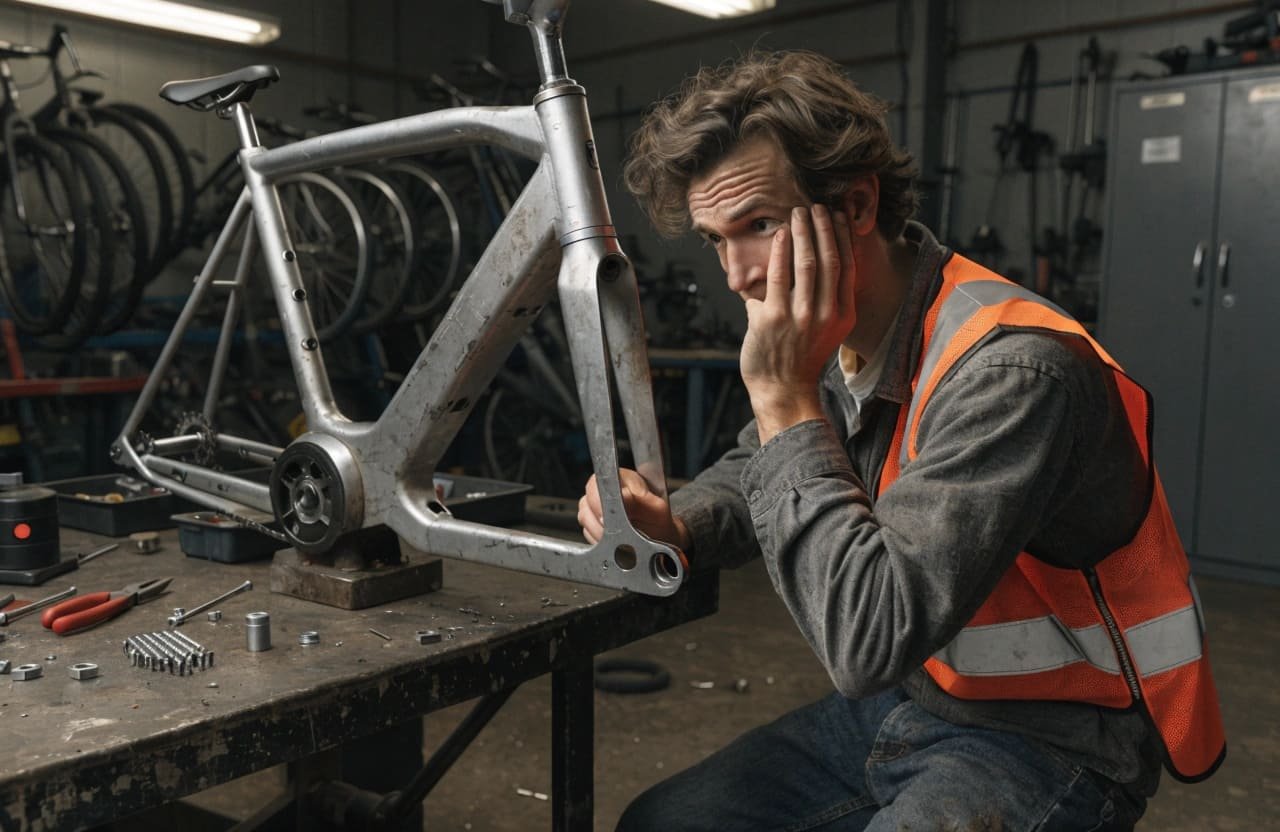
This is the issue we see derail projects most often. Brands decide on a belt drive too late in the process, and it creates a cascade of expensive problems. The frame is the first and most important piece. Beyond the split dropout I mentioned, the frame also needs a way to tension the belt. Since there's no derailleur to take up slack, you need either sliding dropouts or an eccentric bottom bracket11. These are not standard features and must be part of the initial frame design and tooling. If a client brings us an existing frame design, a belt drive is usually not an option without a costly re-tooling investment.
Another major point is torque, especially for cargo e-bikes or performance e-MTBs. Clients often ask about belts slipping or snapping. This is a valid concern. Premium belt systems like the Gates CDX are rated for specific torque levels from mid-drive motors12, and you must respect those limits. Based on supplier data and our prototyping, we often advise clients that for extreme load scenarios, the proven toughness and field serviceability of a chain might be a safer choice. A snapped chain can often be repaired on the trail; a snapped belt ends the ride. You must choose a belt, motor, and hub as a complete, validated system, not as separate parts.
Conclusion
Ultimately, choosing a belt or chain is a strategic business decision, not a tech shootout. Align your choice with your brand, market, and manufacturing capabilities from the start.
"Belt-driven bicycle - Wikipedia", https://en.wikipedia.org/wiki/Belt-driven_bicycle. A technical source on bicycle belt drives should document that belt systems do not require chain lubricant and are commonly described as lower-maintenance than chain drivetrains; this supports the maintenance contrast but does not quantify service-frequency reductions for every e-bike use case. Evidence role: general_support; source type: encyclopedia. Supports: A belt drive offers a cleaner, lower-maintenance ride than a conventional chain drivetrain.. Scope note: Support is contextual unless the source directly compares e-bike belt and chain maintenance intervals. ↩
"Belt-driven bicycle - Wikipedia", https://en.wikipedia.org/wiki/Belt-driven_bicycle. A bicycle belt-drive technical reference should state that continuous belts require compatible frame openings and are generally paired with single-speed or internally geared systems rather than derailleurs; this supports the architectural constraint, although 'gearbox' may include several non-derailleur gear arrangements. Evidence role: mechanism; source type: encyclopedia. Supports: A belt drive requires a compatible frame design and non-derailleur gearing architecture.. Scope note: The source may describe bicycles generally rather than e-bikes specifically. ↩
"Belt-driven bicycle - Wikipedia", https://en.wikipedia.org/wiki/Belt-driven_bicycle. A technical description of bicycle belt drives should explain that most drive belts are continuous loops and therefore require a separable frame section, commonly in the rear triangle, for installation; this supports the claimed frame requirement, while noting that exact split mechanisms differ by frame design. Evidence role: mechanism; source type: encyclopedia. Supports: A continuous bicycle belt drive requires a frame opening or split in the rear triangle for installation.. Scope note: Some specialty frame or belt designs may use different installation approaches, so the claim applies to common continuous belt systems. ↩
"Switching from belt to derailleur : r/bikewrench", https://www.reddit.com/r/bikewrench/comments/1j155g1/switching_from_belt_to_derailleur/. A source explaining synchronous belt drives and derailleur systems should show that belt drives require fixed sprocket alignment and are not compatible with lateral derailleur shifting; this supports the mechanism, although it does not rule out all alternative multi-speed belt-drive architectures. Evidence role: mechanism; source type: education. Supports: Bicycle belt drives cannot be shifted sideways by a derailleur in the way chains can.. Scope note: The support is about conventional bicycle belt systems and derailleurs, not every experimental drivetrain design. ↩
"Comparison of hub gears - Wikipedia", https://en.wikipedia.org/wiki/Comparison_of_hub_gears. An authoritative reference on internal-gear hubs should define an IGH as a bicycle gear system in which the gearing mechanism is enclosed within the rear hub; this supports the article's terminology but does not evaluate any particular e-bike hub model. Evidence role: definition; source type: encyclopedia. Supports: An internally geared hub is the relevant non-derailleur gearing option discussed for belt-drive e-bikes.. ↩
"E-Bike Motor Torque: Complete Technical Specifications Guide", https://movcan.com/blogs/blog/e-bike-motor-torque-complete-technical-specifications-guide?srsltid=AfmBOopBD_EcgYhl30e3WKOVxqXcMt4hEtCpVQRlk3wISwecdWaAgaFn. Technical specifications from hub-gear or e-bike drive manufacturers should list maximum input-torque limits for internally geared hubs; this supports the compatibility concern, although the limits are model-specific and cannot be generalized to all hubs without comparing specifications. Evidence role: mechanism; source type: other. Supports: High-torque e-bike motors may exceed the rated input torque of some internally geared hubs.. Scope note: Torque compatibility depends on the exact motor, hub, gear ratio, rider load, and manufacturer rating. ↩
"Internally Geared Hubs - Performance Bicycle", https://www.performancebike.com/internally-geared-hubs-wheels-parts/c16584?srsltid=AfmBOopUGqAvXQfzvN4Qki8hwN9e0ZcsbujTxUFkFLDKPMGE6P_N3ia1. A market or technical source comparing bicycle drivetrain components should show that chain-and-derailleur parts are widely produced commodity components and are typically less expensive than belt-drive systems with internally geared hubs; this supports the cost direction but not a specific bill-of-materials price for this article's projects. Evidence role: general_support; source type: institution. Supports: Chain and derailleur systems usually have lower upfront component costs than belt-drive and internally geared hub systems.. Scope note: Component prices vary by supplier, specification, region, and purchase volume. ↩
"NWA Outside | Walton College | University of Arkansas", https://walton.uark.edu/outdoor-recreation/?p=bike-maintenance-a-beginners-guide-to-working-on-your-bike. A bicycle maintenance reference should state that roller chains require periodic cleaning and lubrication to reduce wear and maintain function; this supports the maintenance burden claim, although service intervals vary with riding conditions and lubricant choice. Evidence role: expert_consensus; source type: education. Supports: Chain drivetrains require regular cleaning and lubrication.. Scope note: The evidence will usually address bicycle chains generally rather than e-bike-specific chains only. ↩
"How to get bike grease stains out of clothes : r/ukbike - Reddit", https://www.reddit.com/r/ukbike/comments/onxlak/how_to_get_bike_grease_stains_out_of_clothes/. A bicycle-chain maintenance or transport safety source should note that lubricated exposed chains can transfer grease or oil to clothing; this supports the cleanliness concern, although it is a practical observation rather than a controlled performance metric. Evidence role: general_support; source type: education. Supports: Lubricated bicycle chains can stain clothing.. Scope note: The claim is user-experience oriented and may be supported by maintenance guidance rather than formal research. ↩
"Bike Maintenance: A Beginner's Guide To Working On Your Bike", https://walton.uark.edu/outdoor-recreation/bike-maintenance-a-beginners-guide-to-working-on-your-bike.php. A bicycle repair or mechanical reference should explain that derailleur systems require cable tension, limit screw, and indexing adjustments for reliable shifting; this supports the claim that derailleur drivetrains can generate maintenance and support issues, although it does not quantify support-ticket volume. Evidence role: mechanism; source type: education. Supports: Derailleur drivetrains may require shifting adjustments as part of maintenance.. Scope note: The source supports the type of maintenance required, not the article's asserted business impact on customer support. ↩
"Adjusting Belt Tension with an Eccentric Bottom Bracket", https://www.montaguebikes.com/folding-bikes-blog/2016/03/adjusting-belt-tension-with-eccentric-bb/?srsltid=AfmBOoqrjzrfXbBrdT_orpDcgXPBdyX46U1Y0q97ziMHW0gBUOotKtES. A technical source on single-speed or belt-drive bicycle design should explain that chain or belt tension can be adjusted with sliding dropouts or an eccentric bottom bracket when no derailleur tensioner is present; this supports the design requirement, although individual frames may use other tensioning mechanisms. Evidence role: mechanism; source type: education. Supports: Belt-drive frames need a tensioning method such as sliding dropouts or an eccentric bottom bracket.. Scope note: The source may discuss single-speed bicycles as well as belt-drive bicycles, so the support is for the tensioning mechanism rather than for a specific e-bike frame. ↩
"[PDF] 2020 TECHNICAL MANUAL - kentie.net", https://kentie.net/article/endeavour8/gates-tech-manual-en.pdf. Manufacturer technical manuals or compatibility charts for e-bike belt systems should specify allowable torque or power conditions for particular belt, sprocket, motor, and hub combinations; this supports the need to validate torque compatibility, while the evidence is product-specific rather than an independent universal limit. Evidence role: case_reference; source type: other. Supports: Premium belt systems such as Gates CDX have specified torque or compatibility limits for mid-drive e-bike applications.. Scope note: Because torque ratings are typically supplied by the manufacturer, the source supports compatibility requirements for named systems rather than proving general belt durability across all brands. ↩